
PRP Skin Rejuvenation in Riyadh
PRP skin rejuvenation is a treatment that uses a concentrated portion of your own blood to support the skin’s natural repair and remodeling processes. PRP, or platelet-rich plasma, contains platelets and signaling substances that may contribute to tissue repair and changes in skin quality.
For selected patients, PRP may be considered to improve the appearance of fine lines, uneven skin texture, mild loss of firmness, and certain acne-scar changes. Results are generally gradual, and the response can vary depending on the patient’s skin, the PRP preparation and treatment technique used, and the concern being treated.
At Dr. Haitham Al-Gzlan’s dermatology practice in Riyadh, PRP skin rejuvenation begins with an assessment of your skin and treatment goals to determine whether PRP is appropriate and whether it should be used alone or alongside another procedure.
What Is PRP Skin Rejuvenation?
Platelet-rich plasma is prepared from a small sample of the patient’s own blood. The sample is processed to separate and concentrate the platelet-rich portion of the plasma, which can then be used as part of a dermatological treatment.
Platelets contain biologically active substances involved in tissue repair and signaling. For skin rejuvenation, PRP is being studied for its potential effects on skin texture, elasticity, wrinkles, and overall skin quality.
PRP is different from a dermal filler. A filler is designed primarily to add or restore volume or contour, whereas PRP is used with the aim of supporting the skin’s biological remodeling processes.
The clinical evidence for facial rejuvenation is promising in some areas but remains variable. Studies have used different PRP preparation methods, concentrations, application techniques, and treatment schedules, which makes it difficult to predict exactly how much improvement any individual patient will experience.
How PRP May Support Skin Remodeling
PRP contains concentrated platelets and signaling molecules that may influence processes involved in tissue repair and remodeling.
Platelets → biological signaling → tissue response → skin remodeling → potential improvement in skin quality
Research has reported improvements in areas such as skin texture and facial appearance in some patients, but the degree of improvement varies and further high-quality research is still needed to establish standardized treatment protocols.
PRP should therefore be viewed as a personalized dermatological treatment rather than a guaranteed method of reversing skin aging.
What Skin Concerns Can PRP Skin Rejuvenation Address?
PRP may be considered for selected patients with concerns related to skin quality and early signs of skin aging.
Fine Lines and Early Signs of Skin Aging
PRP may be used to address the appearance of fine lines and other early changes associated with skin aging.
The objective is not to freeze facial movement or add volume, but to support overall skin quality and remodeling.
Uneven Skin Texture
Changes in collagen, elasticity, sun exposure, acne, and the natural aging process can contribute to uneven skin texture.
PRP may be considered when improving overall skin texture is one of the treatment goals.
Acne Scar Texture
PRP has also been studied for acne-scar treatment, particularly when combined with procedures such as microneedling or certain laser-based treatments.
The appropriate approach depends on the type and depth of the scar. PRP is not a universal treatment for every form of acne scarring.
Skin Elasticity and Firmness
Changes in collagen and the supporting structures of the skin can contribute to gradual loss of firmness.
PRP may be considered as part of a broader skin-rejuvenation strategy when mild changes in skin quality or elasticity are present.
Dull or Tired-Looking Skin
Some patients seek treatment because their skin appears dull or lacks the smoothness and quality they previously had.
Where appropriate, PRP may form part of an individualized plan focused on improving overall skin quality rather than simply treating one isolated symptom.
Visible Pores and Skin Quality
Visible pores can be influenced by oil production, congestion, genetics, skin elasticity, and other factors.
PRP is not a dedicated pore-cleansing treatment, but it may be considered when visible pores occur alongside changes in skin texture or quality. The underlying cause of pore visibility should first be assessed.
How Does PRP Skin Rejuvenation Work?
The treatment involves several stages, from consultation and blood collection to PRP preparation and application.
Consultation and Skin Assessment
Before treatment, your skin and treatment goals are assessed.
Your dermatologist may consider:
- Skin type
- Skin texture
- Fine lines
- Elasticity and firmness
- Acne or acne scars
- Visible pores
- Pigmentation
- Previous cosmetic treatments
- Current skincare products
- Medications and supplements
- Relevant medical history
This assessment helps determine whether PRP is suitable and whether another treatment may be more appropriate for your specific concern.
Blood Collection
A small amount of blood is collected from the patient, similar to a standard blood sample.
Because the PRP is prepared from the patient’s own blood, it is an autologous treatment.
PRP Preparation
The blood sample is processed, commonly using centrifugation, to separate its components and obtain the platelet-rich plasma fraction.
The characteristics of PRP can vary according to the preparation system and protocol used. There is no single universally standardized PRP formulation for facial rejuvenation.
PRP Application
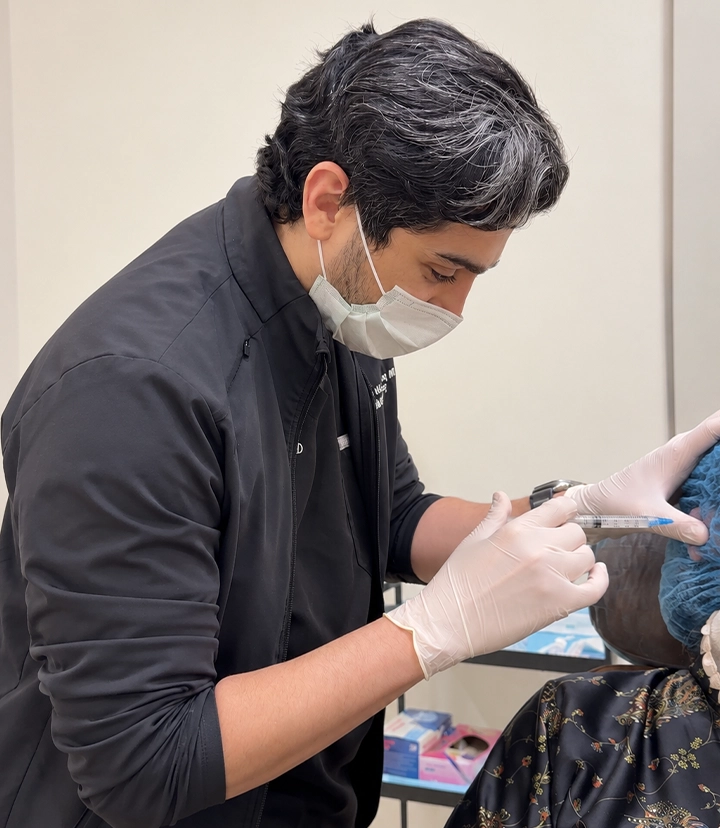
The prepared PRP can be administered using an appropriate technique based on the treatment plan.
Depending on the clinical objective, this may involve targeted injections or combination treatment with a procedure such as microneedling.
The treatment method should be selected according to the patient’s skin, treatment area, and goals.
Skin Remodeling Over Time
PRP is not intended to produce an instant structural transformation of the skin.
When improvement occurs, it generally develops progressively as the skin responds to treatment and remodeling processes take place.
Individual results can vary considerably.
PRP Injections vs. Microneedling With PRP
PRP and microneedling are related but are not the same treatment.
PRP refers to the biological preparation obtained from the patient’s blood, while microneedling is a procedure that creates controlled microscopic channels in the skin.
PRP Injections
With injectable PRP, the prepared platelet-rich plasma is administered into selected areas using an appropriate injection technique.
This approach may be considered when the treatment goal involves improving selected aspects of skin quality or facial aging.
Microneedling With PRP
Microneedling uses controlled microscopic punctures to stimulate a wound-healing and remodeling response in the skin.
PRP may be incorporated into a microneedling treatment plan when the clinical objective includes concerns such as uneven texture or selected acne-scar changes.
The two approaches should not automatically be considered interchangeable.
Which Approach Is Appropriate?
There is no single technique that is appropriate for every patient.
The choice can depend on:
- The condition being treated
- Skin type
- Treatment area
- Acne or scarring
- Skin texture
- Degree of skin aging
- Previous treatments
- Desired outcome
- Tolerance for downtime
A dermatologist can determine which approach is appropriate after assessing the skin.
Who May Be a Candidate for PRP Skin Rejuvenation?
PRP may be considered for adults who are seeking improvement in selected concerns such as:
- Fine lines
- Early signs of skin aging
- Uneven skin texture
- Reduced skin quality
- Mild loss of firmness
- Selected acne-scar changes
- Overall facial skin rejuvenation
Having one of these concerns does not automatically mean PRP is the right treatment.
A medical assessment is important because the same visible concern can have different underlying causes.
When PRP May Not Be the Right Treatment
PRP may not be the most appropriate option when another condition or concern requires a different treatment approach.
For example, patients with:
- Significant volume loss
- More pronounced skin laxity
- Active or uncontrolled acne
- Certain active skin infections or inflammatory conditions
- Deep structural scars
- Concerns better addressed by another dermatological procedure
may benefit from a different treatment or a combination approach.
The purpose of the consultation is to identify the treatment that best matches the actual skin concern, rather than choosing a procedure simply because it is popular.
PRP Skin Rejuvenation Consultation With Dr. Haitham
A personalized treatment plan begins with understanding your skin rather than selecting a procedure based only on a treatment name.
During the consultation, Dr. Haitham may assess:
- Skin type and condition
- Texture and elasticity
- Fine lines and wrinkles
- Acne and acne-scar changes
- Pore visibility
- Pigmentation and uneven tone
- Previous procedures
- Current skincare routine
- Medications and supplements
- Medical history
- Treatment goals
This assessment helps determine whether PRP is suitable, whether another procedure would be more appropriate, or whether a combination approach may provide a better fit for the patient’s concerns.
What to Expect Before PRP Treatment
Before your treatment, you will receive instructions based on your individual circumstances and the procedure being performed.
It is important to tell your dermatologist about:
- Prescription medications
- Over-the-counter medications
- Vitamins and supplements
- Previous cosmetic treatments
- Allergies or relevant medical conditions
- Any active skin problems
Do not stop prescribed medication on your own. If a medication or supplement may affect bleeding or bruising, your healthcare professional can advise you on what to do.
Your skin may also be assessed for factors that could influence treatment timing or recovery.
What to Expect During PRP Skin Rejuvenation
The exact experience depends on how PRP is being administered.
Generally, the process involves:
1. Skin preparation
The treatment area is cleansed and prepared.
2. Blood collection
A small blood sample is collected.
3. PRP preparation
The sample is processed to obtain the platelet-rich plasma.
4. PRP application
The prepared PRP is administered using the technique selected for your treatment plan.
5. Aftercare instructions
You receive instructions regarding skincare, sun protection, and activities following treatment.
A topical or local anesthetic may be considered when appropriate, particularly for procedures involving microneedling or injections.
PRP Skin Rejuvenation Recovery and Aftercare
Recovery varies from patient to patient and depends on how PRP is administered.
Temporary effects can include:
- Redness
- Mild swelling
- Bruising
- Tenderness
- Sensitivity
- Minor discomfort
These effects generally improve as the skin recovers.
After treatment, follow the specific instructions provided by your dermatologist.
General aftercare may include:
- Use gentle skincare products
- Avoid unnecessary irritation
- Protect the treated skin from excessive sun exposure
- Use sunscreen as advised
- Avoid picking or rubbing the treated area
- Follow instructions regarding active skincare ingredients
- Allow the skin to recover before undergoing additional procedures unless advised otherwise
If PRP is combined with microneedling or another procedure, the aftercare and recovery requirements may be different.
Is There Downtime After PRP?
Downtime varies according to the treatment technique and individual response.
PRP injections may cause temporary bruising, swelling, or redness at injection sites. When PRP is combined with microneedling, additional redness and sensitivity may occur.
Your expected recovery should be discussed before treatment rather than assuming that every PRP procedure has the same downtime.
When Will You See PRP Skin Rejuvenation Results?
PRP is generally associated with gradual rather than immediate changes.
Some patients may notice changes in skin appearance or texture as the skin recovers, while other improvements may take longer to develop.
The timing can depend on:
- PRP preparation
- Application technique
- Treatment area
- Number of treatments
- Skin condition
- Individual biological response
- Whether another treatment is performed at the same time
Clinical studies have reported potential improvements in facial skin texture, wrinkles, and other measures of skin quality, but results across studies are inconsistent and treatment protocols vary.
For that reason, it is better to discuss expected improvement in terms of individual response and treatment goals rather than promising a specific result by a particular date.
How Many PRP Skin Rejuvenation Sessions Are Needed?
There is no universal number of PRP sessions that applies to every patient.
The recommended treatment schedule depends on:
- Your skin condition
- The concern being treated
- Treatment technique
- Severity of the concern
- Whether PRP is combined with another procedure
- Your response to previous treatment
- Your treatment goals
Some patients may undergo a series of treatments, while others may have a different schedule based on their individual assessment.
The number and spacing of sessions should therefore be determined as part of a personalized treatment plan.
How Long Do PRP Skin Rejuvenation Results Last?
The duration of improvement varies between individuals.
PRP does not stop the natural aging process, and treatment results should not be considered permanent.
Skin continues to change with age, sun exposure, lifestyle, and other factors. Depending on the patient’s response and goals, maintenance treatment may be discussed.
Consistent skincare and sun protection remain important regardless of whether PRP is used.
Is PRP Skin Rejuvenation Safe?
PRP uses a preparation derived from the patient’s own blood, but that does not mean the procedure is completely risk-free.
PRP skin treatments can involve blood collection and, when injected, needle-based procedures. Potential temporary effects include:
- Bruising
- Redness
- Swelling
- Tenderness
- Discomfort
- Temporary sensitivity
As with other procedures that involve needles or skin penetration, infection and other complications are possible, although appropriate medical technique and sterile precautions are important for reducing risk.
Your medical history and medications should be reviewed before treatment to determine whether PRP is appropriate for you.
PRP Skin Rejuvenation vs. Other Skin Treatments
PRP is one option within a broader range of dermatological treatments. Different procedures work through different mechanisms and are suited to different concerns.
PRP vs. Microneedling
PRP is a platelet-rich preparation derived from blood, while microneedling is a mechanical procedure that creates controlled microscopic channels in the skin.
They can be used separately or combined depending on the treatment objective.
PRP vs. Chemical Peels
Chemical peels use selected chemical agents to produce controlled exfoliation or injury to targeted layers of skin.
They may be considered for concerns such as certain types of acne, pigmentation, or superficial texture irregularities.
PRP takes a different approach by using an autologous platelet-rich preparation.
PRP vs. Laser Skin Resurfacing
Laser treatments use controlled light or laser energy to target specific structures or layers of the skin.
Depending on the technology, lasers can address concerns such as texture, pigmentation, redness, photoaging, or acne scars.
PRP and laser treatments may sometimes be considered separately or in combination, depending on the patient’s condition.
PRP vs. Dermal Fillers
Dermal fillers are primarily used to restore or add volume and improve facial contour.
PRP does not function as a conventional volumizing filler. Its intended role in skin rejuvenation is related to biological signaling and tissue remodeling.
If the main concern is significant volume loss, a filler or another treatment may be more appropriate than PRP alone.
PRP Skin Rejuvenation Cost in Riyadh
The cost of PRP skin rejuvenation in Riyadh can vary because treatment plans are not identical for every patient.
Factors that may influence the overall cost include:
- Number of sessions
- Treatment area
- PRP preparation protocol
- Application technique
- Whether PRP is combined with microneedling
- Whether other procedures are included in the treatment plan
A consultation is the appropriate starting point for determining which treatment is suitable and what the recommended treatment plan will involve.
Frequently Asked Questions About PRP Skin Rejuvenation
PRP skin rejuvenation uses platelet-rich plasma prepared from a patient's own blood as part of a treatment intended to support skin remodeling and improve selected aspects of skin quality, such as texture and fine lines.
PRP contains platelets and signaling substances that may influence tissue-repair and remodeling processes. Clinical studies have reported potential improvements in skin texture and facial appearance, although outcomes vary and PRP preparation and treatment protocols are not standardized.
Yes. PRP is prepared from a sample of the patient's own blood. The sample is processed to separate and concentrate the platelet-rich plasma before it is used for treatment.
PRP may help improve the appearance of selected fine lines and other signs of facial skin aging. However, the degree of improvement varies, and PRP should not be presented as a permanent solution to wrinkles.
PRP has been studied for acne scars and may be used alone or alongside procedures such as microneedling or laser treatment. The most appropriate approach depends on the type, depth, and characteristics of the scars.
PRP and microneedling are different treatments, so one should not automatically be considered better than the other. PRP is a platelet-rich biological preparation, while microneedling is a procedure that creates controlled microscopic channels in the skin. They may sometimes be combined.
Yes, PRP can be used alongside microneedling in selected treatment plans. The combination may be considered when the treatment goal includes improving skin texture or certain acne-scar changes.
There is no fixed number of sessions for everyone. The treatment schedule depends on your skin condition, treatment goals, technique, and individual response.
Results are generally gradual rather than immediate. The timing varies according to the treatment protocol and individual response, and improvements related to skin remodeling may develop over time.
The cost varies according to the treatment plan, number of sessions, treatment area, preparation method, and whether PRP is combined with another procedure. The recommended treatment and associated cost can be discussed during your consultation.
PRP Skin Rejuvenation in Riyadh With Dr. Haitham Al-Gzlan
PRP skin rejuvenation is not simply about injecting platelet-rich plasma. The more important question is whether PRP is appropriate for your specific skin concern, and which treatment approach is most suitable.
Dr. Haitham Al-Gzlan provides dermatologist-led assessment and personalized treatment planning in Riyadh. Your skin condition, treatment goals, medical history, and previous treatments can all be considered before deciding whether PRP should be used alone or as part of a broader skin-rejuvenation plan.
If you are considering PRP for fine lines, uneven texture, acne-scar changes, reduced skin quality, or other signs of facial aging, a consultation can help determine whether PRP is an appropriate option for you.
Book a consultation with Dr. Haitham Al-Gzlan in Riyadh to discuss PRP skin rejuvenation and develop a treatment plan based on your skin and individual goals.