
Fractional CO2 Laser Treatment in Riyadh – Expert Care by Dr. Haitham Al-Gzlan
Fractional CO2 laser treatment in Riyadh is an advanced skin resurfacing option for acne scars, wrinkles, enlarged pores, uneven texture, and selected signs of sun damage. The treatment uses controlled CO2 laser energy to create microscopic treatment zones while leaving surrounding skin available to support healing. This controlled resurfacing encourages skin renewal, collagen production, and gradual collagen remodeling beneath the surface. Dr. Haitham Al-Gzlan personalizes treatment depth, laser energy, and settings according to your skin type, concern, scar characteristics, and expected downtime. His laser portfolio includes UltraPulse CO2 technology for deeper fractional resurfacing when clinically appropriate. The goal is smoother, more even-looking skin while balancing treatment intensity with safe recovery.
What Is Fractional CO2 Laser?
Fractional CO2 laser is an ablative laser skin resurfacing treatment that uses carbon dioxide laser energy at a wavelength strongly absorbed by water in the skin. Unlike traditional fully ablative CO2 resurfacing, fractional technology creates microscopic columns of controlled treatment while leaving bridges of surrounding skin intact. These microthermal treatment zones trigger a healing response that promotes skin regeneration and new collagen formation. The treatment can address problems involving both the surface and deeper structure of the skin, including scars, wrinkles, texture irregularities, and selected pigmentation concerns. Treatment depth and energy can be adjusted according to the condition being treated and the patient’s skin type. This customization is especially important when performing fractional laser treatment on darker or pigmentation-prone skin.
What Does Fractional CO2 Laser Treat?
Fractional CO2 laser treatment can address several concerns involving skin texture, scarring, photoaging, and collagen loss. Its resurfacing action removes microscopic areas of damaged skin while thermal energy within the dermis stimulates collagen remodeling. Common indications include atrophic acne scars, surgical scars, fine lines, enlarged pores, rough texture, and selected forms of sun damage. Fractional CO2 may also be considered for stretch marks, mild skin laxity, and specific pigmentation concerns after dermatological assessment. Results vary because different skin conditions and scar types respond differently to laser resurfacing. Dr. Haitham therefore assesses the condition first before deciding whether CO2 laser treatment or another technology is more appropriate.
Acne Scars – Icepick, Boxcar and Rolling Scars
Fractional laser treatment for acne scars works by creating controlled microscopic injury that stimulates collagen remodeling within scarred skin. Boxcar and rolling scars may respond particularly well when resurfacing is matched to scar depth, while deep icepick scars often require a different or combined treatment approach. Some patients may benefit from combining fractional CO2 laser with procedures such as subcision, punch techniques, microneedling, or other scar-specific treatments. Active acne should usually be controlled before aggressive acne scar resurfacing is considered. The number of fractional laser sessions depends on scar type, depth, distribution, skin type, and response to previous treatment. Dr. Haitham assesses each scar pattern rather than treating every acne scar with identical laser settings.
Surgical or Traumatic Scars
Fractional CO2 laser may help improve the texture and appearance of selected surgical or traumatic scars through controlled resurfacing and collagen remodeling. Scar treatment depends on characteristics such as age, thickness, color, depth, location, and whether the scar is raised or depressed. Laser energy can be adjusted to create microscopic treatment zones within and around the scar while preserving surrounding tissue. Improvement usually develops gradually as the skin heals and collagen organization changes. Some scars respond better to a combination of laser treatment and other dermatological techniques. A scar assessment helps determine whether a fractional CO2 laser is suitable and what level of improvement can realistically be expected.
Fine Lines and Wrinkles
Fractional CO2 laser resurfacing may improve fine lines and selected wrinkles by treating damaged surface skin while stimulating collagen within deeper layers. Areas around the eyes, mouth, forehead, and cheeks can show textural improvement as the skin heals and remodels. Thermal energy generated by the CO2 laser can produce collagen contraction followed by longer-term collagen renewal. The treatment is particularly useful when wrinkles occur alongside rough texture or photoaging. Very deep folds or significant facial laxity may require a different or combined treatment approach. Dr. Haitham adjusts treatment intensity according to skin thickness, location, skin type, and desired recovery period.
Sun Damage and Age Spots
Years of sun exposure can produce uneven pigmentation, rough texture, fine lines, and other visible signs of photodamage. Fractional CO2 laser resurfacing removes microscopic areas of damaged surface skin and encourages healthier skin renewal. This may improve the overall appearance of photodamaged skin while collagen remodeling addresses accompanying texture changes. However, not every brown spot or pigmented lesion should be treated with a CO2 laser without diagnosis. Some pigmentation concerns respond better to pigment-specific technologies such as PicoWay or IPL. Dr. Haitham examines the pigmentation pattern before determining which laser treatment is appropriate.
Hyperpigmentation and Uneven Skin Tone
Fractional CO2 laser can improve selected pigmentation associated with photoaging or surface irregularity, but it is not the ideal treatment for every form of hyperpigmentation. Conditions such as melasma and post-inflammatory hyperpigmentation require careful diagnosis because excessive laser-induced inflammation can sometimes worsen pigmentation. This is particularly relevant in Middle Eastern and darker skin types that may have a greater tendency toward pigment changes after inflammation. Lower treatment density, careful energy selection, appropriate skin preparation, and strict sun protection may reduce risk in suitable patients. Alternative treatments such as PicoWay, IPL, topical therapy, or combination protocols may sometimes be preferable. Dr. Haitham selects treatment according to the cause of the discoloration rather than treating every pigmentation problem with the same fractional laser.
Enlarged Pores and Rough Texture
Enlarged pores can become more noticeable when skin texture becomes irregular or collagen support decreases. Fractional laser treatment for the face may improve the appearance of pores by stimulating skin renewal and collagen remodeling around the treated areas. As the skin heals, the surface can gradually appear smoother and more refined. Treatment is also useful when enlarged pores occur alongside acne scars, rough texture, or early signs of photoaging. The degree of improvement varies because pore visibility is influenced by genetics, oil production, skin structure, and previous acne. A personalized treatment plan may combine resurfacing with skincare or other procedures when several factors contribute to uneven texture.
Skin Tightening and Mild Laxity
Fractional CO2 laser creates controlled thermal effects within the dermis that can support collagen contraction and subsequent collagen remodeling. This may produce a mild tightening effect while improving surface texture and fine lines. It is most appropriate when skin laxity is mild and occurs alongside other resurfacing concerns. Significant sagging skin cannot usually be corrected by a fractional laser in the same way as surgery or deeper energy-based tightening procedures. Technologies such as radiofrequency or focused ultrasound may be considered when deeper tissue laxity is the primary concern. Dr. Haitham evaluates both the skin surface and deeper support structures before recommending treatment.
Stretch Marks – Striae
Fractional CO2 laser for stretch marks may help improve texture by creating controlled microscopic injury within affected skin. The healing response encourages new collagen formation and remodeling within the striae. Results depend on the age, color, depth, location, and width of the stretch marks, with no treatment expected to erase them completely. More than one treatment session is often required to achieve progressive improvement. Pigmentation risk must also be considered carefully in darker skin types or body areas prone to post-inflammatory hyperpigmentation. Dr. Haitham assesses whether fractional laser resurfacing or another treatment approach is appropriate for the individual stretch marks.
Dull Skin Texture and Loss of Radiance
Dull-looking skin can result from rough surface texture, sun damage, uneven pigmentation, or slower skin renewal. Fractional CO2 laser resurfacing removes microscopic columns of damaged tissue and encourages a controlled regeneration process. As healing progresses, the skin may look smoother, more even, and refreshed. Collagen stimulation can also improve underlying texture over the following months. Because fractional CO2 is an ablative procedure with meaningful downtime, it is not necessary for every person seeking a simple glow treatment. Gentler technologies may be recommended when the concern is mild and does not require deep resurfacing.
Selected Actinic Keratoses After Dermatologic Assessment
Actinic keratoses are sun-related precancerous skin lesions and should first be evaluated by a dermatologist rather than treated as a routine cosmetic pigmentation concern. Ablative and fractional CO2 laser techniques have been studied for selected actinic keratoses, including as an adjunct to treatments such as photodynamic therapy. However, suspicious lesions may require dermoscopy, biopsy, or another established medical treatment before resurfacing is considered. The choice depends on lesion type, number, location, skin condition, and the possibility of skin cancer. Cosmetic laser treatment should never replace appropriate diagnosis of a changing or suspicious lesion. Dr. Haitham evaluates these lesions medically before recommending any laser-based approach.
How Fractional CO2 Helps Enlarged Pores and Uneven Skin Texture
Fractional laser resurfacing is especially useful when enlarged pores occur together with rough texture, acne scarring, or early photoaging. The CO2 laser creates controlled microscopic channels through the skin that initiate renewal without treating the entire surface uniformly. During healing, new collagen and extracellular matrix remodeling can improve structural support around irregular areas. The surface gradually becomes smoother as damaged tissue is replaced and collagen organization improves. Results develop progressively rather than immediately because biological remodeling continues after the visible recovery period. Treatment depth and density are adjusted according to pore severity, texture, skin type, and tolerance for downtime.
Targeted Zones: Where Fractional CO2 Laser Can Be Used
Fractional CO2 laser can be applied to specific zones or used for broader resurfacing depending on the concern being treated. Common treatment areas include the face, forehead, temples, areas around the eyes and mouth, and selected scars on the body. The neck, décolletage, and hands require more conservative treatment because healing characteristics differ from facial skin. Body scars and stretch marks may also be treated using settings adapted to skin thickness and location. Not every anatomical area should receive the same depth or density of laser energy. Dr. Haitham maps the treatment area and selects settings according to the skin’s structure and the clinical objective.
Full-Face Resurfacing
Full-face fractional CO2 laser treatment may be considered when acne scars, wrinkles, rough texture, pores, or photoaging affect several facial areas. Treating the face as a complete aesthetic unit can create more consistent texture than targeting isolated patches in suitable patients. Laser depth and density may still vary across different facial zones because skin thickness is not uniform. Areas around the eyes and mouth, for example, require different handling from the cheeks or forehead. Recovery can be more noticeable after full-face resurfacing than after small-area treatment. Dr. Haitham customizes the treatment map according to facial anatomy, skin type, and primary concern.
Perioral Area – Around the Mouth
The skin around the mouth commonly develops fine vertical lines, texture changes, and signs of photoaging. Fractional CO2 laser resurfacing can create controlled skin renewal while stimulating collagen beneath these wrinkles. The treatment depth is selected carefully because the perioral region is highly mobile and requires balanced resurfacing. Patients with a history of cold sores should disclose this during consultation because laser resurfacing around the mouth can reactivate herpes simplex. Preventive antiviral medication may be prescribed when medically appropriate. The treatment plan considers wrinkle depth, skin quality, pigmentation risk, and any previous filler or aesthetic procedures.
Periorbital Area – Around the Eyes
Fine lines and crepey texture around the eyes may respond to carefully controlled fractional CO2 laser treatment. The skin in this area is thinner than many other facial regions, making precise energy selection particularly important. Fractional resurfacing can stimulate collagen remodeling while improving selected surface irregularities. Significant eyelid laxity, deep folds, or under-eye volume loss may require different treatments because resurfacing alone cannot correct every concern. Appropriate eye protection is essential whenever laser energy is used near the eyes. Dr. Haitham determines whether periorbital CO2 resurfacing is suitable after examining the eyelid area and surrounding skin.
Forehead and Temples
Fractional CO2 laser can be used on the forehead and temples for texture, fine lines, selected acne scars, and sun-related skin changes. Treatment settings are chosen according to skin thickness and the depth of the condition being targeted. Acne scarring around the temples may require a scar-specific strategy rather than uniform resurfacing. Expression lines caused primarily by muscle activity may also need a different treatment approach, such as neuromodulators, rather than relying on laser alone. The goal is to treat structural skin concerns without unnecessarily aggressive laser exposure. Dr. Haitham evaluates whether fractional resurfacing should be used alone or within a combined rejuvenation plan.
Neck and Décolletage
Fractional CO2 treatment on the neck and décolletage may be considered for selected wrinkles, sun damage, texture irregularities, and scars. These areas do not heal exactly like facial skin and contain fewer pilosebaceous structures that support re-epithelialization. Treatment therefore generally requires more cautious energy and density settings. Aggressive resurfacing can increase the risk of prolonged healing, pigment changes, and scarring. Alternative technologies may sometimes provide a better balance of improvement and recovery for skin laxity or pigmentation in these areas. Dr. Haitham evaluates the skin carefully before recommending fractional CO2 laser for the neck or chest.
Hands – Sun Damage and Wrinkles
The backs of the hands can show sun spots, textural changes, fine lines, and visible signs of photoaging. Fractional laser resurfacing may improve selected surface damage and stimulate skin renewal when the patient is an appropriate candidate. Hand skin requires careful treatment because healing characteristics differ from those of facial skin. Pigmentation, skin thickness, sun exposure, and previous procedures are considered when choosing laser settings. Some dark spots may respond better to a pigment-specific laser rather than ablative resurfacing. Treatment is therefore selected according to whether the main concern is pigmentation, texture, wrinkles, or a combination.
Body Scars and Stretch Marks
Fractional CO2 laser can be used on selected body scars and stretch marks to support collagen remodeling and improve textural irregularity. Treatment settings must account for the thickness of the skin, scar depth, anatomical location, and pigmentation risk. Surgical and traumatic scars may require a different approach from striae because their underlying structure is different. Several sessions may be needed, and complete scar removal should not be expected. Body areas can also heal differently from the face, so recovery instructions must be followed carefully. Dr. Haitham develops the treatment plan after assessing the individual scar rather than applying standard settings to every body area.
Benefits of Fractional CO2 Laser
Fractional CO2 laser benefits include improvement in acne scars, rough texture, enlarged pores, fine lines, and selected forms of photoaging. Because the laser treats microscopic fractions of skin rather than uniformly ablating the entire surface, surrounding untreated tissue helps support healing. The thermal effect also stimulates collagen production and remodeling beneath the resurfaced skin. Treatment depth can be customized, allowing the dermatologist to balance expected improvement with recovery and pigmentation risk. Results can continue developing after the visible healing phase as collagen remodeling progresses. Fractional CO2 laser is therefore a versatile option when deeper resurfacing is clinically appropriate.
Ideal Candidates for Fractional CO2 Laser
Suitable candidates often have atrophic acne scars, textural irregularities, fine lines, enlarged pores, selected sun damage, or other concerns that may benefit from ablative resurfacing. Candidates should be able to follow post-treatment wound care and strict sun protection during recovery. Active acne should generally be controlled before deeper acne scar resurfacing is performed. Patients should also understand that redness, swelling, peeling, crusting, or temporary pigmentation changes can occur after treatment. Skin type, tendency toward hyperpigmentation, scar history, medications, and previous procedures all influence suitability. A dermatology consultation is therefore necessary before deciding whether fractional CO2 is appropriate.
Who May Not Be an Ideal Candidate for Fractional CO2 Laser?
Fractional CO2 laser may need to be postponed in people with active skin infection, open wounds, active inflammatory acne, or herpes in the treatment area. Pregnancy, breastfeeding, impaired wound healing, immune suppression, connective-tissue disorders, or a strong tendency toward abnormal scarring may also affect treatment suitability. Recent isotretinoin use should be discussed with the dermatologist because timing and individual risk require medical assessment. Patients with darker skin are not automatically excluded, but they may face a greater risk of post-inflammatory pigmentation and require carefully selected treatment parameters. Recent tanning or significant sun exposure can also increase the risk of complications. Dr. Haitham reviews medical history and skin condition before deciding whether treatment should proceed, be modified, or be replaced by another option.
Pre-Care Guide for Fractional CO2 Laser
Preparation begins with protecting the skin from tanning and significant sun exposure before fractional CO2 laser treatment. Use broad-spectrum sunscreen consistently and follow any skincare preparation prescribed by Dr. Haitham for your particular skin type. Inform the clinic about prescription medicines, supplements, photosensitizing medications, previous isotretinoin use, and any history of cold sores or herpes. Do not stop prescribed medication independently; any adjustment should be made only after appropriate medical advice. Strong peels, aggressive resurfacing procedures, and irritating skincare ingredients may need to be paused before treatment depending on your protocol. Arrive with clean skin and notify the clinic if an infection, active acne flare, rash, or new skin problem develops before your appointment.
Step-by-Step Fractional CO2 Laser Procedure
Fractional CO2 treatment begins with skin assessment and planning rather than using identical laser settings for every patient. Treatment depth, density, energy, and number of passes depend on the condition, anatomical area, skin type, and desired recovery profile. The skin is cleansed thoroughly and a topical anesthetic is commonly used to improve comfort before treatment begins. Fractional CO2 energy is then delivered through controlled passes that create microscopic treatment columns. Cooling or soothing measures may be used immediately afterward while the expected wound response begins. Before leaving, you receive detailed post-treatment care instructions designed to support healing and reduce complications.
Step 1: Comprehensive Consultation and Skin Assessment
Your consultation begins with identifying whether the main concern is acne scarring, pigmentation, wrinkles, pores, sun damage, or another texture problem. Dr. Haitham assesses skin type, scar morphology, pigmentation tendency, previous treatments, and relevant medical history. Acne scars may be classified into icepick, boxcar, rolling, or mixed patterns because different scar structures require different treatment strategies. Photographs may be taken to establish a consistent baseline for future comparison. The consultation also covers expected recovery, possible side effects, treatment sessions, and realistic outcomes. This assessment determines whether fractional CO2 laser is appropriate or whether another technology would better suit the concern.
Step 2: Personalized Treatment Plan and Settings
Fractional laser treatment is customized according to treatment depth, laser energy, density, and the number of passes required. Deeper acne scars may require different parameters from fine lines or superficial texture irregularities. Skin type and pigmentation history are particularly important because stronger settings can increase inflammation and post-inflammatory hyperpigmentation. Different facial zones may also receive different settings based on skin thickness and sensitivity. The aim is not to use the strongest available setting but to deliver enough energy to produce an appropriate biological response. Dr. Haitham builds the treatment protocol around the individual rather than using one standard CO2 setting.
Step 3: Skin Cleansing and Numbing Cream
Before fractional CO2 laser treatment, makeup, sunscreen, oil, and surface impurities are removed from the treatment area. The skin is then cleansed using an appropriate preparation to reduce contamination. A topical numbing cream may be applied and allowed sufficient time to reduce treatment-related discomfort. The required numbing period varies according to the area and treatment intensity rather than following an exact time for every patient. Additional comfort measures may be used when deeper treatment is planned. The laser procedure begins only after the skin has been prepared and the treatment parameters have been confirmed.
Step 4: Fractional CO2 Laser Application
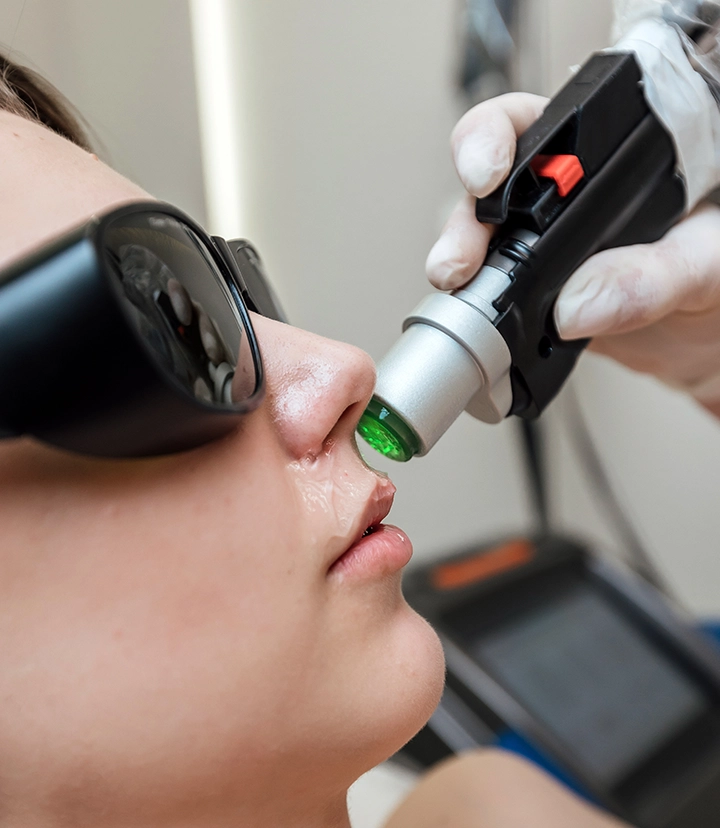
During treatment, the fractional CO2 laser machine delivers controlled energy in a grid of microscopic treatment zones. Laser energy is absorbed by water in the skin, producing precise ablation and controlled thermal effects within the selected depth. Surrounding untreated tissue remains between these columns and helps support the healing process. Dr. Haitham adjusts passes, density, and energy according to scar depth, treatment area, skin type, and treatment goal. Patients may feel warmth, prickling, or brief discomfort despite topical anesthesia. Treatment time depends on whether a small area, individual scars, or the full face is being resurfaced.
Step 5: Cooling and Soothing Post-Laser Care
After the laser passes are completed, the skin usually appears red and may feel warm or similar to a strong sunburn. Cooling measures can be used to reduce heat and improve comfort immediately after treatment. An appropriate soothing or protective product may also be applied according to the resurfacing depth and clinic protocol. Mild swelling can begin during the first several hours and may become more noticeable the following day. The skin barrier is temporarily disrupted, so unnecessary touching and unapproved skincare should be avoided. Patients receive instructions on cleansing, moisturizing, wound care, and sun avoidance before leaving.
Step 6: Aftercare Instructions and Follow-Up Plan
Aftercare is an essential part of fractional laser treatment because healing quality influences both results and the risk of complications. You will receive instructions on gentle cleansing, barrier protection, moisturizing, sun avoidance, and when normal skincare can be restarted. The clinic will also explain what level of redness, swelling, peeling, crusting, or itching is expected. You should know which symptoms require earlier medical review, including worsening pain, unusual discharge, spreading redness, blisters, or signs of infection. Follow-up timing depends on treatment intensity and the concern being addressed. Additional treatment sessions are considered only after the skin response and previous results have been assessed.
Downtime and Fractional CO2 Results Timeline
Fractional CO2 laser has meaningful downtime because it is an ablative resurfacing procedure, although fractional delivery generally allows faster recovery than traditional fully ablative CO2 resurfacing. During the first several days, redness, warmth, swelling, dryness, oozing, or crusting can occur depending on treatment intensity. Peeling and flaking often develop as the skin re-epithelializes, with many fractional treatments requiring roughly a week or more before normal social activities feel comfortable. Residual pinkness can persist longer even after the surface has healed. Skin texture may begin looking better after recovery, while collagen production and remodeling continue for several months. The exact timeline depends heavily on treatment depth, density, area, skin type, and individual healing.
Days 1–3: Redness, Swelling and Early Healing
The first few days are usually the most active stage of fractional laser recovery. The treated skin may appear red, swollen, warm, and sensitive, with varying degrees of clear oozing or pinpoint crusting after deeper resurfacing. Swelling may be most noticeable around the eyes when the upper face is treated. Gentle cleansing and prescribed barrier care help protect the newly treated skin during this period. Picking, scratching, or using active skincare ingredients can interfere with healing. Patients should follow the specific wound-care plan provided by Dr. Haitham rather than applying unapproved products.
Days 4–7: Peeling, Flaking and Skin Renewal
As healing progresses, the surface may become dry, rough, flaky, or mildly itchy. Tiny crusts or bronzing can gradually shed as new epidermal tissue develops underneath. The skin should be allowed to peel naturally rather than being scrubbed or exfoliated. Redness may still be visible even after most flaking has resolved. Strict sun avoidance remains important because freshly resurfaced skin is more vulnerable to pigmentation changes. Recovery can extend beyond seven days when stronger laser settings or deeper treatment are used.
Weeks 2–4: Redness Continues to Settle
Once the skin barrier has healed, most patients notice that roughness and peeling have significantly improved. Residual pinkness or redness can remain and may be more noticeable after heat, exercise, or irritation. Makeup can generally be considered only after adequate re-epithelialization and when Dr. Haitham confirms the skin is ready. Pigmentation-prone patients should continue particularly careful sun protection during this stage. Early improvements in surface texture may become easier to see as inflammation settles. Collagen remodeling continues beneath the skin even though the visible recovery is largely complete.
Months 1–3: Collagen Remodeling Continues
Fractional CO2 laser results do not stop developing when the skin finishes peeling. Controlled thermal injury stimulates fibroblast activity and collagen remodeling within the dermis over the following months. Acne scars and fine lines may gradually soften as the tissue architecture changes. Skin texture and firmness may also continue improving during this period. Some patients will require additional sessions, particularly when acne scars are deeper or more extensive. The decision to repeat treatment should be based on skin recovery and clinical response rather than a fixed schedule.
Months 3–6: Progressive Results Become Clearer
By three to six months, a substantial portion of collagen remodeling from the treatment has taken place, making longer-term changes easier to assess. Acne scars may appear shallower, wrinkles softer, and overall skin texture more even depending on the original concern. Results vary widely because treatment depth, skin biology, scar type, and number of sessions all influence the outcome. Some collagen-related improvement can continue beyond this period. Before-and-after photographs taken under consistent lighting can help evaluate changes more accurately than memory alone. Dr. Haitham can then determine whether further fractional CO2 treatment or another complementary procedure is appropriate.
Aftercare That Protects Your Fractional CO2 Laser Result
Fractional laser aftercare focuses on protecting the healing skin barrier, preventing infection, and reducing avoidable inflammation. Clean the treated skin only as instructed and use the recommended protective moisturizer or wound-care product until the surface has healed. Avoid picking crusts, exfoliating flakes, applying retinoids, acids, or other irritating active ingredients before the skin is ready. Direct sun exposure should be minimized, and broad-spectrum sunscreen becomes essential once appropriate for the healing stage. Excess heat, strenuous exercise, saunas, and other activities that increase flushing may need to be limited temporarily depending on treatment intensity. Contact the clinic if you notice worsening pain, spreading redness, unusual discharge, blistering, or another unexpected change.
Why Choose Dr. Haitham Al-Gzlan for Fractional CO2 Laser in Riyadh?
Dr. Haitham Al-Gzlan is a Consultant Dermatologist and Aesthetic Physician in Riyadh with a clinical focus that includes laser dermatology, acne scars, pigmentation, texture, and skin rejuvenation. His current technology portfolio includes UltraPulse CO2 alongside other laser and energy-based systems, allowing treatment selection to begin with the skin concern rather than the device name. Fractional CO2 settings can be personalized according to skin type, scar depth, pigmentation risk, and expected downtime. This is particularly important for Saudi and Middle Eastern skin, where careful treatment planning can help reduce unwanted pigmentary changes. Dr. Haitham can also combine or sequence fractional resurfacing with other scar and skin treatments when one procedure alone is unlikely to address the full concern. The overall approach focuses on dermatologist-led assessment, individualized settings, realistic expectations, and structured follow-up care.
Schedule a Fractional CO2 Laser Consultation in Riyadh
Choosing the right laser treatment starts with identifying the condition rather than selecting a fractional laser machine from a treatment menu. Dr. Haitham assesses acne scars, pores, pigmentation, wrinkles, texture changes, and other skin concerns before deciding whether fractional CO2 resurfacing is appropriate. Your consultation includes review of skin type, medical history, previous procedures, pigmentation tendency, and expected downtime. Alternative technologies can be discussed when a gentler laser, pigment-specific treatment, radiofrequency procedure, or combined strategy may offer a better fit. You will also receive realistic information about treatment sessions, recovery, possible risks, and expected improvement. Book a consultation in Riyadh to develop a personalized skin resurfacing plan based on your individual needs.
Fractional CO2 Laser Treatment FAQs
Fractional CO2 laser can significantly improve selected atrophic acne scars, but it cannot guarantee complete scar removal. Boxcar and rolling scars often respond better than very deep icepick scars, which may require combination treatment.
A topical anesthetic is commonly used to reduce discomfort before treatment. Patients may still experience heat, prickling, or temporary stinging depending on the treatment depth and area.
Yes, selected darker skin types can undergo fractional CO2 treatment, but the risk of post-inflammatory hyperpigmentation requires careful assessment and customized settings. Experience treating pigmentation-prone and Middle Eastern skin is particularly important.
Not every fractional laser or treatment setting is appropriate for every skin type. The dermatologist should consider skin tone, pigmentation tendency, medical history, concern, and desired downtime before selecting a laser.
There is no single cosmetic age at which everyone should start fractional CO2 treatment. Suitability depends more on the skin condition, medical history, treatment indication, and ability to follow appropriate aftercare.
Makeup should not be applied while the skin remains open, crusted, or incompletely healed. Dr. Haitham can advise when re-epithelialization is adequate and makeup can safely be restarted.
The number of sessions depends on scar depth, skin concern, laser settings, and individual response. Some patients may benefit from one intensive session, while acne scars commonly require a series or combined treatment approach.
Visible recovery commonly lasts around one week or longer depending on treatment intensity, with residual redness potentially continuing beyond surface healing. Deeper resurfacing generally involves more downtime than lighter fractional treatment.
Fractional CO2 is an established resurfacing option for atrophic acne scars because it supports collagen remodeling and structural skin renewal. The best approach depends on whether the scars are rolling, boxcar, icepick, or mixed.
Fractional resurfacing may reduce the visible appearance of enlarged pores by improving surrounding texture and collagen support. Results vary because pore size is also influenced by genetics, oil production, and skin structure.
Fractional CO2 laser may improve the texture and appearance of selected stretch marks by encouraging collagen remodeling. Multiple sessions may be required, and complete removal of striae should not be expected.
It can improve selected pigmentation associated with surface damage, but it is not appropriate for every pigmentation disorder. Melasma and pigmentation-prone skin require particularly careful assessment because CO2 treatment can also trigger PIH.
Expected temporary effects can include redness, swelling, warmth, peeling, crusting, itching, and tenderness. Less common risks include infection, prolonged redness, hyperpigmentation, hypopigmentation, herpes reactivation, and scarring.
Surface texture may begin improving after the skin heals, while collagen-related changes continue developing over several months. Acne scars and wrinkles are therefore best assessed after sufficient remodeling time has passed.
Fractional CO2 can be considered for selected Middle Eastern skin types when treatment parameters are carefully customized. Skin type, tanning, pigmentation history, laser density, energy, and aftercare all influence safety.
Traditional fully ablative CO2 resurfacing treats the entire skin surface within the selected area, while fractional CO2 creates separated microscopic treatment zones. Leaving surrounding skin untreated generally supports faster healing than full-field ablation.
Thermal effects from CO2 resurfacing can stimulate collagen contraction and remodeling, producing mild tightening in suitable patients. It should not be considered a replacement for surgery when significant skin laxity is present.
Direct sun exposure should be minimized during healing because UV exposure can increase inflammation and pigmentation risk. Strict sun protection remains important after the skin has re-epithelialized.
Yes, combination treatment may be useful when different scar types are present. Procedures such as subcision or other scar-specific techniques may address structural problems that laser resurfacing alone cannot fully correct.
Fractional CO2 laser cost in Riyadh varies according to the treatment area, scar severity, session intensity, and number of treatments required. An accurate price can be provided after skin assessment and treatment planning.
Ready to Book Your Fractional CO2 Laser Appointment in Riyadh?
If acne scars, enlarged pores, rough texture, wrinkles, or sun-related skin changes are affecting your skin, fractional CO2 laser may be one treatment option worth considering. Dr. Haitham Al-Gzlan assesses your skin type, concern, scar characteristics, pigmentation risk, and previous treatment history before recommending resurfacing. When fractional CO2 is appropriate, treatment depth and laser settings are personalized rather than applying one standard protocol to every patient. Other technologies or combination treatments can also be considered when they provide a better match for the underlying condition. Your consultation will cover expected results, recovery, post-treatment care, risks, and the likely number of sessions. Book your fractional CO2 laser consultation in Riyadh to receive an individualized treatment plan.