
Facial Harmonization in Riyadh – By
Dr. Haitham Al-Gzlan
Facial harmony is not determined by one feature alone. The appearance of the cheeks, chin, jawline, lips, eyes, temples and overall facial profile can influence how the face is perceived as a whole.
Facial harmonization is a personalized approach to facial aesthetics that considers facial proportions, symmetry, anatomy, volume distribution, muscle movement, skin quality and the relationship between different facial features before deciding whether treatment is appropriate.
For patients considering facial harmonization in Riyadh, the goal is not to change the identity of the face or follow one fixed definition of beauty. Instead, a thorough assessment can help identify which features may contribute to an individual’s concerns and whether a measured aesthetic treatment could improve overall facial balance.
What Is Facial Harmonization?
Facial harmonization is an approach to aesthetic assessment and treatment planning that looks at the face as an interconnected structure rather than treating every feature separately.
A concern that appears to involve one area may be influenced by surrounding structures. For example, the perceived balance of the lower face can be affected by the relationship between the chin, lips and jawline, while cheek and midface structure can influence the appearance of the central face.
Depending on the assessment, facial harmonization may involve one treatment, several complementary treatments, or no procedure at all.
Possible treatment approaches can include dermal fillers, neuromodulators and selected skin or collagen-stimulating treatments when clinically appropriate.
The important distinction is that facial harmonization is not a single procedure or fixed treatment package. It is a way of evaluating facial relationships and developing an individualized plan.
Facial Harmony: Understanding Proportion, Balance and Symmetry
Facial aesthetics involves more than the size of individual features. Proportion, projection, symmetry and the relationships between facial structures all contribute to the overall appearance of the face.
Facial Proportions and Facial Thirds
Facial analysis may consider the upper, middle and lower thirds of the face as reference areas.
The upper third includes the forehead and brow region. The middle third extends around the eyes, nose and midface, while the lower third includes the area from the base of the nose through the lips and chin.
These divisions can help organize facial assessment, but they should not be treated as rigid formulas for attractiveness. Facial anatomy varies between individuals, and factors such as age, sex, ethnicity, skeletal structure and personal aesthetic preferences can influence what appears balanced.
Research on facial proportions also highlights differences between populations and demographic groups, reinforcing the importance of individualized assessment rather than applying one universal facial standard.
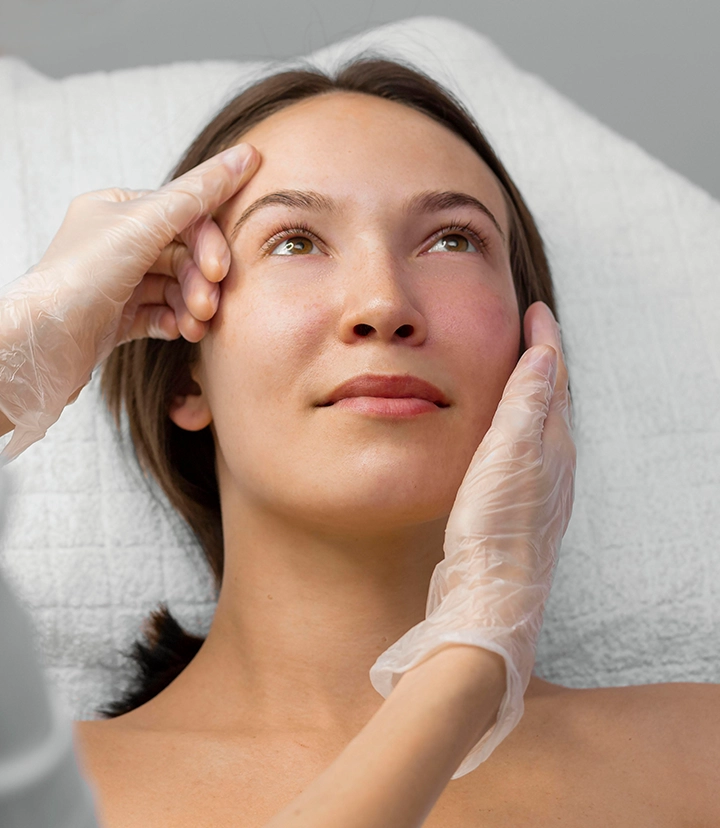
Facial Symmetry and Natural Variation
Some degree of facial asymmetry is normal. The two sides of a person’s face are rarely identical, and small differences may be part of an individual’s natural appearance.
For aesthetic planning, the objective is therefore not necessarily to create perfect symmetry. Instead, the assessment should consider whether a particular asymmetry is noticeable, whether it contributes to the patient’s concern and whether treatment is appropriate.
Recent research also demonstrates that measurable facial asymmetry can be common even when people do not perceive it in the same way, which highlights the importance of discussing expectations during consultation.
Why Facial Features Need to Be Considered Together
Facial features influence how surrounding areas are perceived.
The position of the chin, for example, contributes to facial profile and lower-face balance. Cheek structure can influence midface contour, while the relationship between the lips, chin and jawline can affect the appearance of the lower face.
This is why facial harmonization focuses on relationships between features, rather than automatically treating isolated lines or individual areas.
How Facial Features Work Together
A full-face assessment may consider different facial regions and how they interact.
Cheeks and the Midface
The cheeks and midface contribute to facial contour and volume distribution.
Assessment may consider cheek projection, midface volume, the transition between the under-eye area and cheek, and how these structures relate to the lower face.
Where volume loss or reduced definition is clinically relevant, an appropriate treatment may be considered. However, not every change in cheek appearance requires added volume.
Chin and Jawline
The chin plays an important role in lower-face proportion and facial profile.
Assessment may consider:
- Chin projection
- Chin width and shape
- Jawline definition
- Relationship between the chin and lips
- Relationship between the chin and nose
- Soft-tissue distribution around the lower face
The chin is recognized as an important component of facial harmony and should be considered as part of an overall facial assessment rather than viewed in isolation.
Lips and Lower-Face Proportions
The lips are another component of facial balance.
A facial assessment may consider lip volume, projection, shape and their relationship with the chin and surrounding lower-face structures.
Lip enhancement should therefore be considered in the context of the overall face rather than simply increasing volume.
Facial Profile and the Nose–Chin Relationship
A person’s profile can provide information that may not be apparent from a frontal view.
The relationship between the nose, lips and chin can influence the appearance of facial projection and lower-face balance.
For this reason, facial assessment may consider both frontal and profile views when developing an individualized treatment plan.
How Is Facial Harmonization Assessed?
Facial harmonization should begin with assessment rather than with a predetermined treatment.
Facial Anatomy and Proportions
A consultation may evaluate:
- Facial structure
- Facial proportions
- Facial symmetry
- Feature projection
- Soft-tissue distribution
- Facial contours
- Profile relationships
The purpose is to understand the individual’s existing anatomy before considering treatment.
Volume Distribution
Changes in facial volume can occur with ageing and can also vary naturally between individuals.
Assessment may consider areas such as:
- Cheeks
- Temples
- Midface
- Under-eye region
- Lips
- Lower face
The presence of reduced volume does not automatically mean that additional volume is required. The amount, location and cause of the change all matter.
Muscle Movement
Some facial concerns are influenced by muscle activity rather than volume.
Dynamic facial movement can contribute to expression lines and changes in the appearance of certain facial areas.
Where appropriate, a neuromodulator such as botulinum toxin may be considered to address specific muscle-related concerns.
Skin Quality and Tissue Condition
Facial harmonization is not limited to facial volume.
The assessment may also consider:
- Skin texture
- Fine lines
- Skin laxity
- Pigmentation
- Overall skin quality
- Changes associated with ageing
Depending on the concern, skin-focused treatments may form part of an overall aesthetic plan.
Medical History and Previous Aesthetic Treatments
Previous aesthetic procedures can be relevant when planning further treatment.
A consultation may include discussion of:
- Previous dermal fillers
- Previous neuromodulator treatments
- Other aesthetic procedures
- Current medications
- Relevant medical conditions
- Previous treatment responses
- Individual aesthetic goals
This information helps the physician determine what options may be appropriate and whether additional evaluation is needed.
What Can Facial Harmonization Address?
Facial harmonization may be considered for a range of aesthetic concerns, depending on their underlying cause.
These may include:
- Uneven facial proportions
- Facial asymmetry
- Reduced cheek definition
- Loss of facial volume
- Weak or recessed chin appearance
- Less-defined jawline
- Lip imbalance
- Under-eye concerns
- Facial profile concerns
- Changes associated with facial ageing
- Skin-quality concerns
However, the same visible concern can have different underlying causes. A recessed-looking chin, for example, may relate to skeletal structure, soft-tissue characteristics or the relationship between several facial features.
A medical assessment is therefore important before deciding which treatment, if any, is appropriate.
Facial Harmonization vs Treating One Facial Feature
Facial harmonization and single-area treatment are not necessarily competing approaches. The difference is primarily in how the face is assessed and how treatment is planned.
| Approach | Main focus | Treatment planning |
|---|---|---|
| Single-feature treatment | One specific aesthetic concern | Primarily focused on one area |
| Facial harmonization | Overall facial relationships | Considers multiple features together |
| Treatment selection | May involve one procedure | Based on individual assessment |
| Overall goal | Improve a specific feature | Support facial balance and proportion |
A full-face assessment does not mean that every area needs treatment. In some cases, addressing one carefully selected area may be sufficient.
What Treatments May Be Used in Facial Harmonization?
Facial harmonization is not a specific injectable or device. Depending on the patient’s anatomy, concerns and goals, different treatment approaches may be considered.
Dermal Fillers
Dermal fillers may be considered when the assessment identifies a concern involving volume, projection or contour.
Depending on the clinical situation, treatment may involve areas such as:
- Cheeks
- Chin
- Jawline
- Lips
- Midface
- Selected facial contours
Hyaluronic acid fillers are one type of dermal filler used in aesthetic medicine.
The specific product, treatment area and amount should be selected according to the patient’s anatomy and treatment goals.
Learn more about: Dermal Fillers Treatment in Riyadh
Neuromodulators
Neuromodulators such as botulinum toxin work differently from dermal fillers.
They reduce targeted muscle activity and may be considered for selected dynamic wrinkles or other muscle-related aesthetic concerns.
The purpose is not simply to add volume, but to address the contribution of muscle movement to a particular facial concern.
Skin and Collagen Treatments
In some patients, facial balance is influenced by skin quality or tissue laxity rather than volume alone.
Depending on the assessment, treatment planning may therefore include appropriate skin rejuvenation, tightening or collagen-stimulating approaches.
The treatment should be selected according to the patient’s skin condition and aesthetic objectives rather than automatically adding another procedure to the plan.
Does Facial Harmonization Mean Treating the Entire Face?
No.
A full-face assessment does not mean every facial area needs to be treated.
Facial harmonization is about understanding how the features relate to one another and identifying where treatment may or may not be useful.
For some patients, one carefully selected treatment may address the main concern. Others may benefit from a staged approach involving more than one treatment.
There may also be areas that should intentionally remain untreated.
This is why a personalized assessment is more appropriate than a fixed “full-face” treatment package.
Why a Conservative Approach Can Create a More Natural Appearance
The goal of facial harmonization should not be to make every feature larger, sharper or more symmetrical.
A thoughtful approach focuses on:
- Proportion
- Balance
- Facial identity
- Appropriate treatment selection
- Measured enhancement
- Individual aesthetic goals
Small changes in an important structural area can sometimes influence the overall appearance of the face more than treating several minor concerns independently.
Current full-face aesthetic approaches similarly emphasize evaluating facial structures together and preserving the individual’s recognizable features rather than pursuing a completely different appearance.
What Facial Harmonization Does Not Mean
Facial harmonization does not necessarily mean:
- Multiple dermal fillers
- Treating every area of the face
- Creating perfect symmetry
- Following one universal facial ratio
- Increasing the size of every feature
- Changing a person's identity
- Using the same treatment plan for every patient
- Guaranteeing a particular aesthetic outcome
It also does not mean that every facial concern should be managed with an injectable treatment.
The purpose of facial analysis is partly to determine what should be treated, what may not need treatment and which approach is most appropriate for the individual.
Who May Be a Candidate for Facial Harmonization?
Facial harmonization may be considered for adults who have specific aesthetic concerns involving facial balance, proportions, contours, volume, muscle movement or skin quality and who are suitable for the treatment being considered.
A consultation may take into account:
- The patient's concerns
- Facial anatomy
- Facial proportions
- Skin condition
- Medical history
- Current medications
- Previous aesthetic procedures
- Previous filler or neuromodulator treatment
- Treatment expectations
- Individual goals
Not every patient will require or benefit from the same treatment.
When a concern appears to be related to an underlying medical, dental, skeletal or structural issue, additional evaluation or a different treatment approach may be appropriate.
What Happens During a Facial Harmonization Consultation?
1. Discuss Your Concerns and Goals
The consultation begins by understanding what the patient would like to change or improve.
The goal is to distinguish between the feature that initially attracts attention and the underlying factor that may be contributing to the concern.
2. Assess Facial Structure and Proportions
The face may be assessed from different views, including frontal and profile perspectives.
The assessment can consider facial proportions, symmetry, projection and relationships between facial structures.
3. Evaluate Volume, Muscle Activity and Skin Quality
The physician may assess whether the concern appears to involve:
- Volume distribution
- Muscle movement
- Skin quality
- Tissue laxity
- Facial structure
- A combination of factors
4. Identify Areas That May Benefit From Treatment
Not every area needs to be treated.
The physician can prioritize the concerns that are most relevant to the patient’s goals and determine whether treatment is appropriate.
5. Develop an Individualized Treatment Plan
If treatment is appropriate, the plan may involve one procedure or a combination of approaches.
The treatment sequence should be based on anatomy, clinical considerations and individual goals.
6. Review and Reassess Over Time
Facial aesthetics is not always a one-time decision.
Follow-up can help evaluate the response to treatment and determine whether additional treatment is appropriate.
Safety, Side Effects and Treatment Considerations
The potential risks of facial harmonization depend on the specific treatment performed.
For injectable procedures, temporary effects may include:
- Redness
- Swelling
- Bruising
- Tenderness
- Temporary sensitivity
More significant complications can occur with injectable treatments. Dermal filler procedures, for example, can rarely result in vascular complications that require prompt medical assessment and appropriate management.
Patients should discuss their medical history, medications, allergies, previous procedures and previous filler treatments with their physician before treatment.
A medically appropriate assessment is important because the safest treatment plan is not necessarily the one involving the greatest number of procedures.
Facial Harmonization in Riyadh With Dr. Haitham Al-Gzlan
Facial harmonization should begin with understanding the patient’s individual facial structure and aesthetic concerns.
Dr. Haitham Al-Gzlan approaches facial aesthetics through individualized assessment of facial proportions, anatomy, symmetry, volume distribution, skin quality and treatment goals.
Rather than following a fixed treatment package, the consultation can help determine which areas may benefit from treatment and which areas may be better left untreated.
For patients considering facial harmonization in Riyadh, the aim is to develop a treatment strategy that respects individual facial characteristics while addressing appropriate aesthetic concerns.
Frequently Asked Questions About Facial Harmonization
Facial harmonization is a personalized approach to facial aesthetics that evaluates facial proportions, symmetry, anatomy and the relationships between different features before determining whether treatment is appropriate.
No. Dermal fillers are one possible treatment tool within facial harmonization. Facial harmonization is a broader approach that considers the entire facial structure and may involve fillers, neuromodulators, skin treatments or no procedure at all.
Depending on the individual's concerns, assessment may include the cheeks, midface, temples, under-eye area, lips, chin, jawline and overall facial profile.
No. Facial harmonization does not automatically require dermal fillers. Treatment depends on the underlying concern, anatomy, skin condition, muscle activity and individual goals.
Facial asymmetry is common, and its significance varies between individuals. In selected cases, treatment may be considered to improve the appearance of a noticeable asymmetry, but perfect symmetry is not always realistic or necessary.
A physician may evaluate facial proportions from frontal and profile views, considering the upper, middle and lower facial thirds, feature projection, symmetry and relationships between facial structures.
Treating one feature focuses primarily on a specific concern, while facial harmonization considers how multiple facial features relate to one another before determining which area, if any, should be treated.
Yes. The term can describe a non-surgical aesthetic approach using treatments such as dermal fillers and neuromodulators. However, the appropriate treatment depends on the individual's anatomy and goals, and some structural concerns may require a different medical or surgical approach.
No. Suitability depends on medical history, facial anatomy, treatment goals, previous procedures and the specific treatment being considered.
Yes. Previous filler treatment can be relevant when evaluating facial structure and planning further treatment. Patients should tell their physician about previous injectable procedures.
There is no single duration for all facial harmonization treatments. Longevity depends on the specific procedure, product, treatment area, individual metabolism, ageing and other factors.
Patients considering facial harmonization in Riyadh can arrange a consultation with Dr. Haitham Al-Gzlan to discuss their facial concerns, anatomy and appropriate treatment options.
Book a Facial Harmonization Consultation in Riyadh
If you are considering facial harmonization, the first step is understanding what is influencing your facial balance and which treatment, if any, is appropriate for you.
Book a consultation with Dr. Haitham Al-Gzlan in Riyadh to discuss your facial proportions, aesthetic concerns and individualized treatment options.