
Melasma Treatment in Riyadh
Melasma is a common pigmentation condition that causes brown or darker patches to appear on the skin, most often on the face. It is associated with increased melanin production and can be influenced by sun exposure, hormonal changes, genetic susceptibility, visible light, and other individual factors.
Because melasma can behave differently from one person to another, treatment is not simply about removing visible pigmentation. A proper assessment considers the pattern and distribution of pigmentation, skin characteristics, possible triggers, previous treatments, and the condition of the skin before an individualized management plan is developed.
For patients seeking melasma treatment in Riyadh, understanding the condition and the factors that may contribute to recurrence is an important part of long-term management.
What Is Melasma?
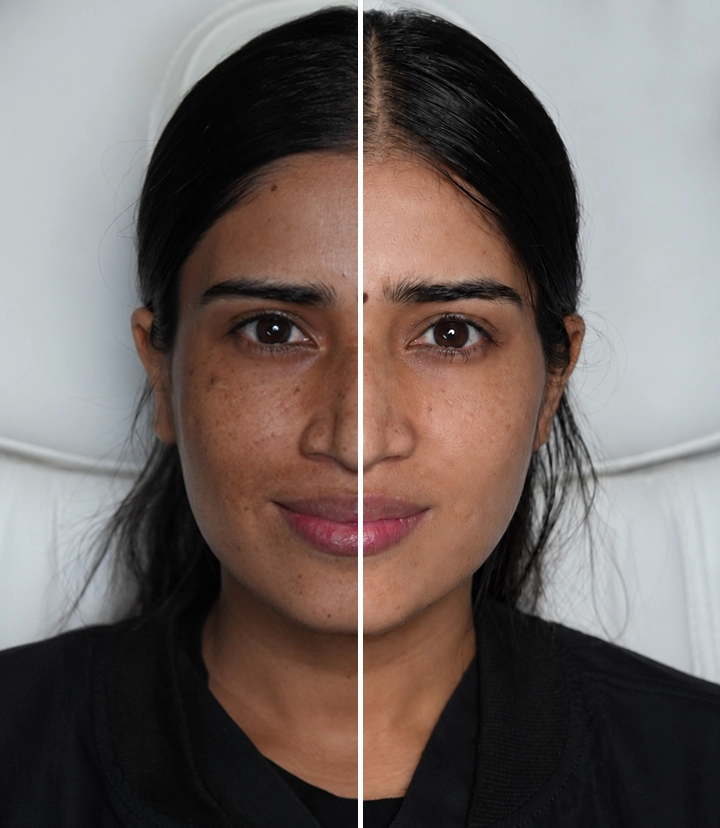
Melasma is a form of hyperpigmentation characterized by darker patches on the skin. It commonly affects the face and occurs when melanocytes, the cells responsible for producing melanin, become more active and produce increased amounts of pigment.
Melasma is usually flat rather than raised and may appear as light brown, brown, or darker patches. The pigmentation can vary in intensity and may become more noticeable following sun exposure or hormonal changes.
Melasma is not simply a surface discoloration. Several environmental, hormonal, and individual factors can contribute to its development and persistence. Identifying these factors can therefore be important when planning treatment.
What Does Melasma Look Like?
Melasma commonly appears as:
- Brown or darker patches on the face
- Uneven skin tone
- Flat areas of pigmentation
- Irregularly shaped patches
- Relatively symmetrical pigmentation on both sides of the face
The appearance can vary between individuals. A dermatologist considers the pattern and distribution of pigmentation when assessing whether it is consistent with melasma or another pigmentation condition.
Where Does Melasma Usually Appear?
Melasma most commonly affects sun-exposed areas of the face, including:
- Cheeks
- Forehead
- Upper lip
- Nose
- Chin
- Jawline
The distribution can provide useful clinical information, although the location alone does not establish the diagnosis.
What Causes Melasma?
Melasma does not have one single cause. It is thought to develop through an interaction between pigment-producing cells, hormonal influences, light exposure, genetic susceptibility, and other individual factors.
Sun and UV Exposure
Sun exposure is one of the most important factors associated with melasma.
Ultraviolet radiation can stimulate melanocytes and increase melanin production, potentially making existing pigmentation more noticeable. Repeated exposure can also make long-term pigment management more difficult.
This is why consistent photoprotection is an important part of melasma management.
Hormonal Influences
Hormonal factors are associated with melasma in many patients.
Pigmentation may develop or become more noticeable during periods of hormonal change, including pregnancy. Hormonal contraceptives and other hormonal treatments may also be relevant for some individuals.
A medical history can help determine whether hormonal factors may be contributing to a patient’s pigmentation.
Genetic and Individual Susceptibility
Some individuals may have a greater tendency to develop melasma because of genetic or individual susceptibility.
A family history of melasma may be relevant, although having a family member with melasma does not mean that another person will necessarily develop the condition.
Visible Light and Environmental Factors
Visible light may contribute to melasma in susceptible individuals, particularly in darker skin types. Heat and other environmental factors have also been investigated as possible contributors.
Skin irritation and inflammation may also influence pigmentation in some individuals.
Understanding potential triggers can help create a practical long-term management plan.
Types and Patterns of Melasma
Melasma can be described according to the apparent depth and distribution of pigmentation.
Epidermal Melasma
Epidermal melasma refers to pigmentation predominantly located within the more superficial layers of the skin.
Its appearance can vary depending on the amount and distribution of pigment. Superficial pigmentation may respond differently to treatment from pigmentation involving deeper layers.
Dermal Melasma
Dermal melasma involves pigment associated with deeper layers of the skin.
Its clinical appearance and response to treatment can differ from predominantly superficial pigmentation.
Mixed Melasma
Some patients have features involving both superficial and deeper pigmentation, commonly described as mixed melasma.
These classifications provide useful context during assessment, but treatment decisions should consider the overall clinical picture rather than relying on pigmentation depth alone.
Centrofacial Melasma
Centrofacial melasma primarily involves the central areas of the face, such as the forehead, cheeks, nose, and upper lip.
Malar Melasma
Malar melasma is mainly distributed across the cheeks and the upper part of the face.
Mandibular Melasma
Mandibular melasma involves pigmentation around the lower face or jawline.
Distribution patterns can overlap, and individual presentations do not always fit neatly into a single category.
Melasma vs. Other Types of Hyperpigmentation
Melasma is one type of hyperpigmentation, but not every dark patch on the face is melasma.
Post-inflammatory hyperpigmentation can develop after acne, eczema, irritation, burns, or other forms of skin inflammation. Sun spots and other pigmentation disorders may also appear as darker areas on the skin.
These conditions can require different approaches to assessment and treatment.
This distinction matters because treating pigmentation without understanding its underlying cause may produce limited results or unnecessary irritation.
If you are unsure whether facial pigmentation is melasma, a dermatological assessment can help determine the most appropriate approach.

What Does Melasma Look Like?
Melasma commonly appears as:
- Brown or darker patches on the face
- Uneven skin tone
- Flat areas of pigmentation
- Irregularly shaped patches
- Relatively symmetrical pigmentation on both sides of the face
The appearance can vary between individuals. A dermatologist considers the pattern and distribution of pigmentation when assessing whether it is consistent with melasma or another pigmentation condition.
How Is Melasma Diagnosed?
Melasma is generally diagnosed through a clinical skin examination and detailed medical history.
Clinical Skin Examination
A dermatologist evaluates the color, pattern, distribution, and appearance of the pigmentation.
The aim is not simply to identify darker areas but to determine whether their characteristics are consistent with melasma and whether another pigmentation condition should be considered.
Assessing Pigmentation Pattern and Distribution
The location and distribution of pigmentation can provide useful information.
A dermatologist may assess whether pigmentation is relatively symmetrical, which facial areas are involved, and whether the appearance has changed over time.
Reviewing Medical History and Hormonal Factors
The assessment may include questions about:
- Pregnancy or recent hormonal changes
- Hormonal contraception or other hormonal treatments
- Current medications
- Family history
- Sun exposure
- Skin sensitivity
- Previous pigmentation problems
This information can help identify factors that may influence management.
Reviewing Previous Treatments
Previous chemical peels, laser procedures, IPL, topical products, and other treatments can affect the current condition of the skin.
Knowing what has already been used is particularly important when previous treatment caused irritation, inflammation, or changes in pigmentation.
Why Is Melasma Treatment Individualized?
There is no single treatment approach that is appropriate for every person with melasma.
Treatment planning may consider:
- The pigmentation pattern
- Skin characteristics
- Extent of pigmentation
- Possible triggers
- Sun and visible-light exposure
- Hormonal factors
- Current skincare
- Skin sensitivity
- Previous treatments
- Previous laser or peel procedures
- Individual treatment goals
- Response to previous treatment
Two patients may have similar-looking pigmentation but require different management strategies.
The objective is to select an appropriate approach for the individual’s condition while minimizing unnecessary irritation and treatment-related pigmentation changes.
Melasma Treatment Options
Melasma management may involve topical treatments, photoprotection, procedures, or a combination of approaches.
The appropriate option depends on the individual’s diagnosis, skin characteristics, treatment history, and risk factors.
Topical Treatments
Topical therapy can play an important role in managing melasma.
Depending on the patient’s circumstances, a dermatologist may consider ingredients such as hydroquinone, tretinoin or other retinoids, azelaic acid, cysteamine, or other pigment-modulating treatments.
Not every topical treatment is appropriate for every patient. Factors such as skin sensitivity, duration of treatment, pregnancy status, current medications, and previous treatment history can influence selection.
Prescription treatments should be used according to medical guidance.
Chemical Peels
Selected chemical peels may be considered as part of a melasma management plan.
Peels use controlled chemical exfoliation to affect selected layers of the skin and may help improve the appearance of certain pigmentation concerns.
The peeling agent, concentration, treatment depth, and frequency should be selected according to the patient’s skin characteristics and diagnosis.
Overly aggressive treatment can cause irritation or inflammation, which may contribute to post-inflammatory hyperpigmentation.
Laser and Light-Based Treatments
Certain laser or light-based procedures may be considered for selected patients with melasma or associated pigmentation concerns.
Their suitability depends on factors such as:
- Pigmentation pattern
- Skin characteristics
- Previous treatment
- Current skin condition
- Risk of post-inflammatory pigmentation
Laser or light-based treatment should therefore be considered as one possible component of a broader management plan rather than an automatic solution for every case of melasma.
Microneedling
Microneedling may be considered in selected patients, particularly when pigmentation occurs alongside certain textural concerns.
Because microneedling creates controlled micro-injuries in the skin, treatment intensity should be selected carefully for individuals who are prone to post-inflammatory hyperpigmentation.
Combination Treatment
Some patients may benefit from a combination of treatment approaches.
A management plan may include topical therapy, consistent photoprotection, and selected procedures when appropriate.
Combining approaches can address different aspects of melasma while allowing treatment to be adapted to the patient’s skin and response.
Combination treatment is not automatically required and should be individualized.
Melasma Treatment Approaches at a Glance
| Approach | Potential role | Important consideration |
|---|---|---|
| Topical treatment | Helps manage pigmentation through dermatologist-guided skincare | Suitability and skin tolerance should be assessed |
| Sun protection | Helps reduce exposure to factors that can stimulate pigmentation | Requires consistent long-term use |
| Chemical peels | May improve selected superficial pigmentation concerns | Peel type and intensity need careful selection |
| Laser or light-based treatment | May be considered for selected patients | Patient selection and treatment settings are important |
| Microneedling | May be considered for selected pigmentation and texture concerns | Excessive inflammation may increase pigmentation risk |
| Combination approach | Combines different management strategies | Requires individualized planning and monitoring |
Why Sun Protection Is Essential in Melasma Management
Sun protection is a fundamental part of managing melasma.
Ultraviolet exposure can stimulate pigmentation and make existing melasma more noticeable. Consistent photoprotection can therefore be important both during active treatment and as part of long-term maintenance.
Sunscreen and Broad-Spectrum Protection
A broad-spectrum sunscreen helps protect the skin against UVA and UVB radiation.
For someone managing melasma, sunscreen should be part of a daily routine rather than used only during prolonged outdoor activities.
Depending on the individual’s pigmentation and skin characteristics, a dermatologist may also discuss tinted sunscreen containing iron oxides as part of broader protection against visible light.
Visible Light and Daily Protection
Visible light may influence melasma in some individuals.
Additional practical measures can include seeking shade, limiting prolonged direct sun exposure, wearing protective clothing, and using a hat when appropriate.
Sun Protection Considerations in Riyadh
For patients living in Riyadh, regular exposure to strong sunlight can be an important consideration when managing pigmentation.
Consistent daily photoprotection is therefore particularly relevant for patients undergoing melasma treatment and for maintaining improvement over time.
Can the Wrong Treatment Make Melasma Worse?
More aggressive treatment is not necessarily better treatment for melasma.
Procedures or skincare products that cause significant irritation or inflammation may contribute to post-inflammatory hyperpigmentation in susceptible individuals.
This can make the overall pigmentation concern more noticeable.
Treatment planning should therefore consider the patient’s skin characteristics, previous procedures, sensitivity, current inflammation, and risk of pigmentation changes.
A carefully selected and appropriately timed treatment plan may be preferable to repeatedly using increasingly aggressive procedures.
Why Can Melasma Return After Treatment?
Melasma can be recurrent, meaning pigmentation may become noticeable again after a period of improvement.
Treatment can reduce existing pigmentation, but factors associated with melasma may continue to be present. Sun exposure, hormonal influences, genetic susceptibility, visible light, and other individual triggers may contribute to recurrence.
Long-term management may therefore include:
- Consistent photoprotection
- Trigger awareness
- Appropriate skincare
- Maintenance treatment when recommended
- Dermatological follow-up
- Adjustments to the management plan when necessary
The goal is not simply to reduce visible pigmentation at one point in time but to develop a sustainable approach to managing a condition that can recur.
What Can You Expect During Melasma Treatment?
Initial Assessment
The first step is understanding your pigmentation, medical history, previous treatments, skin characteristics, and individual concerns.
Treatment Planning
Based on the assessment, a dermatologist can determine which treatment approaches may be appropriate and whether more than one strategy should be considered.
Treatment Sessions
The number and frequency of treatment sessions vary according to the treatment selected and the individual’s response.
Monitoring and Follow-Up
Melasma treatment benefits from monitoring because the skin can respond differently over time.
Follow-up allows the treatment plan to be adjusted according to pigmentation changes, skin tolerance, and overall response.
Gradual Improvement
Improvement in melasma can be gradual, and results vary between individuals.
Factors such as pigmentation pattern, skin characteristics, trigger exposure, treatment approach, and consistency with the recommended management plan can influence the response.
Melasma Treatment Safety and Considerations
Melasma treatments can have potential side effects or limitations depending on the approach used.
Possible effects may include:
- Temporary redness
- Skin sensitivity
- Irritation
- Peeling
- Swelling or tenderness after certain procedures
- Post-inflammatory hyperpigmentation
- Other pigmentation changes
Topical medications can also have specific precautions and side effects.
Medical history, current medications, pregnancy status where relevant, and skin sensitivity should be considered before treatment is recommended.
If significant irritation or unexpected pigmentation changes develop, medical review may be appropriate.
Who May Be a Candidate for Melasma Treatment?
Melasma treatment may be considered for individuals whose facial pigmentation has been clinically assessed as consistent with melasma and who are seeking improvement.
Suitability depends on factors such as:
- Diagnosis and pigmentation pattern
- Skin characteristics
- Current skin condition
- Medical history
- Current medications
- Hormonal factors
- Previous treatments
- Skin sensitivity
- Individual expectations
A consultation allows these factors to be considered before deciding which treatment approach, if any, is appropriate.
Melasma Treatment in Riyadh With Dr. Haitham Al-Gzlan
Dr. Haitham Al-Gzlan approaches melasma treatment through individualized assessment rather than using the same procedure for every patient.
The evaluation considers the appearance and distribution of pigmentation, possible contributing factors, skin characteristics, previous treatments, and treatment goals.
Depending on the assessment, management may include topical treatment, photoprotection, selected procedures, or a combination of approaches when appropriate.
For patients seeking melasma treatment in Riyadh, the focus is on understanding the condition, selecting treatment carefully, and considering long-term management.
Frequently Asked Questions About Melasma
Melasma is a form of hyperpigmentation that usually causes brown or darker patches on the face. It can be influenced by sun exposure, hormonal factors, genetic susceptibility, visible light, and other individual factors.
Melasma has multiple contributing factors. Sun exposure, hormonal changes, pregnancy, genetic susceptibility, visible light, and other environmental or individual factors can play a role.
No. Melasma is a specific type of hyperpigmentation. Other forms of pigmentation can result from acne, inflammation, skin injury, irritation, medications, or other conditions.
Melasma most commonly affects the cheeks, forehead, upper lip, and nose, although the chin and jawline can also be involved.
Hormonal changes during pregnancy can contribute to the development or worsening of melasma. Pregnancy-associated melasma is sometimes referred to as chloasma.
Sun exposure can stimulate melanin production and may make melasma more noticeable. Consistent photoprotection is therefore an important part of melasma management.
Visible light may contribute to melasma in susceptible individuals. Depending on the patient's skin and pigmentation, a dermatologist may discuss additional photoprotection measures alongside sunscreen.
Heat has been investigated as a possible contributing factor in melasma. Individual responses vary, so trigger management should be tailored to the patient.
Melasma is generally assessed through a clinical examination of the pigmentation together with medical and treatment history. A dermatologist may assess its pattern, distribution, skin characteristics, and potential triggers.
Treatment may include physician-guided topical therapies, photoprotection, chemical peels, selected laser or light-based procedures, microneedling in appropriate cases, and combination approaches.
Laser or light-based treatment may be considered for selected patients, but it is not appropriate for every case. Skin characteristics, pigmentation pattern, previous treatment, and the risk of pigmentation changes should be considered before treatment.
Selected chemical peels may be used in some treatment plans. The peeling agent, strength, and treatment frequency should be chosen according to the patient's skin characteristics and pigmentation concerns.
Microneedling may be considered in selected cases, particularly when pigmentation occurs alongside certain textural concerns. Treatment intensity should be carefully selected because skin inflammation can contribute to post-inflammatory pigmentation.
Yes. Melasma can recur because contributing factors such as sun exposure, hormonal influences, visible light, and individual susceptibility may continue after pigmentation improves.
Melasma can be persistent or recurrent. Its appearance may improve with appropriate management, but permanent elimination cannot be guaranteed.
Sun protection is an important part of melasma management because ultraviolet exposure can stimulate pigmentation. Daily broad-spectrum sunscreen and other protective measures can help reduce ongoing exposure.
Certain treatments can cause irritation or inflammation, which may contribute to post-inflammatory hyperpigmentation. This is one reason treatment selection and intensity should be individualized.
There is no fixed number of sessions. The treatment plan depends on the type and extent of pigmentation, treatment method, skin characteristics, previous treatment, and individual response.
Improvement can be gradual. The timeframe varies according to the severity and pattern of pigmentation, treatment approach, trigger exposure, and individual response.
Some medications and procedures are not appropriate during pregnancy. Pregnancy-related pigmentation may also change naturally over time. Treatment should be discussed with an appropriate healthcare professional.
Consistent photoprotection, appropriate skincare, avoiding unnecessary skin irritation, identifying individual triggers, and following a dermatologist-guided maintenance plan can help with long-term management.
Yes. Patients in Riyadh can seek a dermatological assessment to determine whether facial pigmentation is consistent with melasma and discuss appropriate management options based on their individual skin and medical history.
Book a Melasma Consultation in Riyadh
If you are concerned about facial pigmentation or possible melasma, a dermatological assessment can help determine the nature of the pigmentation and identify appropriate management options.
Dr. Haitham Al-Gzlan can assess your pigmentation, skin characteristics, previous treatments, and individual factors before discussing a personalized treatment plan.
Book a melasma consultation in Riyadh to discuss your pigmentation concerns and treatment options.