
Chemical Peel Treatment in Riyadh
Chemical peel treatment can improve selected concerns such as uneven skin tone, pigmentation, acne, post-acne marks, rough texture, dullness and some visible signs of skin ageing.
At Dr. Haitham Al-Gzlan’s dermatology practice in Riyadh, chemical peel treatment begins with assessing your skin rather than choosing a peel simply because it is popular. Your skin type, pigmentation tendency, current condition, medical history, treatment goals and tolerance for downtime all help determine whether a chemical peel is appropriate and which approach may be suitable.
Chemical peels vary significantly in their ingredients, concentration and depth. A lighter peel may be appropriate for improving surface texture and tone, while a stronger peel requires more careful patient selection and aftercare.
The goal is not simply to make the skin peel. It is to choose an appropriate treatment that addresses the underlying skin concern while respecting the skin’s ability to heal.
What Is a Chemical Peel?
A chemical peel is a dermatological treatment that uses a carefully selected chemical solution to produce controlled exfoliation of the skin. Depending on the formulation and treatment depth, a peel can affect different layers of the skin and may be used to improve concerns such as:
- Uneven skin tone
- Certain types of pigmentation
- Acne and clogged pores
- Post-acne marks
- Rough or uneven texture
- Dull-looking skin
- Fine lines
- Selected signs of sun damage
Chemical peels are not all the same. The appropriate formulation, strength and treatment frequency depend on the patient’s skin and the concern being treated.
What Can Chemical Peel Treatment Help With?
Chemical peels may be considered for several skin concerns, although they are not the right treatment for every patient or every condition.
Acne and Congested Skin
Certain chemical peels may be used as part of an acne treatment plan, particularly when clogged pores, excess oil or superficial acne-related changes are present.
A chemical peel should not automatically replace medical acne treatment. Active acne, its severity and the risk of scarring should first be assessed so that treatment addresses the underlying condition.
Post-Acne Marks
Dark marks left after acne can remain visible even after active breakouts have improved.
Selected chemical peels may help improve superficial pigmentation and overall skin tone. However, post-inflammatory hyperpigmentation can behave differently depending on skin type and pigmentation tendency, so treatment intensity should be selected carefully.
Uneven Skin Tone and Pigmentation
Chemical peels can sometimes be incorporated into a treatment plan for uneven pigmentation, sun-related discoloration and other superficial pigmentary concerns.
The important first step is identifying the type of pigmentation. Melasma, post-inflammatory hyperpigmentation and sun-induced pigmentation do not necessarily respond in the same way.
For pigmentation-prone skin, an overly aggressive approach can sometimes make discoloration worse. This is why assessment and appropriate treatment selection are important.
Melasma
Melasma is a complex pigmentation condition that often requires a longer-term management strategy rather than a single procedure.
In selected patients, chemical peels may form part of a broader melasma treatment plan alongside appropriate skincare, sun protection and other dermatologist-directed treatments.
Rough Skin Texture
A chemical peel can remove damaged surface cells and may improve the feel and appearance of rough or uneven skin.
The appropriate peel depends on whether the problem is primarily superficial texture, pigmentation, acne-related changes or a deeper structural concern.
Dull-Looking Skin
When the skin looks tired or lacks radiance, a superficial peel may sometimes be considered to refresh the skin surface.
However, dullness can have multiple causes, including dryness, pigmentation, sun exposure and underlying skin conditions. Treatment should therefore be based on the reason for the change rather than the appearance alone.
Fine Lines and Early Signs of Skin Ageing
Selected chemical peels may improve the appearance of fine lines and surface skin changes.
They do not reverse the natural ageing process, and the degree of improvement depends on the treatment depth, skin condition and individual response.
Types of Chemical Peels
Chemical peels can be broadly classified according to how deeply they affect the skin.
Superficial Chemical Peels
Superficial peels primarily target the upper layers of the skin.
They may be considered for concerns such as:
- Uneven skin tone
- Mild pigmentation
- Dullness
- Rough texture
- Selected acne concerns
- Post-acne marks
They generally involve less recovery than deeper peels, although redness, sensitivity or peeling can still occur.
Medium-Depth Chemical Peels
Medium-depth peels reach deeper into the skin than superficial peels and therefore require more careful patient selection and aftercare.
They may be considered for selected pigmentation, texture and ageing concerns when a stronger treatment is clinically appropriate.
The expected recovery is generally greater than with a superficial peel.
Deep Chemical Peels
Deep chemical peels are significantly more intensive and are not appropriate for routine cosmetic treatment of every patient.
Because deeper peels carry greater risks and require substantial recovery, they should only be considered after an appropriate medical assessment and in a suitable clinical setting.
For many patients seeking improvement in pigmentation, acne marks, texture or general skin quality, a lighter treatment approach may be more appropriate.
Common Chemical Peel Ingredients
Different chemical agents have different properties and are selected according to the treatment objective.
Glycolic Acid
Glycolic acid is an alpha hydroxy acid commonly used in superficial chemical exfoliation. It may be considered for selected concerns involving texture, dullness, pigmentation and signs of photoaging.
Salicylic Acid
Salicylic acid is a beta hydroxy acid with properties that can make it useful in selected acne-prone or oily skin treatment plans.
Its suitability depends on the patient’s skin condition and the overall treatment objective.
Lactic Acid
Lactic acid is another alpha hydroxy acid used in selected superficial peel formulations. It may be considered when the goal includes improving surface texture and tone.
Mandelic Acid
Mandelic acid is an alpha hydroxy acid with a larger molecular structure than glycolic acid. It may be considered in selected patients, including some individuals with acne or pigmentation concerns.
TCA
Trichloroacetic acid, commonly referred to as TCA, can be used in chemical peel treatments at different strengths and for different treatment depths.
TCA treatment requires appropriate clinical assessment because concentration, application and treatment depth can significantly affect the skin.
The exact peel used should therefore be selected by the treating clinician rather than based only on the ingredient name.
Chemical Peel Treatment for Different Skin Types
Skin does not respond identically to chemical exfoliation.
Patients with darker or pigmentation-prone skin may have a greater risk of developing post-inflammatory pigmentation after irritation or overly aggressive treatment. This does not mean that chemical peels are unsuitable, but it makes appropriate patient selection and treatment planning particularly important.
Dr. Haitham Al-Gzlan considers factors such as:
- Skin type and tone
- Previous pigmentation changes
- Current acne or inflammation
- Existing skin conditions
- Previous cosmetic procedures
- Current skincare products
- Medical history
- Treatment goals
- Expected downtime
The objective is to select a treatment approach that is appropriate for your skin rather than using the strongest possible peel.
Chemical Peel Treatment Areas
Chemical peels are most commonly associated with facial treatment, but selected peels may also be considered for other areas depending on the concern and formulation.
Possible treatment areas can include:
- Face
- Neck
- Chest
- Hands
- Selected areas of the body
Not every peel is appropriate for every body area. Skin thickness, sensitivity, pigmentation risk and the reason for treatment all need to be considered.
What Happens During a Chemical Peel?
1. Skin Assessment
The process begins with an assessment of your skin and the concern you want to address. Dr. Haitham Al-Gzlan considers your skin condition, pigmentation history, medical history, previous treatments and treatment goals before deciding whether a chemical peel is appropriate.
2. Treatment Planning
If a peel is suitable, the treatment approach is selected according to the skin concern and expected recovery. The formulation, strength, application technique and treatment area may vary from one patient to another.
3. Skin Preparation
Your skin is cleansed and prepared before the chemical solution is applied. Depending on your skin and the planned treatment, you may receive specific instructions before the procedure.
4. Chemical Peel Application
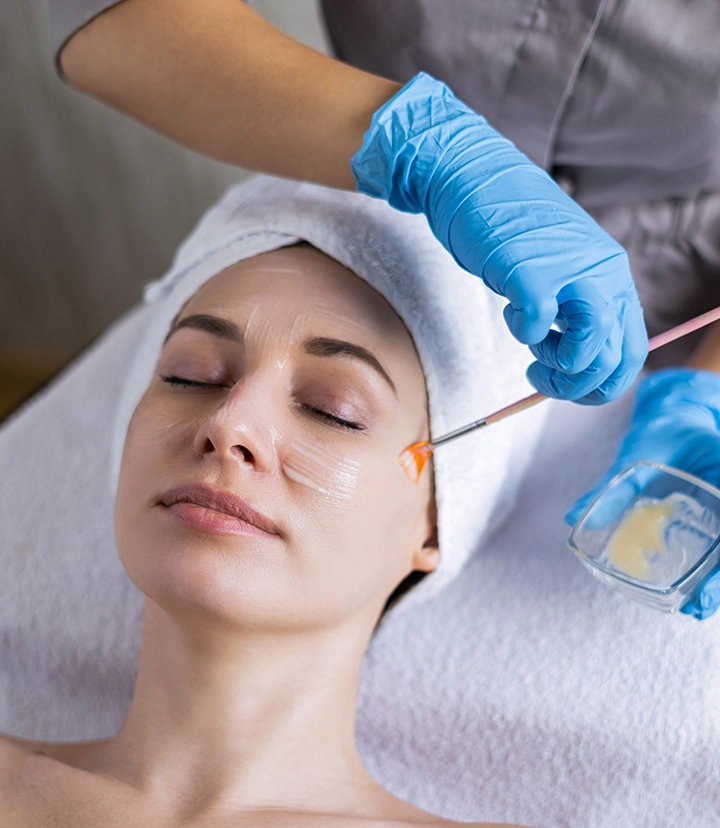
The selected chemical solution is carefully applied to the treatment area. The skin is monitored throughout the procedure, and the treatment is performed according to the planned protocol.
5. Post-Treatment Care
After the peel, you will receive instructions for caring for your skin during recovery. Depending on the treatment, temporary redness, sensitivity, dryness, tightness or peeling may occur.
How Should I Prepare for a Chemical Peel?
Preparation depends on the type of peel and your individual skin.
Before treatment, tell Dr. Haitham about:
- Prescription medications
- Acne medications
- Retinoids or retinol products
- Recent cosmetic treatments
- Previous chemical peels
- A history of cold sores
- A tendency to develop dark marks after skin irritation
- A history of abnormal scarring
- Current skin irritation or infection
- Any other relevant medical conditions
You may also receive instructions about sun exposure and your skincare routine before treatment.
Do not stop prescribed medication on your own. Any changes to your routine should be discussed with your treating clinician.
Chemical Peel Aftercare
Aftercare is an important part of the treatment.
Depending on the peel, you may be advised to:
- Keep the skin gently cleansed
- Use the recommended moisturizer
- Apply sunscreen consistently
- Avoid unnecessary sun exposure
- Avoid picking or peeling the skin
- Avoid aggressive exfoliation
- Temporarily stop selected active skincare products if instructed
- Follow the specific recovery instructions provided after treatment
The skin should be allowed to recover rather than being forced to peel faster.
Is There Downtime After a Chemical Peel?
Downtime depends on the depth and formulation of the peel.
A superficial peel may cause temporary redness, dryness or mild peeling, while a deeper peel can involve more noticeable redness, swelling, peeling and a longer recovery period.
Because different chemical peels have different recovery profiles, there is no single downtime estimate that applies to every patient.
Your expected recovery will be explained before treatment so that you can plan appropriately.
How Many Chemical Peel Sessions Are Needed?
There is no universal number of sessions.
Some patients may be considered for a single treatment, while others may benefit from a planned series of superficial peels depending on the concern, treatment response and overall skincare plan.
The number and spacing of treatments should be determined after assessing your skin rather than following a fixed package or schedule.
When Will I See Results?
Results vary according to the type of peel, the concern being treated and the individual’s skin response.
Some patients may notice a fresher or smoother appearance as the skin recovers, while concerns such as pigmentation and texture may require a longer treatment plan.
For conditions such as melasma or post-inflammatory pigmentation, maintaining the improvement may require ongoing skincare and sun protection because the underlying tendency can persist.
Are Chemical Peels Safe for Darker Skin?
Chemical peels can be used in patients with darker skin, but treatment needs to be selected carefully.
Skin with a higher tendency toward pigmentation can develop post-inflammatory hyperpigmentation following excessive irritation or an inappropriate treatment intensity.
This is why experience with different skin tones, careful treatment selection and appropriate aftercare are important when considering a chemical peel.
Who May Not Be Suitable for a Chemical Peel?
A chemical peel may need to be postponed, modified or avoided depending on your individual circumstances.
Examples can include:
- Active skin infection
- Significant skin irritation or inflammation
- Recent excessive sun exposure or tanning
- Certain medications
- Impaired wound healing
- A history of certain reactions to chemical peels
- Active conditions requiring different medical treatment
Pregnancy, breastfeeding, recent procedures and current skincare or prescription medications may also affect treatment selection depending on the specific peel.
Suitability should always be determined during a professional consultation.
Chemical Peels vs Other Skin Treatments
A chemical peel is only one option for improving skin quality.
Depending on the concern, Dr. Haitham Al-Gzlan may consider other approaches such as:
- Laser skin rejuvenation
- Laser Genesis
- Microneedling
- RF microneedling
- PRP skin rejuvenation
- Medical skincare
- Other dermatological treatments
For example, superficial pigmentation may sometimes be approached with a chemical peel, while deeper textural acne scars may require a different treatment strategy.
The important question is not simply, “Which treatment is most popular?” but rather, “Which treatment matches the cause and characteristics of my skin concern?”
Why Choose Dr. Haitham Al-Gzlan for Chemical Peel Treatment in Riyadh?
Chemical peel treatment should be based on dermatological assessment rather than a one-size-fits-all protocol.
Dr. Haitham Al-Gzlan, Consultant Dermatologist and Aesthetic Physician in Riyadh, takes an individualized approach to dermatological and aesthetic treatment. His assessment considers your skin type, medical history, pigmentation tendency, underlying concern and treatment goals before recommending an appropriate approach.
This medical-led approach is particularly important when treating pigmentation-prone skin, acne, post-acne marks and other concerns where aggressive treatment may not necessarily produce a better outcome.
The aim is to select the appropriate treatment intensity, explain realistic expectations and support the skin through the recovery process.
Chemical Peel Treatment in Riyadh for Patients Across Saudi Arabia
Dr. Haitham Al-Gzlan is based in Riyadh and provides personalized dermatological and aesthetic care for patients from Riyadh and other parts of Saudi Arabia.
If you are considering a chemical peel, the consultation can help determine whether a peel is appropriate for your skin and whether another treatment may be more suitable for your specific concern.
Frequently Asked Questions About Chemical Peels
The level of discomfort depends on the type and depth of the peel. Some superficial peels may cause mild tingling or warmth, while stronger treatments can produce more noticeable burning or discomfort. Your expected level of discomfort will depend on the specific treatment selected.
Chemical peels may help selected superficial acne scars or post-acne changes, but deeper acne scars often require different treatment approaches. The type of scar matters. A consultation can help distinguish pigmentation from structural scarring and determine which treatment is more appropriate.
Selected chemical peels can be used for certain pigmentation concerns. However, pigmentation has many causes, including melasma and post-inflammatory hyperpigmentation, and treatment should be based on the underlying diagnosis.
A chemical peel may be considered as part of a broader melasma treatment plan for selected patients. Melasma often requires ongoing management rather than relying on one procedure alone.
Yes. Chemical peel treatment is not limited to women. The appropriate treatment depends on the person's skin condition, skin type, medical history and treatment goals.
Sensitive skin does not automatically rule out treatment, but it may affect the type, strength and timing of a peel. Your skin should be assessed before treatment to determine whether chemical exfoliation is appropriate.
Some active skincare ingredients may need to be paused temporarily after treatment. Your post-peel instructions should take priority over your usual skincare routine, particularly during the recovery period.
High-strength chemical peels should not be used at home without appropriate professional supervision. The concentration and application of chemical peel products can affect how deeply they penetrate the skin, and inappropriate use can cause burns, pigmentation changes, infection or scarring.
There is no universal schedule. The appropriate interval depends on the peel used, your skin's response, the concern being treated and whether your skin has fully recovered.
No. A chemical peel is not automatically appropriate for every patient or every skin concern. A professional assessment is important before treatment, particularly if you have pigmentation concerns, sensitive skin, active inflammation, recent procedures or are using prescription medications.
Book a Chemical Peel Consultation in Riyadh
If you are considering chemical peel treatment for pigmentation, acne, post-acne marks, uneven skin tone, rough texture, dullness or selected signs of skin ageing, the first step is understanding whether a chemical peel is appropriate for your skin.
Book a consultation with Dr. Haitham Al-Gzlan in Riyadh for an individualized skin assessment and treatment plan based on your skin type, medical history, concerns and goals.
The right peel is not necessarily the strongest peel. The right treatment is the one selected for the skin in front of the dermatologist.