
Fraxel Laser Treatment in Riyadh – Expert Care by Dr. Haitham Al-Gzlan
Fraxel laser treatment in Riyadh is a non-ablative fractional skin resurfacing option for acne scars, sun damage, uneven pigmentation, fine lines, and selected texture concerns. The treatment creates microscopic treatment zones within the skin while leaving surrounding tissue intact to support recovery. This controlled thermal response promotes skin renewal and stimulates collagen remodeling over time. Fraxel technology uses different wavelengths and treatment depths, allowing the procedure to be customized according to the concern, skin type, and expected downtime. Dr. Haitham Al-Gzlan assesses your skin, scar pattern, pigmentation, medical history, and treatment goals before selecting appropriate Fraxel settings. The goal is progressive skin rejuvenation while maintaining a treatment intensity appropriate for your individual skin.
What Is Fraxel Laser?
Fraxel is a fractional laser skin resurfacing system that treats microscopic portions of the skin rather than exposing the entire surface uniformly. Current Fraxel systems use 1550 nm erbium-glass and 1927 nm thulium wavelengths, which reach different depths and can therefore address different skin concerns. The 1550 nm wavelength penetrates more deeply and is commonly associated with resurfacing, acne scars, surgical scars, wrinkles, dyschromia, and collagen remodeling. The 1927 nm wavelength acts more superficially and is particularly useful for selected sun spots, freckles, age spots, and other pigment-related concerns. By leaving untreated skin between microscopic thermal zones, fractional treatment supports faster healing than traditional full-field resurfacing. Fraxel laser treatment can therefore improve skin quality progressively without removing the entire surface layer of the skin.
The Fraxel Laser and Your Skin
Fraxel laser treatment works by delivering controlled fractional energy into thousands of microscopic treatment zones within the skin. These columns initiate a natural healing response while surrounding untreated tissue helps support recovery. Depending on the wavelength and treatment depth, Fraxel can address deeper dermal remodeling or more superficial pigmentation and sun damage. The healing process encourages new collagen formation, cellular renewal, and gradual improvement in skin texture. Because treatment parameters can be adjusted, the procedure can be personalized according to skin type and the condition being addressed. This makes Fraxel useful for a range of resurfacing concerns without relying on the more aggressive ablation associated with fractional CO2 treatment.
Stimulates Collagen and Skin Remodeling
The Fraxel 1550 nm wavelength delivers fractional thermal energy into deeper layers of the skin where collagen remodeling can occur. Controlled microscopic injury activates the skin’s repair response and supports fibroblast activity within treated areas. Existing collagen undergoes remodeling while new structural proteins develop gradually during healing. This process can improve the appearance of acne scars, fine lines, rough skin texture, and selected surgical scars. Collagen-related changes continue after the visible redness and peeling have settled, so the final response develops progressively. Multiple Fraxel laser sessions may be recommended when more extensive remodeling is required.
Replaces Damaged Skin Through Controlled Renewal
Fraxel does not remove the entire skin surface like traditional fully ablative laser resurfacing. Instead, it creates microscopic thermal zones surrounded by untreated skin that supports faster repair. Damaged cells within treated columns are gradually cleared as the skin’s natural renewal process progresses. This fractional approach can improve uneven texture, pigmentation, sun damage, and selected signs of photoaging. The newly renewed surface may gradually appear smoother and more even while deeper remodeling continues beneath it. The extent of renewal depends on the Fraxel wavelength, energy, density, number of sessions, and individual healing response.
Fraxel for Arab and Middle Eastern Skin
Fraxel can be considered for a broad range of skin tones, including many Arab and Middle Eastern skin types, but treatment is not risk-free. Higher Fitzpatrick skin types generally have a greater tendency to develop post-inflammatory hyperpigmentation (PIH) after procedures that create inflammation. Research involving 1550 nm and 1927 nm non-ablative fractional lasers in skin of color has shown favorable outcomes when settings are carefully selected. Lower treatment energy or density may reduce adverse pigmentary effects in suitable patients. Recent tanning, previous PIH, melasma, skin sensitivity, and the condition being treated should therefore influence treatment planning. Dr. Haitham selects treatment parameters according to the patient’s skin rather than assuming one standard Fraxel setting is safe for everyone.
What Does Fraxel Laser Treat?
Fraxel laser skin resurfacing can address several concerns involving skin texture, scarring, pigmentation, and photoaging. Current Fraxel indications include acne scars, surgical scars, periorbital wrinkles, melasma, dyschromia, age spots, sun spots, freckles, and actinic keratoses depending on the wavelength used. Fractional resurfacing may also support improvement in pores, selected stretch marks, and overall skin texture in appropriate patients. The 1550 nm and 1927 nm wavelengths do not treat every condition in exactly the same way because they penetrate to different depths. Some concerns respond better to combination treatment or another laser technology altogether. Dr. Haitham evaluates the underlying problem first before deciding whether Fraxel laser treatment is the appropriate option.
Fine Lines and Wrinkles – Forehead, Eyes and Mouth
Fraxel laser for wrinkles works by creating microscopic thermal treatment zones that stimulate progressive dermal remodeling. Fine lines caused by photoaging and reduced collagen support may gradually soften as the skin heals and reorganizes collagen. Fraxel has a specific indication for periorbital wrinkles, making the area around the eyes one established treatment concern. Fine surface changes elsewhere on the face may also improve as overall skin texture becomes smoother. Deep expression lines caused primarily by muscle movement or significant facial folds may require another treatment such as neuromodulators or fillers. Dr. Haitham determines whether Fraxel alone or a combined rejuvenation plan is more appropriate for the wrinkle pattern.
Acne Scars – Icepick, Boxcar and Rolling Scars
Fraxel laser for acne scars can improve selected atrophic scars by stimulating collagen remodeling within damaged skin. Boxcar and rolling scars may respond to fractional resurfacing, while deep icepick or tethered scars can require additional scar-specific procedures. Fractional treatment allows energy to reach the dermis while leaving surrounding skin available to support healing. As collagen reorganizes, some scars may gradually become shallower and overall texture more even. Several treatment sessions may be required because structural acne scars rarely disappear after a single Fraxel procedure. Dr. Haitham assesses whether each scar is rolling, boxcar, icepick, or mixed before deciding if Fraxel should be used alone or alongside another acne scar treatment.
Surgical or Traumatic Scars
Fraxel laser for scars may be considered for selected surgical scars and other stable textural scars after appropriate assessment. The 1550 nm Fraxel wavelength has an established indication for surgical scar treatment and works by encouraging controlled dermal remodeling. Scar response depends on characteristics such as age, depth, thickness, color, anatomical location, and previous treatment. Raised scars, keloids, and scars with abnormal healing characteristics may require a different treatment strategy. Several sessions can be needed before meaningful changes in texture become apparent. Dr. Haitham evaluates scar type and healing history before deciding whether fractionated laser treatment is appropriate.
Sun Damage and Age Spots
Years of ultraviolet exposure can produce brown spots, uneven tone, rough texture, and other visible signs of photodamage. Fraxel skin resurfacing can address selected sun-related changes by creating microscopic treatment zones and stimulating skin renewal. The 1927 nm wavelength acts closer to the surface and has indications for pigmented lesions such as age spots, sun spots, and freckles. The 1550 nm wavelength can simultaneously support deeper remodeling when texture or photoaging is also part of the concern. Not every brown lesion should be treated without diagnosis because some pigmented lesions require medical evaluation first. Dr. Haitham assesses the pigmentation before determining whether Fraxel or another pigment-targeting technology is more appropriate.
Hyperpigmentation and Uneven Skin Tone
Fraxel can improve selected forms of dyschromia and uneven pigmentation, but the cause of the discoloration should be diagnosed before laser treatment. Pigmentation may result from sun exposure, inflammation, melasma, acne, medication, or several other conditions that require different approaches. Fractional resurfacing encourages controlled skin renewal while selected wavelengths can target different depths within pigmented skin. Darker skin types require more cautious treatment because inflammation can sometimes produce additional post-inflammatory hyperpigmentation. PicoWay, IPL, topical therapy, chemical peels, or another approach may sometimes be more appropriate than Fraxel. Treatment selection should therefore focus on the diagnosis rather than simply attempting to remove every dark spot with the same laser.
Melasma and Hormonal Pigmentation
The Fraxel 1550 nm wavelength has an indication for melasma, and fractional 1550/1927 nm lasers have been studied in patients with skin of color. However, melasma is a chronic and recurrent pigmentation disorder influenced by factors including ultraviolet exposure, visible light, hormones, and inflammation. Laser treatment should therefore not be presented as a permanent cure, and overly aggressive settings may trigger pigmentation in susceptible skin. A 2026 review found improvement with 1550 nm and 1927 nm fractional treatment in skin of color while also emphasizing variable PIH rates and the importance of lower energy or density when appropriate. Sun protection and topical pigmentation management often remain important before and after laser treatment. Dr. Haitham evaluates the melasma pattern and skin phototype before deciding whether Fraxel should form part of the treatment plan.
Enlarged Pores and Rough Skin Texture
Enlarged pores can become more noticeable when skin texture is irregular, sebaceous activity is high, or structural collagen support has changed. Fractional laser resurfacing can improve overall surface texture by triggering microscopic renewal and dermal remodeling. As collagen organization changes, pores may become less visually prominent and the surrounding skin can appear smoother. Fraxel cannot permanently eliminate pores because pores are normal anatomical structures influenced by genetics and oil production. Several sessions may be considered when rough texture or acne scarring occurs alongside enlarged pores. Dr. Haitham may also recommend skincare or other treatments when excess oil, active acne, or another condition contributes to the appearance of pores.
Dull Skin Texture and Loss of Radiance
Dull-looking skin often develops from a combination of uneven texture, photodamage, pigmentation, and reduced surface renewal. Fraxel laser skin rejuvenation can address these structural and surface changes through controlled fractional treatment. As damaged cells are cleared and healthier skin renewal progresses, tone and texture can become more even. Deeper fractional treatment can simultaneously encourage collagen remodeling that contributes to longer-term skin quality. Fraxel is more intensive than a simple facial or superficial glow treatment, so it is not necessary for every person seeking brighter skin. Dr. Haitham can recommend a gentler treatment when resurfacing would create unnecessary downtime for the concern being treated.
Stretch Marks – Striae
Stretch marks are structural scars within the skin that develop when dermal tissue stretches and collagen architecture changes. Non-ablative 1550 nm fractional laser treatment has been studied for both red and mature white stretch marks and may improve their width, texture, and appearance. Treatment works through fractional dermal injury and progressive collagen remodeling rather than simply removing surface pigmentation. Several sessions are usually required, and complete removal of stretch marks should not be expected. Results vary according to the age, depth, color, location, and individual biology of the striae. Fractional CO2, radiofrequency microneedling, or other technologies may sometimes be considered depending on the characteristics of the stretch marks.
Actinic Keratosis – Precancerous Sun-Damaged Lesions
Actinic keratoses are sun-damaged precancerous skin lesions that should first be diagnosed medically rather than treated as routine cosmetic spots. Current Fraxel indications include treatment of actinic keratosis with both the 1550 nm and 1927 nm wavelengths. However, a dermatologist should evaluate suspicious, persistent, changing, bleeding, or unusual lesions before any resurfacing procedure. Some lesions may require biopsy, cryotherapy, topical medication, photodynamic therapy, excision, or another medical approach instead. Fraxel treatment should never substitute for appropriate skin-cancer assessment. Dr. Haitham determines whether fractional laser treatment is medically appropriate only after evaluating the lesion and surrounding skin.
Mild Skin Laxity and Loss of Firmness
Fraxel treatment creates a controlled dermal response that can stimulate collagen remodeling and improve aspects of skin firmness. Patients with mild textural laxity may notice that the skin appears smoother and somewhat firmer as remodeling develops. The treatment is best understood as resurfacing and collagen stimulation rather than a surgical lifting procedure. Moderate or significant facial sagging involves deeper tissues that a Fraxel laser cannot reposition. Ultherapy, radiofrequency technologies, injectables, or surgery may be more appropriate when deeper laxity is the primary concern. Dr. Haitham evaluates both surface skin quality and underlying facial structure before recommending a treatment for laxity.
Common Fraxel Treatment Areas
Fraxel laser face treatment can be performed across selected areas where scarring, pigmentation, wrinkles, or photodamage are present. The full face is commonly treated when texture and tone concerns involve several regions rather than one isolated spot. Fraxel under-eye treatment may be considered for selected periorbital wrinkles using settings appropriate for thinner skin around the eyes. The forehead, cheeks, temples, and areas around the mouth can also be treated according to the underlying concern. Fraxel on the neck, décolletage, hands, or selected body scars may be considered, but non-facial skin can require different treatment parameters and recovery expectations. Each area should therefore be assessed separately rather than receiving the same laser energy and density.
Fraxel Laser Benefits
Fraxel laser benefits include improvement in acne scars, selected surgical scars, wrinkles, sun damage, pigmentation, and uneven skin texture. Fractional treatment leaves surrounding tissue intact between microscopic treatment zones, helping support recovery while still triggering renewal. The Fraxel wavelength can be selected according to whether deeper remodeling or more superficial pigmentation is the main objective. Because Fraxel is non-ablative, it generally involves less surface injury and recovery than deeper fractional CO2 resurfacing. Treatment intensity can also be adjusted according to skin type, concern, and acceptable downtime. Results develop progressively and can continue improving as collagen remodeling occurs after the visible recovery period.
Fraxel Laser Quick Facts
Fraxel is a non-ablative fractional laser treatment used for skin resurfacing, pigmentation, scars, and selected signs of aging. Current Fraxel systems use 1550 nm and 1927 nm wavelengths that reach different depths within the skin. A full-face Fraxel FTX 1550/1927 treatment itself can take approximately 20–25 minutes, although the total appointment is longer because cleansing and topical anesthesia may be required. Some patients notice improvement after one session, while a series of treatments—sometimes up to five—may be recommended according to the concern. Temporary redness, warmth, itching, flaking, dryness, or mild swelling can occur during Fraxel laser recovery. Individual treatment intensity, skin type, and condition determine the actual downtime and number of sessions required.
Fraxel Laser vs. Fractional CO2 Laser
Search terms such as Fraxel CO2 laser, CO2 Fraxel, and Fraxel CO2 laser skin resurfacing are common, but the current Fraxel 1550/1927 platform and fractional CO2 resurfacing are different treatments. Current Fraxel technology uses non-ablative 1550 nm erbium-glass and 1927 nm thulium wavelengths, while CO2 lasers use a 10,600 nm ablative wavelength that removes microscopic columns of tissue. Fractional CO2 can generally produce deeper resurfacing but usually involves greater surface injury and a more intensive recovery period. Fraxel may be preferred when non-ablative fractional resurfacing can appropriately address scars, pigmentation, texture, or photoaging with less recovery. Historically, the Fraxel re:pair system was an ablative CO2 device, which is one reason the terms are sometimes confused online. On Dr. Haitham’s current site, Fraxel and UltraPulse CO2 are appropriately listed as separate technologies and selected according to treatment depth and clinical need.
Ideal Candidates for Fraxel Laser
Fraxel may be suitable for adults concerned about acne scars, surgical scars, sun spots, age spots, selected pigmentation, fine lines, or uneven skin texture. Good candidates should have realistic expectations and understand that several sessions may be required for more established concerns. Active acne, inflammatory skin conditions, pigmentation tendency, medical history, and previous laser treatments need to be considered before resurfacing. Darker skin does not automatically exclude someone from Fraxel treatment, but individualized settings are particularly important because PIH risk can increase with skin phototype. Candidates should also be able to follow post-treatment skincare and strict sun protection recommendations. The final decision is made after Dr. Haitham evaluates the condition, skin type, and expected benefit versus risk.
Who May Not Be an Ideal Candidate for Fraxel?
Fraxel treatment may be unsuitable or need to be postponed in patients with certain healing disorders, active infection, significant inflammation, or a predisposition to keloids or excessive scarring. Current manufacturer safety information also identifies systemic steroid use and ongoing isotretinoin treatment or similar medication as important contraindication considerations. Recent procedures that have not fully healed can also affect treatment timing. A history of herpes around the treatment area should be disclosed because laser procedures may trigger reactivation in susceptible patients. Recent tanning, uncontrolled melasma, or a history of significant post-inflammatory pigmentation may require modification or postponement of treatment. Dr. Haitham reviews medical history and current skin condition before determining whether Fraxel is appropriate.
Pre-Treatment Care for Fraxel Laser
Preparing correctly for Fraxel laser treatment helps reduce unnecessary irritation and supports predictable recovery. Avoid significant sun exposure and tanning because recently tanned skin can increase the risk of unwanted pigmentary reactions. Inform Dr. Haitham about prescription medications, supplements, previous aesthetic treatments, skin conditions, and any history of cold sores. Strong skincare actives and other procedures may need to be paused according to the treatment plan and manufacturer guidance. Do not independently discontinue prescribed medication, including anticoagulants or aspirin, without advice from the clinician responsible for your care. Arrive with clean skin and follow any individualized preparation instructions provided during the dermatology consultation.
Avoid Sun Exposure and Tanning
Sun exposure before laser treatment can increase skin inflammation and alter melanin activity, making the response to Fraxel less predictable. Avoid intentional tanning and protect the treatment area consistently in the period before your appointment. Broad-spectrum sunscreen, protective clothing, and limiting direct midday exposure are particularly important in Riyadh’s high-UV environment. Inform the clinic if you develop a significant tan or sunburn before your session. Treatment may need to be postponed if the skin is irritated or recently sun-exposed. Continued sun protection after Fraxel is equally important for reducing recurrence of pigmentation and protecting the healing skin.
Pause Retinoids, Acids and Irritating Exfoliants as Directed
Retinoids, exfoliating acids, scrubs, and other irritating skincare can increase skin sensitivity around the time of laser resurfacing. Current Fraxel manufacturer information advises avoiding retinoids for at least two weeks before and during treatment, although individual instructions may differ. Prescription products should not be stopped without discussing them with the clinician who manages your care. Chemical peels, mechanical exfoliation, and other resurfacing procedures may also need to be separated from Fraxel treatment. Dr. Haitham provides a skincare timeline according to your existing routine and treatment intensity. Gentle cleansing, moisturization, and sun protection generally become the priority during preparation.
Discuss Blood-Thinning Medications and Supplements
Certain medications and supplements can influence bruising or bleeding during aesthetic procedures, so the clinic should know everything you are taking. These may include prescribed anticoagulants, aspirin, anti-inflammatory medicines, fish oil, vitamin E, or other supplements. However, you should not stop prescribed blood-thinning medication independently simply to undergo cosmetic laser treatment. The medical reason for the medication can be substantially more important than reducing temporary bruising. Dr. Haitham can advise whether any adjustment is appropriate or whether treatment should proceed without changing medication. Full disclosure during consultation allows the risks to be assessed safely.
Antiviral Medication When Appropriate
Laser treatment can trigger herpes simplex reactivation in patients who have previously experienced cold sores, particularly when treating around the mouth. Tell Dr. Haitham if you have ever had recurrent herpes or previous outbreaks after cosmetic procedures. Preventive antiviral medication may be prescribed around the treatment period when clinically appropriate. This decision depends on your medical history and the anatomical area being treated. Antiviral medication should be taken only according to the prescribed instructions. Inform the clinic promptly if blisters or symptoms suggestive of a cold sore appear before or after treatment.
Maintain Healthy Skin Before Treatment
The skin should ideally be calm, intact, and free from active infection before a Fraxel procedure. Follow a simple skincare routine and avoid unnecessary irritation in the days leading up to treatment. Adequate hydration supports general skin health, although drinking extra water does not directly determine Fraxel treatment results. Inform the clinic if you develop a rash, active acne flare, open wound, dermatitis, or another new skin problem. Some conditions may require treatment before fractional resurfacing is appropriate. The final skin assessment on the day of treatment confirms whether it is safe to proceed.
Arrive With Clean, Makeup-Free Skin
Arriving with clean skin helps streamline preparation for your Fraxel laser procedure. Avoid heavy makeup, self-tanner, oils, or unnecessary cosmetic products on the planned treatment area where possible. The clinic will still cleanse the skin thoroughly before the laser is applied. Topical anesthetic may then be used to improve comfort depending on the Fraxel procedure and treatment area. Appropriate eye protection is required while the laser is operating. Treatment begins only after the skin, settings, and planned treatment zones have been confirmed.
What's Happening During the Fraxel Procedure?
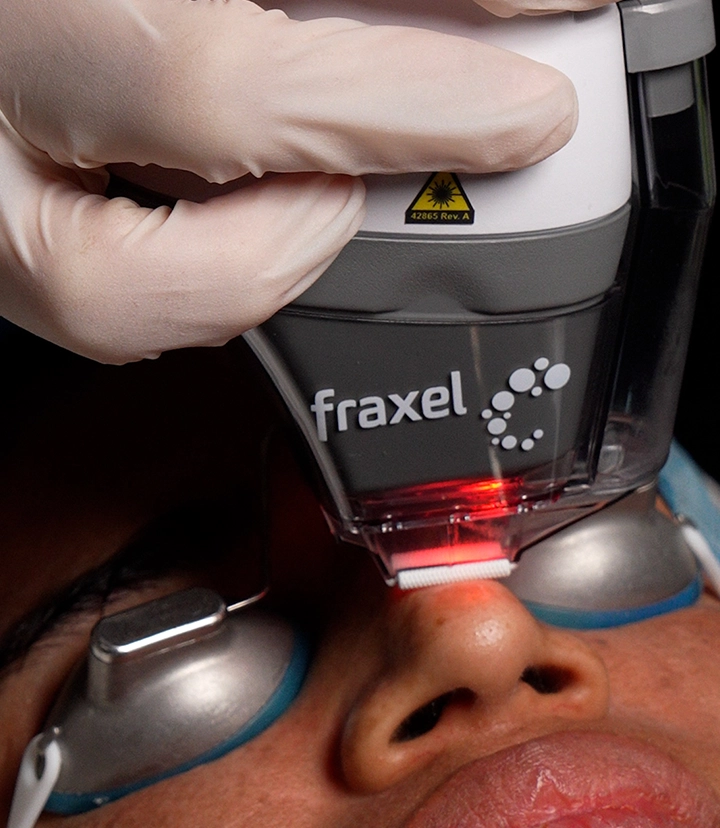
During a Fraxel procedure, the laser delivers fractional energy into microscopic treatment zones rather than uniformly heating or removing the entire skin surface. The specific wavelength is selected according to the depth and condition being treated. A topical anesthetic is commonly applied beforehand, and cooling may be used during treatment to reduce discomfort. Patients typically describe increasing warmth, prickling, or a sunburn-like sensation rather than complete absence of feeling. The fractional thermal response then initiates skin renewal and collagen remodeling over the following days and months. Treatment time varies, although the current manufacturer states that a full-face Fraxel FTX 1550/1927 procedure itself can take approximately 20–25 minutes.
Microscopic Thermal Zones Are Created in the Skin
Fraxel technology divides laser energy into many microscopic columns instead of treating the entire surface continuously. These microthermal treatment zones reach controlled depths according to the wavelength and pulse-energy setting selected. Tissue between the columns remains untreated and contributes to the healing response. The 1927 nm wavelength acts relatively superficially, while the 1550 nm wavelength can reach more deeply into the dermis. This fractional architecture is fundamental to the way Fraxel balances resurfacing with recovery. Dr. Haitham adjusts energy and treatment density according to the concern and skin type.
Damaged Tissue Is Cleared During Natural Renewal
The controlled thermal zones created by Fraxel contain damaged or coagulated tissue that the skin gradually processes during recovery. Superficial debris can move toward the surface, contributing to temporary dryness, bronzing, flaking, or peeling. The manufacturer notes that facial peeling commonly becomes noticeable around days three to four after treatment. Patients should allow this process to occur naturally rather than picking or manually exfoliating the skin. Surrounding untreated tissue supports re-epithelialization and recovery between microscopic treatment zones. As the surface settles, improvements in tone and texture can gradually become more apparent.
Collagen Remodeling Is Stimulated
Fractional thermal energy also creates a wound-healing response within deeper treated tissue. Fibroblasts participate in repairing the microscopic zones and remodeling the extracellular matrix around them. This progressive process contributes to improvements in scar texture, wrinkles, and general skin quality after treatment. The collagen response develops over time, which means the final result should not be judged immediately after redness disappears. Repeated Fraxel procedures can create additional remodeling when multiple sessions are clinically appropriate. Treatment intensity must still be balanced against inflammation and pigmentation risk, particularly in darker skin.
Fresh Skin Replaces Treated Surface Tissue
As microscopic treatment zones heal, damaged superficial cells are gradually replaced through the skin’s normal renewal processes. Temporary roughness, bronzing, flaking, and dryness can occur while this transition takes place. The new surface may appear smoother and more even once visible recovery has settled. Deeper collagen remodeling continues beyond this early surface renewal stage. Pigment-related improvement may also develop as abnormal superficial pigmentation is cleared, depending on the wavelength and condition treated. Consistent sun protection helps preserve these improvements and limits new UV-related skin damage.
Fraxel Laser Recovery and Results Timeline
Fraxel laser recovery varies with wavelength, treatment level, density, anatomical area, and individual skin response. Immediately after treatment, the skin commonly feels hot or sunburned, with the manufacturer reporting that this sensation often decreases within approximately one to three hours. Redness, swelling, itching, dryness, bronzing, and flaking can occur over the following days, with facial peeling often beginning around days three or four. Some patients feel comfortable returning to routine activities relatively quickly, while visible redness may last longer after more intensive treatment. Surface improvements become noticeable as healing progresses, while collagen-related results continue developing over subsequent weeks and months. Several treatment sessions may be recommended when acne scars, pigmentation, or more established photoaging are being treated.
Fraxel Laser Aftercare
Fraxel laser aftercare focuses on reducing irritation, supporting the skin barrier, and protecting treated skin from ultraviolet exposure. Use gentle cleansing and bland moisturizers or products recommended by Dr. Haitham while dryness and flaking settle. Do not scratch, peel, scrub, or manually exfoliate the microscopic crusting that can appear during recovery. Strong retinoids, acids, exfoliants, and other irritating skincare should only be restarted after the skin has recovered and the clinic advises it is appropriate. Broad-spectrum sunscreen with SPF 30 or higher and careful sun avoidance are particularly important after resurfacing; the manufacturer advises avoiding direct sun exposure for at least three months after the final treatment. Contact the clinic if you experience worsening pain, blistering, unusual discharge, prolonged severe redness, or another unexpected reaction.
Fraxel Side Effects and Treatment Risks
Expected Fraxel side effects can include temporary redness, swelling, warmth, itching, dryness, flaking, or temporary darkening of treated pigmentation. Manufacturer safety information also identifies possible blistering, burns, bruising, infection, delayed healing, prolonged redness, pigmentation changes, and scarring. Temporary or persistent hyperpigmentation is particularly relevant in darker skin types because melanocytes may respond more strongly to inflammation. Rare complications are one reason treatment energy and density should be selected according to skin type rather than using maximum settings routinely. Proper eye protection is also essential because Fraxel is a medical laser system. Patients should understand potential risks and warning signs before providing informed consent for treatment.
Why Choose Dr. Haitham Al-Gzlan for Fraxel Laser in Riyadh?
Dr. Haitham Al-Gzlan is a Consultant Dermatologist and Aesthetic Physician in Riyadh whose practice includes medical dermatology, laser dermatology, pigmentation, acne scars, and skin rejuvenation. His current technology portfolio includes Fraxel alongside PicoWay, UltraPulse CO2, Excel V+, M22 IPL, Clear + Brilliant, and other energy-based treatments. This range allows the treatment decision to start with your diagnosis rather than assuming Fraxel is automatically the right laser for every concern. Dr. Haitham evaluates scar type, pigmentation depth, skin phototype, medical history, recovery expectations, and treatment goals before selecting a procedure. This individualized approach is particularly relevant for Saudi and Middle Eastern skin, where pigmentation risk can influence laser wavelength, energy, density, and treatment intervals. Fraxel can therefore be used as one part of a broader dermatologist-led treatment strategy when it appropriately matches the patient’s concern.
Fraxel Laser Treatment FAQs
Most patients describe heat, prickling, or a sunburn-like sensation during Fraxel rather than severe pain. Topical anesthesia and cooling are commonly used to improve comfort during treatment.
The current Fraxel manufacturer states that a full-face 1550/1927 treatment itself can take approximately 20–25 minutes. Your total appointment will be longer because cleansing, assessment, topical numbing, and post-treatment care require additional time.
Some patients return to routine activities quickly, but redness, swelling, bronzing, dryness, or peeling can remain visible for several days. Plan social downtime according to treatment intensity rather than assuming every Fraxel procedure has no downtime.
Makeup should only be applied once the skin surface is adequately healed and your clinician confirms it is appropriate. Avoid covering irritated, blistered, or incompletely healed skin with cosmetic products.
Fraxel can be used in selected darker skin types, and studies support carefully configured 1550/1927 nm treatment in skin of color. However, PIH risk increases in more pigmented skin, so customized energy, density, preparation, and aftercare are important.
Yes, inflammatory laser procedures can sometimes trigger PIH or worsen pigmentation in susceptible patients even though Fraxel is also used for selected pigment conditions and melasma. Careful diagnosis, conservative settings, and ongoing pigment management are therefore important.
Longevity depends on the condition treated, natural aging, sun exposure, skincare, and whether the underlying problem can recur. Sun protection and appropriate maintenance care help preserve improvements after Fraxel treatment.
Some people notice improvement after one treatment, while a series may be recommended for more extensive scars, pigmentation, or photoaging. Current manufacturer guidance notes that up to five treatments may be appropriate for some patients, although fewer may be sufficient for others.
Yes, Fraxel may form part of a broader treatment plan involving injectables, other lasers, scar procedures, or skincare when clinically appropriate. Treatments need to be correctly sequenced so the skin has adequate time to recover between procedures.
Most reactions are temporary, but laser treatment carries risks including persistent pigmentation changes, prolonged redness, scarring, or textural changes. Appropriate patient selection and treatment parameters help reduce these risks but cannot eliminate them completely.
Fraxel results develop progressively, so an early assessment may not represent the final outcome. Dr. Haitham can review your response after adequate healing and discuss whether additional treatment, another technology, or no further procedure is appropriate.
No. Current Fraxel 1550/1927 treatment is non-ablative, while fractional CO2 uses ablative 10,600 nm energy and generally creates more intensive resurfacing.
Fraxel can improve selected atrophic acne scars through fractional collagen remodeling. Deep icepick or tethered scars may require additional scar-specific treatments rather than Fraxel alone.
Yes, Fraxel's 1550 nm wavelength has an indication for periorbital wrinkles. Treatment around the eyes requires appropriate settings, eye protection, and careful assessment because the skin is thinner in this area.
Fraxel may be considered for selected neck texture, pigmentation, or photoaging concerns. Treatment parameters should be adjusted because neck skin has different healing characteristics from facial skin.
Fractional collagen remodeling may make enlarged pores appear less prominent while improving surrounding skin texture. Fraxel cannot permanently remove pores because they are normal structures influenced by genetics and sebaceous activity.
Fraxel may improve mild firmness through collagen remodeling, but it is primarily a resurfacing treatment rather than a deep lifting procedure. Significant facial or neck laxity may require another energy-based treatment or surgery.
Yes. Fraxel is commonly used for photoaging concerns, and the 1927 nm wavelength is indicated for sun spots and other selected pigmented lesions.
The 1550 nm Fraxel wavelength has an indication for melasma, but melasma is chronic and frequently recurs. Treatment therefore requires careful patient selection, sun protection, and often a wider pigmentation-management plan.
Fraxel laser treatment cost in Riyadh varies according to the treatment area, condition, intensity, and number of sessions required. An accurate price can be provided after Dr. Haitham assesses your skin and creates an individualized treatment plan.
Book Your Fraxel Laser Consultation in Riyadh
If you are considering Fraxel laser treatment in Riyadh for acne scars, pigmentation, wrinkles, sun damage, or uneven texture, the first step is determining whether fractional non-ablative resurfacing matches your skin concern. Dr. Haitham Al-Gzlan assesses your skin type, scar pattern, pigmentation tendency, previous treatments, and desired recovery before recommending treatment. Your consultation can also clarify whether Fraxel, PicoWay, fractional CO2, IPL, Clear + Brilliant, or another technology would provide a better match for the condition. When Fraxel is appropriate, wavelength, treatment depth, and energy are customized rather than following a one-size-fits-all protocol. Expected results, number of sessions, downtime, side effects, and aftercare are discussed before treatment. Book an appointment in Riyadh to receive a personalized Fraxel laser treatment plan.