
Aesthetic Dermatology in Riyadh
Aesthetic dermatology treatment in Riyadh combines medical knowledge of the skin with non-surgical treatments designed to improve facial appearance, skin quality, and age-related concerns. Dr. Haitham Al-Gzlan provides personalized aesthetic care for concerns such as wrinkles, facial volume loss, skin laxity, pigmentation, acne scars, uneven skin texture, and changing facial contours. Depending on your needs, treatment may include Botox, dermal fillers, collagen stimulators, chemical peels, laser treatments, or other skin rejuvenation procedures. Every treatment begins with a medical consultation and assessment rather than selecting a procedure based only on trends. The goal is to improve skin health and facial balance while preserving natural-looking results. Patients in Riyadh can receive an individualized face, skin, and aesthetic treatment plan based on their anatomy, skin type, medical history, and personal goals.
What Is Aesthetic Dermatology?
Aesthetic dermatology is a medical field that focuses on improving the appearance, quality, and visible health of the skin through dermatologist-led cosmetic treatments. It can address concerns such as fine lines, wrinkles, facial ageing, pigmentation, acne scars, uneven skin tone, skin laxity, and facial volume loss. Treatments may include injectables, chemical peels, lasers, collagen biostimulators, skin boosters, and other non-surgical procedures. Unlike general beauty treatments, medical aesthetic treatments require consideration of skin biology, anatomy, medical history, medications, and potential complications. A consultant dermatologist can also identify when an apparent cosmetic concern may have an underlying medical component that requires diagnosis or treatment. This medical-led approach allows aesthetic treatment to be planned around both appearance and skin health.
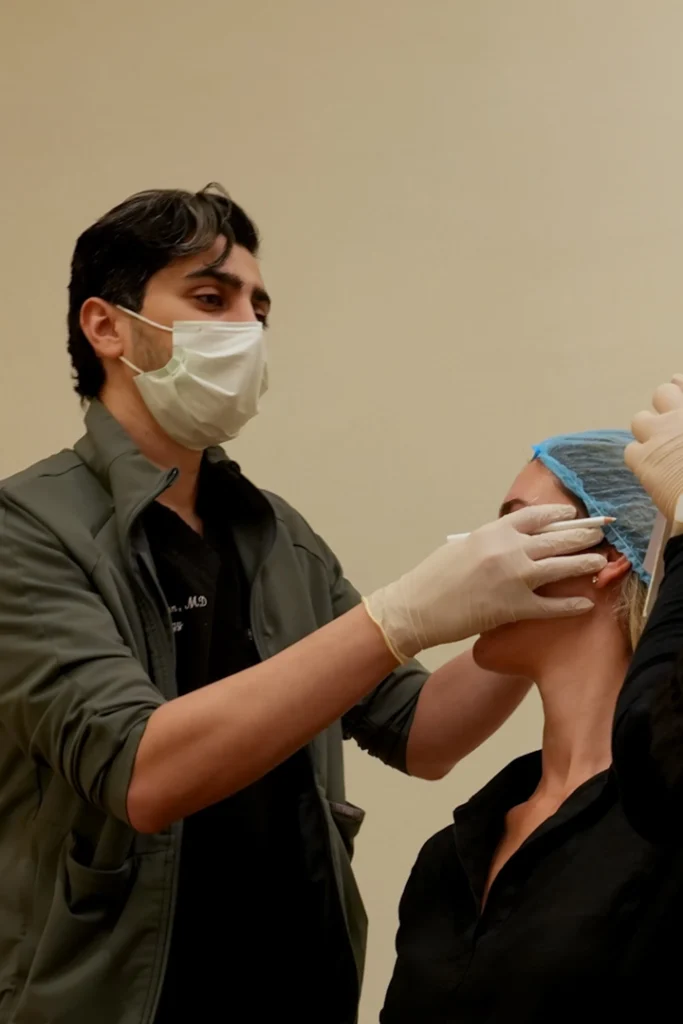
Skin & Aesthetic Concerns We Assess
Aesthetic dermatology can address a wide range of concerns rather than focusing on a single feature or procedure. Patients may seek treatment for wrinkles, fine lines, reduced facial volume, skin laxity, pigmentation, uneven skin tone, enlarged pores, acne scars, or changes in skin texture and firmness. Facial assessment may also identify changes in the cheeks, jawline, chin, or other areas that influence overall facial balance. Some concerns respond best to injectables, while others may require laser treatment, chemical peels, skincare, or a combination approach. Different skin tones and skin conditions also require different treatment parameters to reduce avoidable irritation or pigmentation problems. Dr. Haitham evaluates the concern first and then recommends the most appropriate treatment rather than fitting every patient into the same procedure.
Aesthetic Dermatology Treatments We Offer in Riyadh
Aesthetic dermatology includes several treatment categories that can be used individually or combined according to the patient’s needs. At Dr. Haitham’s Riyadh practice, the treatment plan may involve neuromodulators, dermal fillers, collagen stimulators, facial rejuvenation treatments, chemical peels, lasers, or skin-quality procedures. Each option addresses different aspects of facial ageing, skin texture, volume, movement, pigmentation, or structural support. Some treatments provide relatively immediate changes, while others work progressively through collagen stimulation or skin remodeling. Combination treatment may sometimes be appropriate when several factors contribute to the same aesthetic concern. The final plan is based on medical assessment, facial anatomy, skin quality, and realistic treatment goals rather than using every available procedure.
Botox & Neuromodulators
Botox and other neuromodulator treatments are commonly used to soften dynamic wrinkles created by repeated facial muscle movement. These may include expression lines affecting areas such as the forehead, between the eyebrows, or around the eyes when treatment is appropriate. The injections temporarily reduce selected muscle activity rather than adding volume to the face. Careful placement is important because facial expression, muscle strength, symmetry, and individual anatomy differ between patients. Results generally develop over several days and are temporary, so maintenance may be considered when movement gradually returns. Dr. Haitham plans neuromodulator treatment around natural facial expression instead of attempting to eliminate all movement.
Dermal Fillers
Dermal fillers are injectable treatments used to restore selected areas of lost volume, improve facial contours, or soften certain folds and lines. Different fillers have different compositions, firmness, longevity, and suitable treatment areas, so product selection should match the intended result. Hyaluronic acid fillers can provide relatively immediate volume and may be used for areas such as the cheeks, lips, chin, or facial folds when clinically appropriate. Other fillers can combine volume correction with collagen-stimulating effects. Proper facial assessment is particularly important because excessive or poorly positioned filler can distort natural proportions. Dr. Haitham considers facial anatomy, previous filler treatments, tissue quality, and the patient's aesthetic goals before developing an injection plan.
Facial Rejuvenation
Facial rejuvenation is not a single procedure but a personalized strategy for addressing the different changes that occur with facial ageing. These may include volume loss, wrinkles, changing facial contours, pigmentation, reduced elasticity, skin laxity, and uneven skin texture. Depending on the assessment, a rejuvenation plan may combine injectables, collagen stimulation, laser treatments, skincare, or other non-surgical treatments. Treating the underlying causes of an aged or tired appearance can often create a more balanced result than focusing on one isolated wrinkle. The goal is facial harmonization rather than making every feature larger, tighter, or completely wrinkle-free. Dr. Haitham develops each facial rejuvenation plan around the patient's existing features and desired level of change.
Sculptra
Sculptra is a collagen biostimulator containing poly-L-lactic acid, or PLLA, that works differently from a conventional hyaluronic acid filler. Instead of relying primarily on immediate gel volume, the treatment stimulates collagen production progressively within selected tissues. It may be considered for patients with facial volume loss, reduced structural support, or broader age-related facial changes. Results develop gradually over several weeks and months, so Sculptra can suit patients who prefer progressive rather than sudden rejuvenation. Treatment commonly requires a planned series of sessions depending on the degree of correction required. Dr. Haitham determines whether Sculptra, another collagen stimulator, or a conventional dermal filler better matches the patient's facial anatomy and goals.
Radiesse
Radiesse is a calcium hydroxylapatite, or CaHA, injectable that combines structural filling properties with collagen-stimulating effects. Its gel carrier can provide initial contour or volume support, while the CaHA microspheres contribute to a longer-term regenerative response. Depending on the formulation, technique, and applicable indication, Radiesse may be considered for facial contouring, deeper folds, jawline concerns, hand volume loss, or selected skin-quality treatments. Its characteristics differ from both hyaluronic acid fillers and PLLA-based Sculptra, so the products are not interchangeable. Treatment depth, concentration, and injection technique also change according to the anatomical area being treated. Dr. Haitham assesses whether the structural properties of Radiesse suit the patient's concern before recommending treatment.
Chemical Peels & Skin Renewal
An aesthetic cosmetic chemical peel treatment uses carefully selected chemical solutions to produce controlled exfoliation and skin renewal. Depending on the type and strength of peel, treatment may help improve concerns such as uneven skin tone, superficial pigmentation, acne-related marks, rough texture, or selected fine lines. The correct peel depends on skin type, pigmentation tendency, medical history, current skincare, and the depth of treatment required. Stronger treatment is not automatically better because inappropriate peel selection can increase irritation or post-inflammatory pigmentation. An aesthetic cosmetic skin chemical peel treatment should therefore be selected after a proper skin assessment rather than according to a standard package. Dr. Haitham can also determine whether a peel, laser procedure, topical treatment, or combination approach better suits the concern.
Laser & Energy-Based Treatments
Laser treatments can form an important part of aesthetic dermatology when concerns involve pigmentation, scars, texture, unwanted hair, vascular changes, or aspects of skin rejuvenation. Different laser and energy-based technologies interact with the skin in different ways, making device selection and treatment settings important. Some conditions require multiple treatment sessions because skin remodeling and pigment reduction often occur progressively. Skin type and pigmentation tendency also influence which technology and settings are appropriate. Patients searching for an aesthetic dermatology and laser center in Riyadh should therefore consider the medical assessment behind the technology, not simply the device name. Dr. Haitham integrates laser treatment into a broader dermatological plan when it is suitable for the patient's skin and treatment goals.
Skin Boosters & Skin Quality Treatments
Not every aesthetic concern requires additional facial volume or significant contour change. Skin boosters and other skin-quality treatments may be considered when the main goals involve hydration, texture, elasticity, luminosity, or overall skin appearance. Depending on the product or procedure, these treatments can support skin rejuvenation without producing the same structural effect as conventional dermal fillers. They may also form part of a combined plan alongside lasers, chemical peels, injectables, or medical skincare. Product selection and treatment intervals should reflect the patient's skin condition rather than a universal schedule. Dr. Haitham assesses whether improving skin quality alone is enough or whether another underlying issue also needs treatment.
Advanced Care Solutions: Our Treatment Philosophy
Dr. Haitham’s approach to aesthetic medicine begins with diagnosis and assessment before treatment selection. Instead of treating every wrinkle, pigment spot, hollow, or area of laxity separately, he considers how skin quality, facial anatomy, volume, movement, and ageing interact. A patient with facial lines may need a neuromodulator, filler, skin treatment, or combination depending on what is actually causing those lines. The same principle applies to pigmentation, acne scars, skin laxity, and changes in facial definition. Treatment plans are therefore personalized to achieve appropriate improvement while avoiding unnecessary procedures or excessive correction. This assessment-led philosophy supports natural-looking results and allows medical dermatology and cosmetic dermatology to work together when required.
Why Patients Choose Our Clinic for Aesthetic Dermatology in Riyadh
Dr. Haitham Al-Gzlan is a Consultant Dermatologist and Aesthetic Doctor based in Riyadh whose practice covers medical dermatology, aesthetic dermatology, laser treatments, facial aesthetics, and hair and scalp care. His website identifies him as American Board-certified with more than 10 years of clinical experience, allowing cosmetic concerns to be assessed within a broader understanding of skin health. Each patient receives an individualized assessment based on skin type, facial features, medical history, previous procedures, and treatment goals. This helps determine whether Botox, dermal fillers, Sculptra, Radiesse, laser treatment, chemical peels, or another approach is appropriate. Saudi Arabia’s Ministry of Health also emphasizes medical supervision, informed consent, practitioner credentials, and transparent product information for procedures such as fillers and Botox. The focus is therefore on physician-led planning, patient education, and balanced aesthetic outcomes rather than treatment based solely on trends.
Aesthetic Dermatology for Men in Riyadh
Aesthetic dermatology for men uses the same medical principles as treatment for women while accounting for differences in facial structure, muscle strength, hair distribution, skin characteristics, and aesthetic preferences. Men may seek treatment for expression lines, acne scars, pigmentation, skin texture, jawline definition, volume changes, or general facial ageing. Botox, dermal fillers, collagen stimulators, lasers, chemical peels, and skincare may all be considered depending on the concern. Treatment planning should avoid automatically applying feminine facial proportions or identical injection patterns to every patient. Some men prefer subtle changes that preserve stronger facial contours and natural expression rather than visibly altering their appearance. Dr. Haitham creates individualized plans according to anatomy, skin condition, lifestyle, and the patient’s own aesthetic goals.
Begin Your Personalized Face, Body & Skincare Journey
Aesthetic treatment should begin with understanding what you want to improve and why the concern has developed. During your consultation, Dr. Haitham evaluates your skin, facial characteristics, medical history, previous aesthetic treatments, current skincare, and personal goals. He can then explain which medical aesthetic treatments may provide meaningful improvement and which procedures are unlikely to benefit you. Your plan may focus on one procedure or combine different treatments in stages when several concerns need attention. Appropriate skincare and long-term skin maintenance can also be incorporated alongside in-clinic procedures. The result is a personalized face, skin, and aesthetic care journey rather than a standard package applied to every patient.
Book Your Consultation with Dr. Haitham Al-Gzlan
Your aesthetic dermatology consultation provides an opportunity to discuss your concerns before committing to a particular treatment. Dr. Haitham assesses the skin and relevant facial anatomy while reviewing medical conditions, medications, allergies, previous procedures, and current skincare products. Photographs or other clinical documentation may be used when appropriate to establish a baseline and evaluate future changes. You can discuss expected benefits, limitations, potential side effects, downtime, treatment alternatives, and maintenance before deciding whether to proceed. If several procedures could address the same concern, their differences can be explained so the treatment plan reflects your priorities. This consultation-led approach helps ensure that aesthetic treatment follows the assessment rather than the other way around.
Aesthetic Dermatology FAQs – Questions Riyadh Patients Ask
A dermatologist is a medical doctor trained to diagnose and treat diseases of the skin, hair, and nails and may also perform medical aesthetic procedures. An aesthetician primarily provides non-medical skincare and beauty services and does not have the same medical training or scope.
Aesthetic dermatology can improve the appearance of concerns such as acne scars or pigmentation, but active medical conditions may require diagnosis and medical treatment first. A dermatologist can determine whether medical care, aesthetic treatment, or both are appropriate.
The right treatment depends on your diagnosis, skin type, facial anatomy, medical history, previous procedures, and goals. A consultation helps determine whether injectables, lasers, chemical peels, skincare, or another treatment is most appropriate.
Many elective cosmetic treatments and certain skincare ingredients are postponed or modified during pregnancy because safety data may be limited. Tell your dermatologist and obstetric clinician about pregnancy or breastfeeding before undergoing treatment or changing medical skincare.
The timeline depends on the procedure: some fillers provide immediate correction, while collagen stimulators, lasers, and skin-remodeling treatments develop progressively. Your dermatologist should explain the expected timeline before treatment.
Usually, but some active skincare ingredients may need to be stopped or adjusted before and after procedures such as lasers or chemical peels. Bring details of your skincare products to your consultation so appropriate instructions can be provided.
There is no single ideal age because treatment should respond to a specific concern rather than a birthday. Skin condition, facial anatomy, medical history, treatment goals, and realistic expectations are more useful factors than age alone.
Potential risks depend on the treatment and can range from temporary redness or swelling to less common complications such as pigmentation changes, scarring, infection, or injectable-related complications. Appropriate patient selection, technique, and follow-up help manage risk, but no medical procedure is completely risk-free.
Maintenance frequency depends on the treatment, product, skin condition, ageing process, and individual response. Follow-up assessment is preferable to repeating Botox, fillers, lasers, or other procedures automatically according to a fixed schedule.
Yes, dermatologists can use treatments such as lasers, microneedling, chemical procedures, injections, or other techniques to make selected scars less noticeable. The most suitable approach depends on scar type, depth, color, age, and the patient's skin characteristics.
Purely cosmetic treatment is commonly excluded from standard health-insurance benefits, while medically necessary dermatological care may fall under different coverage rules. Coverage depends on your policy, diagnosis, and insurer, so confirm authorization directly before treatment.
Contact your treating doctor so the result can be assessed after the appropriate healing or settling period rather than attempting to correct it elsewhere immediately. The next step depends on the procedure, cause of concern, timing, and whether observation, treatment, or correction is appropriate.
Ready to Enhance Your Natural Beauty? Book Your Aesthetic Dermatology Consultation in Riyadh
If you are considering aesthetic treatment in Riyadh, a medical consultation can help identify which options genuinely match your skin and facial concerns. Dr. Haitham Al-Gzlan provides dermatologist-led assessment for facial aesthetics, injectables, skin rejuvenation, pigmentation, acne scars, laser treatments, and other cosmetic dermatology concerns. Your treatment plan may involve Botox, dermal fillers, Sculptra, Radiesse, chemical peels, skin-quality procedures, or another approach depending on your needs. Expected outcomes, treatment stages, downtime, risks, and maintenance can be discussed before you decide to proceed. The goal is not to follow every aesthetic trend but to select treatments that complement your features and support healthy-looking skin. Book your aesthetic dermatology consultation in Riyadh to receive a personalized treatment plan based on your skin, facial anatomy, and aesthetic goals.