
PRF Treatment for Hair Loss in Riyadh – By
Dr. Haitham Al-Gzlan
Hair thinning and hair loss can develop for many different reasons, and the most appropriate treatment depends on the underlying cause, pattern of hair loss, scalp condition and individual goals.
PRF (Platelet-Rich Fibrin) is an autologous treatment that uses a small sample of the patient’s own blood to prepare a fibrin-rich platelet concentrate for targeted scalp treatment. It may be considered as part of an individualized approach to certain types of hair thinning, particularly when a dermatologist determines that it is clinically appropriate.
At his practice in Riyadh, Dr. Haitham Al-Gzlan evaluates the hair and scalp before recommending PRF or other hair-loss treatments. The goal is to identify the likely cause of hair loss and develop a treatment plan suited to the individual rather than applying the same approach to every patient.
What Is PRF for Hair Loss?
PRF stands for Platelet-Rich Fibrin. It is prepared from the patient’s own blood and contains platelets and other blood components within a fibrin-based matrix.
During preparation, a small blood sample is processed to create the PRF preparation used for treatment. The resulting material can then be applied through targeted injections into selected areas of the scalp.
PRF has attracted interest in regenerative and dermatological applications because the fibrin matrix can retain platelets and other cellular components. These components may contribute to the release of biological mediators involved in tissue repair and the local healing environment.
For hair loss, PRF is being investigated as a treatment that may support the scalp and hair follicle environment. However, it is not a universal treatment for every type of hair loss, and individual response can vary.
How PRF May Support Hair and Scalp Health
Growth Factors and the Fibrin Matrix
PRF contains platelets within a fibrin-rich structure. Platelets contain biological mediators that may participate in tissue repair and cellular signaling.
The fibrin matrix is one of the characteristics that distinguishes PRF from conventional platelet-rich plasma preparations. Researchers have proposed that this structure may influence how cellular components and growth factors are retained and released.
The exact clinical effect can vary depending on the preparation method, treatment protocol and individual patient factors.
PRF and the Hair Follicle Environment
Hair growth depends on the condition of the follicle and its surrounding scalp environment. In certain forms of hair thinning, treatments that target the scalp may be considered as part of a broader hair-restoration strategy.
PRF may be used to support the local scalp environment, but it should not be presented as a guaranteed method of restoring hair or reversing every form of alopecia.
A proper diagnosis remains important because hair loss caused by nutritional deficiencies, inflammatory scalp disorders, hormonal conditions, medications, autoimmune disease or other medical factors may require different management.
Why PRF May Be Considered in Hair Restoration
PRF may be considered when a dermatologist identifies a suitable pattern of hair thinning and believes that a platelet-fibrin treatment could form part of the overall treatment plan.
The decision may depend on:
- The type and pattern of hair loss
- The degree of hair thinning
- Existing hair density
- Scalp health
- The condition of the hair follicles
- Possible underlying medical causes
- Previous treatments
- Current medications and medical history
- Individual treatment goals
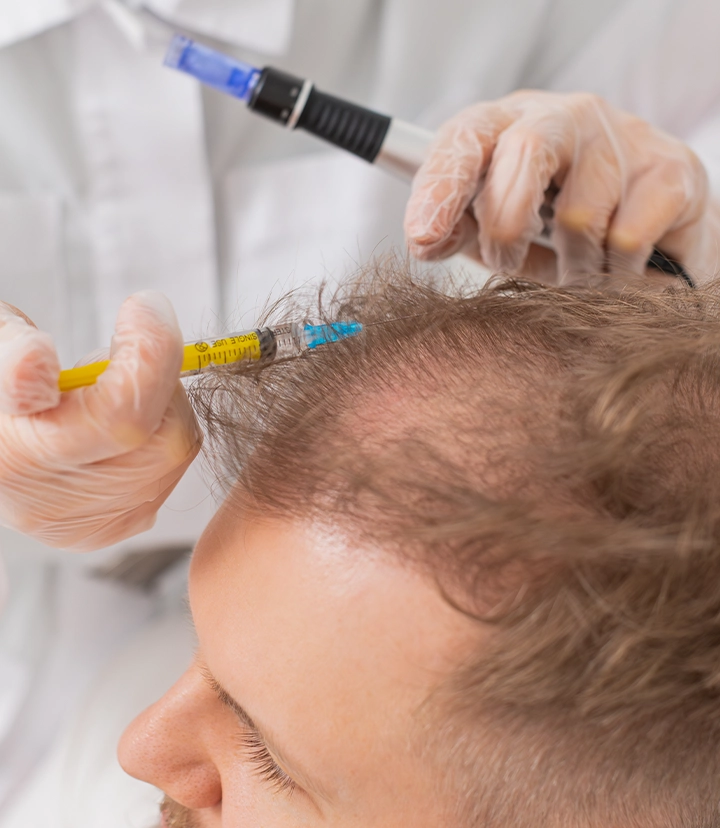
PRF should therefore be viewed as one possible component of a personalized hair-loss treatment plan rather than a standalone solution for every patient.
PRF for Different Types of Hair Loss
Pattern Hair Loss
Pattern hair loss, also known as androgenetic alopecia, is one of the conditions for which platelet-based treatments have been investigated.
PRF has been studied as a potential treatment for androgenetic alopecia, but the clinical evidence remains limited compared with more established approaches, and treatment protocols are not yet fully standardized.
A dermatologist should determine whether PRF is appropriate based on the individual’s diagnosis and degree of hair loss.
Early Hair Thinning
Patients noticing early changes in hair density may benefit from an assessment before deciding on treatment.
Early evaluation can help identify whether the thinning is related to pattern hair loss, scalp inflammation, nutritional factors, hormonal changes or another underlying condition.
Where appropriate, PRF may be discussed as one part of an individualized treatment strategy.
Reduced Hair Density
Reduced density can have different causes and may affect different areas of the scalp.
A scalp and hair assessment helps determine the distribution of thinning, the condition of existing follicles and whether additional investigation or treatment may be necessary.
PRF may be considered when the clinical findings and treatment goals support its use.
Hair Loss Associated With Scalp or Medical Conditions
Not all hair loss should be treated with PRF.
Inflammatory scalp disorders, autoimmune forms of alopecia, sudden or unexplained hair loss and hair loss associated with systemic or nutritional conditions may require specific medical evaluation and treatment.
For this reason, diagnosing the cause of hair loss is an important step before selecting a regenerative or procedural treatment.
PRF vs PRP for Hair Loss
PRF and PRP are both autologous platelet-based treatments, meaning they are prepared using the patient’s own blood. However, they are not identical preparations.
How PRF and PRP Are Prepared
PRP, or Platelet-Rich Plasma, is prepared to create a platelet-rich plasma component.
PRF, or Platelet-Rich Fibrin, incorporates platelets within a fibrin-based matrix.
Preparation methods can differ between systems and protocols, which means that PRF and PRP should not be treated as completely standardized products.
Fibrin Matrix and Growth-Factor Release
One of the main differences between PRF and PRP is the presence of a fibrin matrix in PRF.
The fibrin structure can influence the organization and retention of cellular components within the preparation. Researchers have proposed that this may affect the pattern of biological mediator release.
However, differences in preparation techniques and treatment protocols make it difficult to assume that one platelet-based treatment will produce the same result in every patient.
When a Doctor May Consider PRF or PRP
The choice between PRF and PRP depends on the patient’s diagnosis, scalp condition, treatment objectives, medical history and the physician’s assessment.
Neither treatment should automatically be considered superior for every patient.
If PRP is being considered for hair loss, the treatment plan should be based on the individual’s clinical findings rather than on the name of the procedure alone.
Learn more about: PRP for Hair Loss
What Happens During a PRF Hair Treatment?
1. Scalp and Hair Assessment
The process begins with an assessment of the hair and scalp.
Dr. Haitham may evaluate:
- The pattern of hair loss
- Hair density
- Scalp condition
- Areas of thinning
- The apparent condition of existing hair follicles
- Previous hair-loss treatments
- Relevant medical history
- Current medications
- Possible underlying causes
Additional evaluation may be recommended when the pattern of hair loss suggests an underlying medical condition.
2. Blood Collection
A small amount of the patient’s own blood is collected using a standard blood-drawing technique.
Because PRF is an autologous treatment, the material used during the procedure is derived from the patient’s own blood.
3. PRF Preparation
The blood sample is processed using a centrifugation technique to prepare the PRF component.
PRF preparation methods can vary, and the characteristics of the final preparation depend on the specific protocol and system being used.
The prepared PRF is then made ready for targeted scalp treatment.
4. PRF Injection Into the Scalp
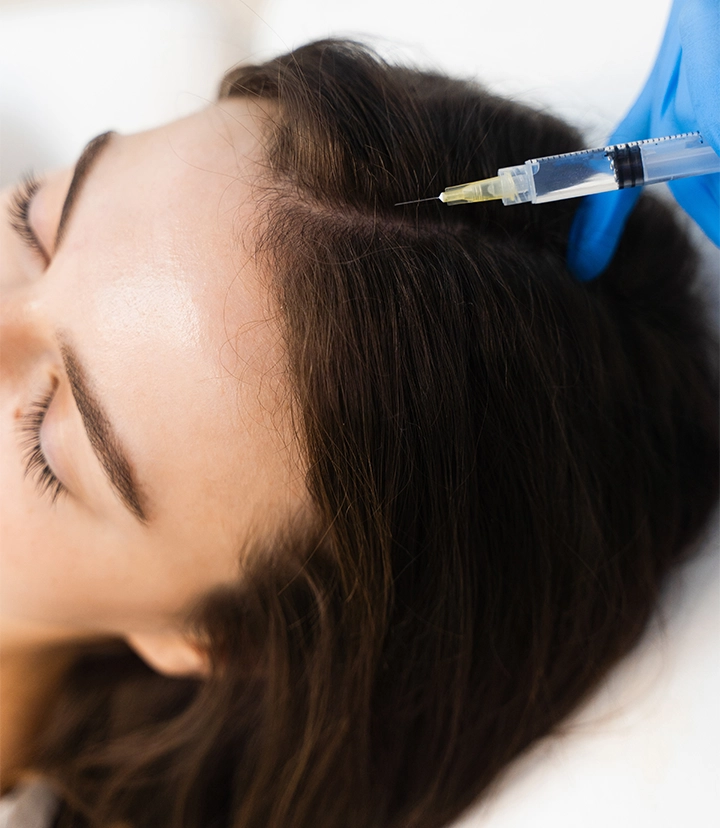
The PRF preparation is delivered through targeted injections into selected areas of the scalp.
Treatment areas are determined according to the patient’s pattern of thinning and the treatment plan established during the consultation.
5. Aftercare and Follow-Up
After treatment, the patient receives individualized aftercare instructions.
Follow-up allows the doctor to assess the scalp, review changes over time and determine whether additional treatment or another approach should be considered.
Who May Be a Candidate for PRF Hair Treatment?
PRF may be considered for selected patients with hair thinning or certain patterns of hair loss after appropriate medical assessment.
A consultation may consider:
- Type of hair loss
- Pattern and extent of thinning
- Existing hair density
- Scalp health
- Medical history
- Medications
- Previous hair treatments
- Treatment expectations
- Whether another diagnosis or treatment should be considered first
PRF may not be appropriate for every patient.
If hair loss is sudden, severe, unexplained or associated with scalp symptoms, a dermatologist may recommend further evaluation before proceeding with a procedural treatment.
What to Expect After PRF Treatment
Downtime and Recovery
PRF scalp treatment is generally performed as an outpatient procedure.
Temporary effects such as:
- Redness
- Mild swelling
- Tenderness
- Bruising
- Scalp sensitivity
may occur around the treated areas.
The degree and duration of these effects can vary between patients.
When Changes May Become Noticeable
Hair growth is a gradual biological process, so changes should not be expected immediately after treatment.
Any response to PRF may develop progressively and varies between individuals.
The timing and degree of change depend on factors such as the underlying cause of hair loss, the condition of the follicles, treatment protocol and individual response.
Why Multiple Sessions May Be Recommended
A treatment plan may involve more than one session depending on the diagnosis and clinical goals.
The appropriate number and timing of sessions should be determined by the treating physician rather than following a fixed schedule for every patient.
PRF Hair Treatment Aftercare
After PRF treatment, Dr. Haitham may provide individualized instructions based on the treatment performed and the patient’s scalp condition.
These may include guidance regarding:
- When to wash the scalp
- Physical activity
- Heat exposure
- Hair products
- Touching or manipulating treated areas
- Other scalp treatments
- Follow-up appointments
Patients should follow the specific aftercare instructions provided by their treating physician.
Possible Side Effects and Considerations
PRF treatment involves injections and blood collection, so temporary local effects can occur.
Possible effects may include:
- Tenderness
- Redness
- Swelling
- Bruising
- Temporary scalp sensitivity
As with any medical procedure, PRF is not completely risk-free.
Patients should discuss relevant medical conditions, medications, allergies, bleeding tendencies and previous treatments with their physician before undergoing treatment.
The suitability of PRF should be determined after an appropriate clinical assessment.
Can PRF Be Combined With Other Hair-Loss Treatments?
In some cases, PRF may be considered as part of a broader hair-loss treatment plan.
Depending on the diagnosis, a dermatologist may discuss other medical or procedural approaches alongside or instead of PRF.
The appropriate combination depends on the underlying cause of hair loss, the patient’s medical history, existing treatments and treatment objectives.
There is no single combination that is appropriate for every patient.
Current Evidence for PRF in Hair Loss
Research into PRF for hair loss is still developing.
A 2024 review specifically examining PRF in androgenetic alopecia highlighted the potential of PRF as an emerging treatment while also noting the limited number of available studies and the need for further research.
PRF preparation and treatment protocols can also vary between studies and clinical systems. This makes direct comparison between different PRF treatments difficult.
For this reason, PRF should be discussed as a potential treatment option for selected patients, rather than as a guaranteed treatment for hair loss.
The decision to use PRF should be based on the patient’s diagnosis, clinical findings and individualized treatment goals.
PRF Hair Treatment in Riyadh With Dr. Haitham Al-Gzlan
If you are experiencing hair thinning or reduced hair density, a medical assessment can help determine the underlying cause before choosing a treatment.
Dr. Haitham Al-Gzlan provides dermatologist-led assessment for patients considering hair and scalp treatments in Riyadh.
Rather than treating every case of hair loss in the same way, the consultation focuses on understanding the pattern of hair loss, scalp condition, existing hair density, medical history and previous treatment.
Where appropriate, PRF may be considered as part of an individualized hair-restoration strategy.
Frequently Asked Questions About PRF for Hair Loss
PRF, or Platelet-Rich Fibrin, is an autologous treatment prepared from the patient's own blood. The resulting fibrin-rich platelet preparation can be delivered through targeted scalp injections and may be considered for selected types of hair thinning.
No. Both treatments use the patient's own blood and contain platelets, but PRF incorporates a fibrin matrix while PRP is prepared as platelet-rich plasma. Preparation methods and clinical protocols can also vary.
PRF is being investigated for its potential effects on the local scalp environment. Platelets and other components within the fibrin matrix may participate in biological signaling and tissue-repair processes. The clinical response, however, varies between patients and more research is needed to establish standardized treatment protocols.
No. Hair loss has many possible causes, and PRF is not appropriate for every type of alopecia. A dermatologist should assess the pattern and cause of hair loss before recommending treatment.
There is no single number of sessions that applies to every patient. The treatment schedule depends on the diagnosis, degree of thinning, treatment objectives and individual response.
The overall appointment time can vary depending on the consultation, blood collection, PRF preparation and scalp treatment. The exact duration can be discussed during the consultation.
Patients may experience temporary redness, swelling, tenderness, bruising or scalp sensitivity. Most aftercare requirements are individualized according to the treatment and patient.
Any changes in hair density or appearance are expected to develop gradually rather than immediately. Individual responses vary, and the timing of any visible change depends on several clinical factors.
It may be possible in selected cases. The decision depends on the cause of hair loss, medical history, existing treatments and the overall treatment plan.
PRF for hair and scalp concerns can be discussed with Dr. Haitham Al-Gzlan in Riyadh following an individual medical assessment.
Book a PRF Hair and Scalp Consultation in Riyadh
If you are experiencing hair thinning, reduced hair density or ongoing hair loss, a consultation can help determine the likely cause and whether PRF is appropriate for you.
Book a hair and scalp consultation with Dr. Haitham Al-Gzlan in Riyadh to discuss your individual treatment options.