
Hair Restoration Treatment in Riyadh
Hair restoration treatment in Riyadh begins with understanding why hair is thinning or being lost, how the loss is progressing, and what is happening to the hair and scalp. Dr. Haitham Al-Gzlan provides personalized hair and scalp assessment for patients experiencing hair thinning, reduced hair density, excessive shedding and other hair-loss concerns.
Hair restoration is not a single procedure. Depending on the diagnosis and individual circumstances, treatment may involve medical management, regenerative approaches or other restoration strategies. The focus is on understanding the underlying concern before selecting an appropriate treatment approach.
What Is Hair Restoration?
Hair restoration is a personalized approach to addressing hair loss, hair thinning and reduced hair density.
Depending on the underlying condition, restoration may involve treatments intended to support existing hair follicles, address selected causes of hair loss, support hair growth or improve the appearance of hair density.
The appropriate approach can depend on:
- The type and pattern of hair loss
- The duration and progression of thinning
- Hair and scalp health
- Existing hair density
- Hair follicle condition
- Relevant medical or hormonal factors
- العلاجات السابقة
- Individual restoration goals
A proper assessment helps determine which options may be appropriate for the individual patient.
Who May Consider Hair Restoration Treatment?
Hair restoration may be considered for patients experiencing:
- Gradual hair thinning
- Reduced hair density
- Pattern hair loss
- A receding hairline
- Persistent or excessive hair shedding
- Early changes in hair growth
- Thinning in specific areas of the scalp
- Selected forms of hair loss associated with medical or lifestyle factors
Not every type of hair loss requires a restoration procedure. Some patients may first need medical evaluation or treatment of an underlying condition, while others may be suitable for regenerative or restoration-focused approaches.
Understanding Hair Loss Before Restoration
Hair loss can have many possible causes. Understanding the pattern and potential contributing factors is an important part of treatment planning.
Genetic and Pattern Hair Loss
Genetic factors and family history can contribute to male pattern hair loss and female pattern hair loss. These conditions can develop gradually and may affect hair density and distribution differently between individuals.
Hormonal and Medical Factors
Hormonal changes and certain medical conditions can contribute to changes in hair growth or increased shedding. Medical history can therefore be an important part of the hair restoration assessment.
Nutritional Factors
Nutritional factors may be relevant in some patients experiencing hair shedding or thinning. Where clinically appropriate, potential nutritional contributors can be considered during the overall assessment.
Stress and Illness
Significant physical or emotional stress, illness or other major changes in the body may be associated with increased hair shedding in some patients.
Scalp Conditions
Scalp inflammation, irritation, infection and other scalp conditions can affect the hair environment. When a scalp condition is present, addressing the underlying issue may be an important part of management.
Hair-Care and Styling Factors
Repeated heat exposure, chemical processing and prolonged tension from certain hairstyles can contribute to hair damage or traction-related hair loss in some individuals.
Hair & Scalp Assessment in Riyadh
A detailed hair and scalp assessment helps determine what may be contributing to hair loss and which treatment options may be appropriate.
During the consultation, Dr. Haitham may consider:
- The pattern and distribution of hair loss
- Hair density
- Scalp health
- The progression of thinning or shedding
- التاريخ العائلي
- Relevant medical history
- Previous hair-loss treatments
- Current medications and other relevant factors
- Individual restoration goals
Additional investigations may be considered when clinically appropriate.
The purpose of the assessment is to understand the overall pattern of hair loss and identify relevant contributing factors before treatment is selected.
Hair Restoration Treatment Options
There is no single hair restoration treatment that is right for every patient.
Depending on the clinical assessment, Dr. Haitham may consider selected medical and regenerative approaches as part of an individualized treatment plan.
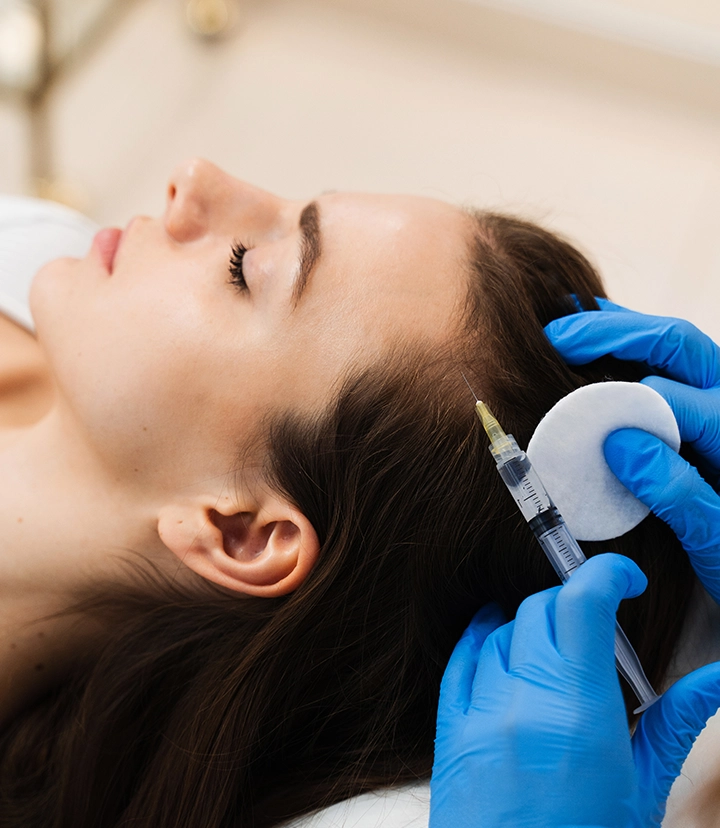
PRP Hair Restoration Treatment
Platelet-rich plasma (PRP) is an autologous treatment approach that uses components derived from the patient's own blood. PRP may be considered for selected patients with certain hair-loss or reduced-density concerns. Its suitability depends on factors such as the type and stage of hair loss, hair and scalp condition, follicular activity and individual circumstances. The treatment schedule and follow-up approach are determined according to the patient's needs rather than applying an identical protocol to everyone.
PRF for Hair Restoration
Platelet-rich fibrin (PRF) is another autologous approach that may be considered for selected hair restoration goals. PRF uses the patient's own blood and follows a different preparation process from PRP. Whether it is appropriate depends on the patient's condition, treatment goals and clinical assessment.
Regenlab for Hair Restoration
Regenlab may be considered as part of a personalized hair restoration strategy where clinically appropriate. The treatment approach depends on the patient's hair and scalp condition, pattern of hair loss and overall restoration plan.
Exosmart for Hair Restoration
Exosmart may be considered for selected patients as part of an individualized hair restoration approach. Treatment suitability is determined following assessment of the hair, scalp and underlying concern. The appropriate approach depends on the individual clinical situation.
Acell for Hair Restoration
Acell may be considered within a personalized hair restoration protocol for selected patients. Whether it is appropriate depends on the individual's condition, treatment goals and clinical assessment. The recommended approach can be discussed during consultation.
Choosing the Right Hair Restoration Approach
Different hair concerns require different treatment considerations.
| Hair concern | What may be assessed | Possible treatment direction |
|---|---|---|
| Gradual hair thinning | Pattern, density and progression | Personalized hair-loss management or restoration |
| Reduced hair density | Distribution and follicular condition | Selected regenerative or restoration approaches |
| Pattern hair loss | Pattern, progression and family history | Individualized treatment planning |
| Increased hair shedding | Timing, triggers and medical history | Assessment of potential contributing factors |
| Scalp-related concerns | Scalp health and signs of inflammation | Management of the underlying scalp concern |
| Restoration goals | Density, pattern and expectations | Personalized restoration plan |
The treatment should follow the assessment, not the other way around.
Hair Restoration vs. Hair Loss Treatment
Hair restoration and hair-loss treatment are closely related, but they are not exactly the same.
Hair-loss treatment focuses primarily on identifying and managing the condition or factors contributing to hair loss.
Hair restoration is a broader term that may include supporting existing hair, addressing reduced density and considering appropriate medical, regenerative or other restoration-focused approaches.
For some patients, hair-loss management and restoration may form complementary parts of the same long-term plan.
Hair Restoration vs. Hair Transplant
Hair restoration is broader than hair transplantation.
A hair transplant is a surgical procedure that moves hair follicles from a donor area to areas affected by hair loss. Hair restoration, however, can include a range of medical and non-surgical approaches designed around the patient’s individual condition.
Not every patient with hair loss requires a transplant.
When surgical restoration is being considered, factors such as donor hair availability, the extent of hair loss, long-term planning, scalp condition and realistic expectations become important.
The Hair Restoration Journey
A personalized hair restoration plan generally involves several stages.
01 — Understand the Concern
The first step is identifying what has changed, whether that involves increased shedding, gradual thinning, reduced density or a receding hairline.
02 — Assess the Hair and Scalp
Hair density, scalp health, hair-loss pattern and other relevant findings are evaluated.
03 — Consider Contributing Factors
Genetic, hormonal, medical, nutritional, lifestyle and scalp-related factors may be considered according to the patient's history.
04 — Select an Appropriate Treatment
Available treatment options are discussed according to the diagnosis, clinical suitability and individual restoration goals.
05 — Monitor and Adjust
Hair restoration is a gradual process. Follow-up allows the response to treatment to be assessed and the approach to be reviewed when appropriate.
What Can Affect Hair Restoration Results?
The response to hair restoration treatment varies between individuals.
Factors that may influence the overall course include:
- The underlying cause of hair loss
- The type and pattern of thinning
- Duration of the condition
- Existing hair density
- Hair follicle health
- Scalp condition
- Selected treatment approach
- الاستجابة الفردية
- Ongoing management and follow-up
Because these factors differ between patients, an identical result or timeline should not be expected for everyone.
Hair Restoration Results and Timeline
Hair growth is a gradual biological process, so meaningful changes should not generally be expected immediately.
Depending on the treatment and individual circumstances, progress may be evaluated over the following months rather than days or weeks.
Follow-up allows the response to be assessed in relation to the original hair-loss pattern and restoration goals. The timeline can vary according to the treatment selected and the patient’s individual response.
Hair Restoration Aftercare and Follow-Up
Aftercare depends on the specific treatment performed.
Patients may receive individualized guidance regarding:
- Hair and scalp care
- Washing and product use
- Physical activity
- التعرّض للشمس
- Treatment-specific precautions
- When normal activities can be resumed
- Follow-up appointments
Following the recommended aftercare helps support appropriate recovery and allows treatment response to be monitored.
Hair Restoration Treatment in Riyadh, Saudi Arabia
Patients seeking hair restoration treatment in Riyadh can benefit from a dermatologist-led assessment that considers both the hair and scalp before treatment is selected.
Dr. Haitham Al-Gzlan provides personalized dermatological care for patients experiencing hair loss, hair thinning, reduced hair density and other hair and scalp concerns.
Based in Riyadh, his approach may include selected restoration and regenerative options such as PRP, PRF, Regenlab, Exosmart and Acell where clinically appropriate.
The focus is on understanding the patient’s condition, discussing realistic goals and selecting an approach suited to the individual’s needs.
الأسئلة الشائعة
Hair restoration treatment is a personalized approach to addressing hair loss, hair thinning and reduced hair density. Depending on the patient's condition, treatment may involve medical management, regenerative approaches or other appropriate restoration strategies.
Patients with selected forms of hair thinning, reduced hair density, pattern hair loss or persistent shedding may be considered for hair restoration. Suitability depends on the underlying cause, hair and scalp condition and individual goals.
No. Different types of hair loss can have different causes and may require different approaches. A hair and scalp assessment helps determine whether restoration treatment is appropriate.
Hair-loss treatment focuses primarily on identifying and managing the causes or contributing factors behind hair loss. Hair restoration focuses more broadly on goals such as supporting existing hair, addressing reduced density and considering appropriate restoration treatments.
Hair restoration is a broader term that can include medical and non-surgical approaches. A hair transplant is a surgical procedure that moves hair follicles from a donor area to areas affected by hair loss. Not every patient seeking hair restoration requires a transplant.
PRP may be considered for selected hair-loss and hair-density concerns. Its suitability depends on the patient's diagnosis, hair and scalp condition and individual treatment goals.
PRF may be considered as part of a personalized hair restoration plan for selected patients. The appropriate approach depends on the clinical assessment.
Hair growth is gradual, and the timeline varies according to the underlying condition, treatment approach and individual response. Progress is assessed over time during follow-up.
The long-term course depends on the cause of hair loss, treatment approach and ongoing hair health. Some forms of hair loss may require continued management or maintenance.
The cost varies depending on the diagnosis, treatment approach, number of sessions and individual treatment plan. A consultation is required to determine the appropriate treatment and associated cost.
A professional assessment is recommended when hair loss is persistent, rapidly progressing, occurring in patches, associated with scalp changes or causing noticeable changes in hair density. Early assessment can help identify possible contributing factors and guide appropriate management.
Related Hair & Scalp Treatments
Explore related hair and scalp care:
- Hair & Scalp Treatment in Riyadh
- Hair Loss Treatment in Riyadh
- Hair Thinning Treatment
- PRP Hair Treatment
- PRF Hair Treatment
- Hair Restoration Treatment
Book a Hair Restoration Consultation in Riyadh
If you are experiencing hair loss, thinning, excessive shedding or reduced hair density, understanding the cause is an important first step toward choosing an appropriate treatment.
Dr. Haitham Al-Gzlan provides personalized hair and scalp assessment in Riyadh, followed by treatment planning based on your individual condition, goals and clinical suitability.
Book a consultation to discuss your hair restoration options.