
Hair Loss in Riyadh
Hair loss can develop gradually, occur suddenly, or appear as increased shedding, reduced hair density, or clearly defined areas of hair loss. The underlying cause can vary significantly from one person to another.
Hereditary factors, hormonal changes, illness, stress, nutritional factors, medications, autoimmune conditions, and scalp disorders can all affect the hair-growth cycle and follicular health.
Dr. Haitham Al-Gzlan provides personalized hair loss treatment in Riyadh, beginning with an assessment of the hair, scalp, pattern of loss, medical history, and relevant individual factors. The goal is to understand the underlying concern and develop an appropriate treatment plan based on the patient’s clinical needs.
Hair Loss Treatment in Riyadh
Hair loss treatment should begin with understanding why the hair is being lost or why shedding has increased rather than treating visible thinning alone.
Dr. Haitham Al-Gzlan assesses factors such as the type, pattern, duration, and progression of hair loss, along with scalp condition, relevant medical history, family history, previous treatments, and other clinical findings.
Depending on the diagnosis, management may involve:
- Medical treatment for appropriate types of hair loss
- Management of an underlying scalp or medical condition
- Regenerative treatments for selected patients
- Hair restoration procedures when clinically appropriate
- Monitoring and follow-up to assess changes over time
There is no single treatment that is appropriate for every form of hair loss. The most suitable approach depends on the underlying condition, the extent of hair loss, follicular status, scalp health, and individual circumstances.
What Causes Hair Loss?
Hair loss can have one or several contributing factors. Common causes and associations include:
Hereditary or Pattern Hair Loss
Androgenetic alopecia, commonly known as male or female pattern hair loss, is associated with genetic and hormonal factors. It typically develops progressively and can affect hair density in characteristic areas of the scalp.
Excessive Hair Shedding
Conditions such as telogen effluvium can cause increased shedding when a greater proportion of hair follicles enters the resting phase of the hair-growth cycle. Illness, significant stress, surgery, hormonal changes, and other physical triggers may contribute.
Hormonal Changes
Changes in hormone levels can affect hair growth and shedding. Depending on the individual, hormonal factors may be associated with hair changes during periods such as pregnancy, postpartum recovery, menopause, or certain endocrine conditions.
Nutritional Factors
Inadequate levels of certain nutrients may contribute to hair shedding or reduced hair quality in some patients. Nutritional assessment may be considered when the clinical history suggests a possible deficiency.
Medications and Medical Conditions
Some medications and systemic medical conditions can be associated with hair loss. Reviewing medical history and current medications can therefore be an important part of the assessment.
Autoimmune Conditions
Some immune-mediated conditions can affect hair follicles and produce localized or more extensive hair loss. Alopecia areata is one example.
Scalp Disorders
Inflammatory, infectious, or other scalp conditions may affect the scalp environment and contribute to shedding, hair breakage, or reduced hair quality.
Mechanical or Traction-Related Hair Loss
Repeated tension, pulling, or other mechanical stress on the hair can contribute to hair loss in affected areas. Early recognition can be important to reduce continued follicular damage.
Scarring Hair-Loss Conditions
Certain inflammatory disorders can damage hair follicles and lead to permanent loss of follicular structures in affected areas. These conditions require appropriate dermatological assessment.
Because different causes can produce similar-looking symptoms, persistent, sudden, or unexplained hair loss should be assessed rather than assumed to have a single cause.
Hair Loss Diagnosis & Scalp Assessment
A proper assessment helps distinguish between different patterns of hair loss and identify factors that may be contributing to shedding or thinning.
During a consultation, Dr. Haitham may assess:
- When the hair loss or shedding began
- How quickly it has progressed
- The pattern and distribution of hair loss
- Changes in hair density
- Scalp condition and symptoms
- Family history of hair loss
- Previous hair-loss treatments
- Relevant medical history
- Current medications and other relevant factors
- Hair and follicle characteristics
- Additional examination methods when clinically appropriate
- Laboratory investigations when indicated by the clinical assessment
The assessment is not simply about identifying how much hair has been lost. It is about understanding the pattern, possible cause, scalp environment, and condition of the hair follicles so that treatment can be selected appropriately.
Why the Cause of Hair Loss Matters
Two people can experience similar-looking thinning while having completely different underlying conditions.
For example, gradual hereditary thinning may require a different management strategy from sudden shedding following an illness, while patchy hair loss may require evaluation for an inflammatory or immune-mediated condition.
This is why selecting a treatment based only on the appearance of thinning may not address the underlying problem.
A diagnosis-first approach helps determine whether the priority should be medical management, treatment of a scalp condition, a procedural approach, hair restoration, monitoring, or a combination of appropriate strategies.
Common Types of Hair Loss
Hair loss can appear in several different patterns. Identifying the type can help guide appropriate management.
Male Pattern Hair Loss
Male pattern hair loss, or androgenetic alopecia, commonly develops gradually. It may involve recession around the temples and frontal hairline, thinning around the crown, or progressive reduction in overall hair density.
Female Pattern Hair Loss
Female pattern hair loss often presents as gradual reduction in density over the top or crown of the scalp. Some patients may notice a widening central part or increased scalp visibility.
Telogen Effluvium
Telogen effluvium can cause increased hair shedding when more follicles than usual enter the resting phase of the hair-growth cycle. It may follow illness, significant stress, surgery, hormonal changes, or other physical triggers.
Alopecia Areata
Alopecia areata is an immune-mediated condition that can cause clearly defined patches of hair loss. It may affect the scalp and, in some cases, other hair-bearing areas.
Scarring Hair Loss
Scarring forms of hair loss involve damage to hair follicles that can result in permanent hair loss in affected areas. Early dermatological assessment may be important when this type of hair loss is suspected.
Scalp-Related Hair Loss
Some scalp disorders can affect the condition of the hair and follicles and may contribute to shedding, breakage, irritation, or changes in hair quality. Treating the underlying scalp condition may be an important part of management.
Hair Loss Treatment Options
Treatment depends on the underlying diagnosis rather than the appearance of hair loss alone.
Medical Hair Loss Treatment
Certain forms of hair loss may be managed with medical treatments that aim to slow progression, support existing follicles, or address an underlying condition. The choice of treatment depends on the diagnosis, medical history, potential risks, contraindications, and individual circumstances.
PRP for Hair Loss
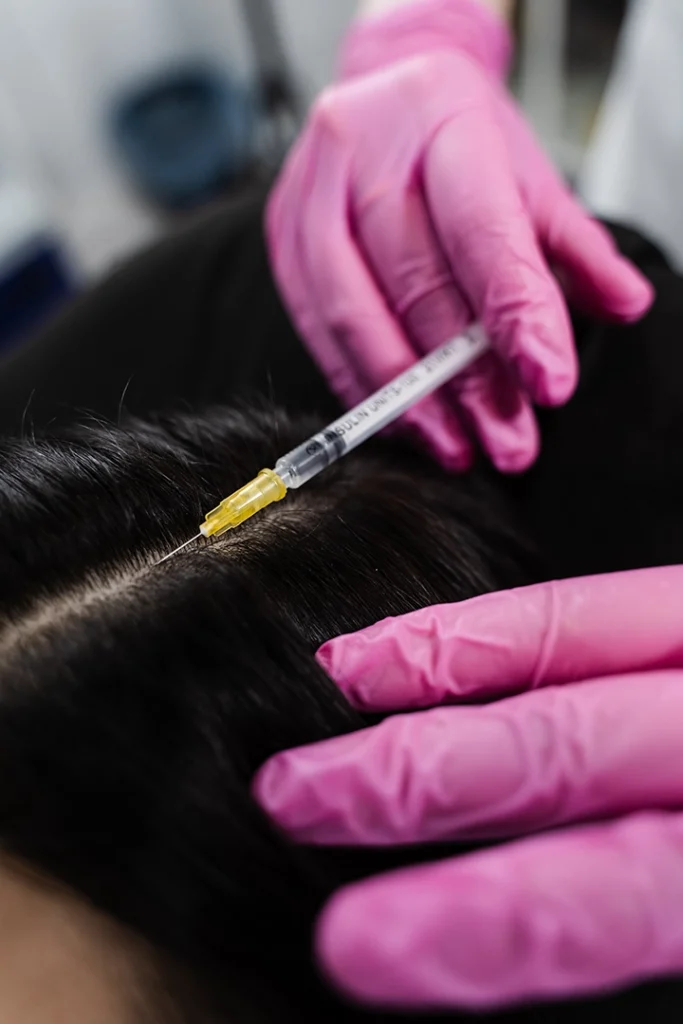
Platelet-rich plasma (PRP) is a regenerative treatment that uses a preparation derived from the patient's own blood. After processing, the platelet-rich preparation is administered to selected areas of the scalp. PRP may be considered for certain patients with specific hair-loss conditions. Treatment selection depends on the clinical diagnosis, follicular condition, treatment goals, and individual circumstances. Learn more about PRP for Hair Loss
Regenerative Hair Treatments
Regenerative approaches may be considered for selected patients as part of a broader hair-management strategy. These treatments are not interchangeable, and their potential role depends on the individual condition, treatment protocol, clinical findings, and treatment objectives. Explore Exosmart Hair Treatment
Scalp Condition Management
When a scalp condition is contributing to shedding, irritation, inflammation, or changes in hair quality, treating the underlying condition may be an important part of the overall management plan. The appropriate approach depends on the specific scalp disorder identified during assessment.
Hair Restoration
Hair restoration may be considered for patients with appropriate indications and suitable donor-hair characteristics. Hair restoration procedures have a different role from medical or regenerative treatments and may be discussed when there has been established follicular loss or when restoration of affected areas is an appropriate treatment goal. Explore Hair Restoration in Riyadh
Hair Loss Treatment for Men and Women
Hair loss affects both men and women, but the pattern and contributing factors can differ.
In men, androgenetic hair loss commonly presents with gradual recession around the temples and frontal hairline or thinning around the crown.
In women, reduced density over the top of the scalp or a widening central part may be more noticeable. Hormonal and other medical factors may also need consideration depending on the individual.
For both men and women, treatment should be selected according to the diagnosis, clinical findings, medical history, and individual circumstances.
Dr. Haitham's Approach to Hair Loss
Dr. Haitham Al-Gzlan takes a structured, individualized approach to hair and scalp concerns.
01 — Understand
The consultation begins by understanding when the hair loss started, how it has changed, and what symptoms or concerns the patient has noticed.
02 — Assess
The hair and scalp are evaluated alongside relevant medical, family, medication, and treatment history.
03 — Identify
The assessment helps determine the likely pattern of hair loss and possible contributing factors. Additional investigations may be considered when clinically appropriate.
04 — Plan
Treatment recommendations are developed according to the clinical findings, underlying condition, hair-loss pattern, scalp health, previous treatments, and individual goals.
05 — Treat
The selected treatment approach is provided according to the patient's clinical needs and the appropriate treatment protocol.
06 — Monitor
Hair shedding and growth can change over time. Follow-up allows the response to treatment to be reviewed and the management plan adjusted when clinically appropriate.
When Should You See a Dermatologist for Hair Loss?
Some daily hair shedding is part of the normal hair-growth cycle. However, a dermatological assessment may be appropriate when shedding becomes persistent, excessive, sudden, or noticeably different from your usual pattern.
Consider seeking professional assessment if you notice:
- Sudden or significant hair shedding
- Rapid hair thinning
- A receding hairline
- A widening central part
- Clearly defined bald patches
- Increasing scalp visibility
- Eyebrow or beard hair loss
- Scalp redness, scaling, itching, or inflammation
- Hair loss following an illness or major physical event
- Persistent hair loss without an obvious explanation
Early assessment can help identify the underlying pattern and determine whether treatment, monitoring, or further evaluation is appropriate.
Hair & Scalp Concerns
Hair loss is one part of overall hair and scalp health. Dr. Haitham assesses a range of concerns affecting hair density, growth, and scalp condition.
Hair Loss
Assessment and treatment planning for different patterns and causes of hair loss.
Thinning Hair
Evaluation of reduced hair density, gradual thinning, and changes in overall hair volume.
Hair Restoration
Assessment and treatment planning for suitable patients considering hair restoration procedures. Explore Hair Restoration
Scalp Concerns
Evaluation of scalp conditions that may affect scalp health, hair quality, or hair growth.
Hair Loss Care in Riyadh, Saudi Arabia
Dr. Haitham Al-Gzlan provides personalized dermatological care for patients seeking hair loss treatment in Riyadh, Saudi Arabia.
Hair loss can have different causes and presentations, making individualized assessment an important part of treatment planning. Whether the concern involves gradual hereditary thinning, increased shedding, patchy hair loss, or a scalp-related condition, management should be guided by the patient’s specific clinical findings.
Based in Riyadh, Dr. Haitham’s approach focuses on understanding the underlying concern, selecting appropriate treatment options, and providing follow-up when required.
Frequently Asked Questions About Hair Loss Treatment
There is no single treatment that is appropriate for every type of hair loss. Treatment depends on the underlying cause, pattern, severity, duration, scalp condition, medical history, and individual circumstances.
Many forms of hair loss can be managed, but the appropriate approach depends on the underlying condition. Treatment may involve medical management, treatment of an associated scalp condition, regenerative approaches, hair restoration, or monitoring depending on the diagnosis.
Hair loss can result from hereditary factors, hormonal changes, illness, stress, nutritional factors, medications, autoimmune conditions, scalp disorders, mechanical stress, and other medical causes.
Some daily hair shedding is part of the normal hair-growth cycle. Persistent, excessive, sudden, or noticeably increased shedding may warrant professional assessment.
Significant physical or emotional stress can be associated with increased hair shedding in some patients. When this occurs, the timing of the shedding and any other contributing factors should be evaluated.
No. PRP is not appropriate for every patient or every cause of hair loss. Suitability depends on the diagnosis, clinical findings, follicular condition, medical history, and treatment goals.
Diagnosis begins with a detailed history and examination of the hair and scalp. Depending on the clinical situation, additional examination methods or laboratory investigations may be considered.
Treatment timelines vary according to the cause of hair loss, treatment approach, individual response, and the natural hair-growth cycle. Some conditions require ongoing management rather than a single treatment.
Hair loss can recur or continue in some conditions because the underlying cause may persist or change over time. Follow-up can help monitor the condition and determine whether treatment adjustments are needed.
Some causes of hair loss can be effectively managed, while others may require ongoing treatment or monitoring. Permanent follicular loss may require a different restoration strategy. The expected course depends on the underlying diagnosis.
Consider a dermatological assessment if hair loss is sudden, persistent, excessive, rapidly progressing, associated with scalp symptoms, or occurring in clearly defined patches.
Dr. Haitham Al-Gzlan provides personalized hair and scalp assessment and discusses appropriate hair-loss treatment options in Riyadh based on the patient's clinical needs.
Book a Hair Loss Consultation in Riyadh
Hair loss can have different causes, and identifying the underlying concern is an important step toward appropriate management.
If you are experiencing hair loss, thinning hair, excessive shedding, or changes in your scalp, book a consultation with Dr. Haitham Al-Gzlan for a personalized hair and scalp assessment in Riyadh.