
Microneedling Treatment in Riyadh
Microneedling treatment in Riyadh is a minimally invasive dermatological procedure used to improve selected acne scars, uneven skin texture, enlarged pores, fine lines, stretch marks and other skin concerns.
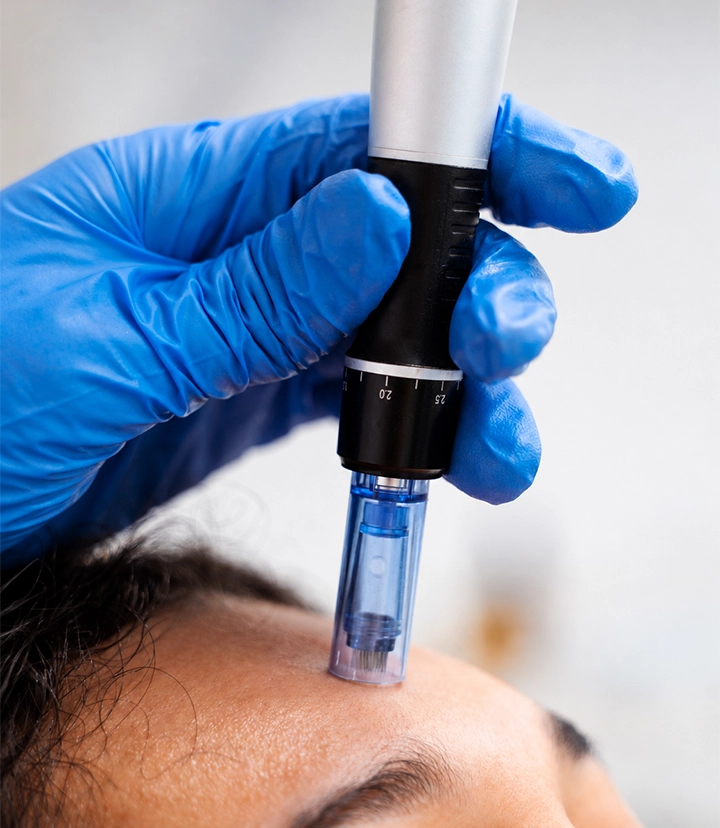
Also known as collagen induction therapy, microneedling uses fine sterile needles to create controlled microscopic punctures in the skin. This controlled injury activates a wound-healing response that supports collagen remodeling over time.
The treatment is not simply about creating as many micro-injuries as possible. Needle depth, treatment intensity and technique should be selected according to the skin concern, treatment area, skin characteristics, medical history and expected recovery.
At Dr. Haitham Al-Gzlan’s dermatology practice in Riyadh, microneedling is considered as part of an individualized treatment plan. Depending on the concern, traditional microneedling may be recommended alone or another treatment such as RF microneedling, laser resurfacing, chemical peels or other dermatological procedures may be more appropriate.
What Is Microneedling?
Microneedling is a medical procedure that uses fine needles to create controlled micro-injuries in the skin.
These microscopic punctures initiate the body’s natural wound-healing process. As the skin repairs itself, collagen remodeling can gradually improve the appearance of selected scars, wrinkles and uneven texture.
Professional microneedling devices can allow the treatment depth to be adjusted according to the treatment area and clinical objective. The depth used on one area of the face may not be appropriate for another area or for a different skin concern.
Microneedling is therefore not a one-setting treatment.
The aim is controlled collagen induction, not unnecessary trauma to the skin.
How Does Microneedling Work?
Microneedling works primarily through controlled mechanical stimulation.
The needles create microscopic channels in the skin, triggering a wound-healing response. During this process, cells involved in tissue repair contribute to collagen formation and remodeling.
As new collagen develops, selected skin concerns may gradually appear less noticeable.
This can help improve:
- Acne-scar texture
- Uneven skin texture
- Fine lines
- Selected enlarged pores
- Certain surgical or traumatic scars
- Stretch marks
- Overall skin quality
The results are gradual because collagen remodeling takes time. Deeper treatment is not automatically better; excessive inflammation can increase the risk of unwanted skin reactions, including pigmentation changes and scarring.
What Can Microneedling Treat?
Microneedling can be considered for several concerns involving skin texture and collagen remodeling. The appropriate treatment depends on the diagnosis and characteristics of the skin.
Microneedling for Acne Scars
Microneedling is commonly used to improve the appearance of selected atrophic acne scars.
Acne scars are not all the same. Rolling scars, boxcar scars and icepick scars have different structures and may respond differently to treatment.
Microneedling can be useful for selected rolling and boxcar scars, while deeper or tethered scars may require another procedure or a combination approach.
Depending on the scar type, treatment options may include microneedling, RF microneedling, subcision, chemical procedures, fractional laser resurfacing or combination treatment.
The objective is to match the procedure to the scar rather than treating every acne scar with the same technique.
Microneedling for Enlarged Pores
Microneedling may improve the appearance of enlarged pores by stimulating collagen remodeling around the treated area and improving overall skin texture.
Pores cannot be permanently eliminated because pore appearance is influenced by genetics, oil production, skin structure and aging.
When enlarged pores occur together with acne scars or uneven texture, microneedling may be considered as part of a broader treatment plan.
Microneedling for Uneven Skin Texture
Uneven texture can develop from acne scars, sun exposure, aging and other changes within the skin.
Microneedling can gradually improve selected textural irregularities through collagen remodeling.
The appropriate treatment depends on whether the texture problem is superficial or associated with deeper scarring. More pronounced resurfacing concerns may require a different treatment approach.
Microneedling for Fine Lines and Early Wrinkles
Microneedling can stimulate collagen remodeling in skin affected by early fine lines and textural changes.
The improvement develops progressively rather than immediately.
Microneedling is generally more relevant to superficial lines and skin texture than deep folds caused by significant volume loss or facial muscle movement. Other treatments may be considered when those factors are the primary cause of the concern.
Microneedling for Stretch Marks
Stretch marks are a type of dermal scar associated with changes in the skin during periods of rapid stretching.
Microneedling may improve the appearance of selected stretch marks by stimulating collagen remodeling within the affected skin.
Treatment can be considered for areas such as the abdomen, thighs and arms, depending on the characteristics of the stretch marks.
Complete removal should not be expected, and improvement may require more than one treatment.
Microneedling for Surgical and Traumatic Scars
Selected surgical and traumatic scars may improve with collagen-induction treatment.
Before treatment, the scar should be assessed for its age, thickness, color, texture and healing characteristics.
Raised scars and keloids require particular caution and may not be suitable for microneedling.
Microneedling for Pigmentation and Uneven Skin Tone
Microneedling has also been studied for selected pigmentation concerns, including melasma and post-inflammatory pigmentation.
However, pigmentation should be diagnosed before treatment.
Melasma, post-inflammatory hyperpigmentation, sun-related pigmentation and other dark spots do not necessarily have the same cause or respond to the same treatment.
Microneedling also creates controlled inflammation, so overly aggressive treatment can potentially worsen pigmentation in susceptible patients.
For this reason, patients with a history of pigmentation changes should have their skin assessed carefully before treatment.
Is Microneedling Suitable for Darker Skin?
Microneedling can be performed on different skin tones, but individual pigmentation risk still matters.
Patients with darker or pigmentation-prone skin can develop post-inflammatory hyperpigmentation after skin injury or inflammation. Treatment therefore needs to be appropriately selected and controlled.
Skin tone alone does not determine whether someone is suitable for microneedling.
Dr. Haitham Al-Gzlan considers factors such as:
- Skin tone and pigmentation history
- Existing skin conditions
- Previous treatment reactions
- Scar characteristics
- Current skincare and medications
- Treatment area
- Desired outcome
- Expected recovery
The goal is to create sufficient controlled stimulation without unnecessary inflammation.
Traditional Microneedling vs RF Microneedling
Traditional microneedling and RF microneedling are related but different procedures.
Traditional Microneedling
Traditional microneedling uses mechanical needle penetration to create controlled micro-injuries and stimulate collagen remodeling.
It may be considered for selected:
- Acne scars
- Uneven texture
- Enlarged pores
- Fine lines
- Stretch marks
- Surgical scars
RF Microneedling
RF microneedling combines needle penetration with radiofrequency energy delivered at selected tissue depths.
It has a different mechanism and safety profile from conventional microneedling. RF microneedling may be considered for concerns such as selected scars, texture, wrinkles and mild skin laxity.
Because RF adds thermal energy, it should be treated as a separate procedure rather than simply a stronger version of traditional microneedling.
The FDA issued a safety communication in 2025 regarding serious complications reported with certain uses of RF microneedling, including burns, scarring, fat loss and nerve damage. Patients considering RF microneedling should therefore receive treatment from a licensed provider with appropriate training and experience.
Microneedling With PRP
Microneedling may sometimes be combined with platelet-rich plasma (PRP) as an adjunctive treatment.
PRP is prepared from the patient’s own blood and contains platelets and associated biological factors. Research has investigated PRP-assisted microneedling for concerns such as acne scars and skin rejuvenation.
However, PRP should not be presented as automatically necessary for every microneedling treatment.
The FDA states that microneedling devices have not been cleared specifically for delivering PRP or other products into the skin. The decision to combine procedures should therefore be based on the individual treatment plan rather than assuming that adding another product will always improve results.
Microneedling and At-Home Derma Rollers
Professional medical microneedling is different from using a cosmetic roller at home.
Professional treatment allows the provider to assess the skin, control treatment depth, use appropriate sterile equipment and manage potential complications.
At-home products are generally designed to produce a more superficial effect. Aggressive use, poor hygiene or sharing a device can increase the risk of irritation, infection, scarring and pigmentation changes.
For meaningful acne-scar remodeling or other medical skin concerns, professional assessment is preferable to attempting deeper treatment at home. The FDA also recommends choosing a trained healthcare provider and ensuring that a new needle cartridge is used for each patient and treatment session.
Who Is a Good Candidate for Microneedling?
Microneedling may be considered for adults who are concerned about:
- Atrophic acne scars
- Uneven skin texture
- Enlarged pores
- Fine lines
- Selected surgical or traumatic scars
- Stretch marks
- Selected skin-quality concerns
A suitable candidate should understand that improvement is gradual and that more than one treatment may sometimes be needed.
Microneedling is not automatically appropriate for every skin condition. The skin should be assessed before treatment to determine whether microneedling is likely to provide meaningful benefit.
Who Should Avoid or Postpone Microneedling?
Microneedling may need to be postponed or avoided in certain circumstances.
These can include:
- Active skin infections
- Open wounds
- Significant skin irritation or inflammation
- Active severe inflammatory acne in the treatment area
- Certain bleeding or clotting disorders
- Some immune-system conditions
- A history of keloid scarring
- Certain active skin diseases
- Recent significant sun exposure or tanning
- Certain medications or medical treatments
A history of cold sores should also be disclosed because procedures involving the skin can potentially trigger herpes reactivation.
Current medications, including blood thinners and acne medications, should always be discussed before treatment.
Do not stop prescribed medication on your own.
FDA guidance also lists several medical circumstances in which microneedling may not be suitable and emphasizes individual assessment before treatment.
How to Prepare for Microneedling
Preparation depends on your skin and the treatment being performed.
Before your appointment, tell Dr. Haitham about:
- Prescription medications
- Acne medications
- Retinoids and active skincare products
- Blood-thinning medications
- Previous cosmetic procedures
- Previous chemical peels or laser treatments
- A history of cold sores
- A history of abnormal scarring
- Previous pigmentation after skin procedures
- Any current skin irritation or infection
You may be advised to temporarily modify certain skincare products or avoid significant sun exposure before treatment.
Do not discontinue prescription medication unless instructed by the appropriate healthcare professional.
What Happens During a Microneedling Treatment?
1. Skin Assessment
Your skin and treatment concern are assessed before the procedure. For acne scars, this includes considering the type, depth and distribution of the scars. For pigmentation or uneven texture, the underlying cause is considered before deciding whether microneedling is appropriate.
2. Skin Preparation
The treatment area is cleansed and prepared before microneedling. Appropriate infection-control procedures and sterile equipment are important because microneedling temporarily disrupts the skin barrier.
3. Numbing
A topical anesthetic may be used before professional microneedling to improve comfort. The FDA notes that topical anesthesia is commonly used before microneedling. Any known allergy or sensitivity to anesthetic products should be disclosed before treatment.
4. Microneedling
A sterile needle cartridge is used to create controlled micro-injuries across the selected treatment area. Treatment depth and technique are adjusted according to the treatment objective and anatomical area.
5. Aftercare
After treatment, you receive instructions for cleansing, moisturization, sun protection and skincare during the recovery period. The skin should be allowed to recover rather than being aggressively exfoliated or treated with unnecessary active products.
Microneedling Recovery and Aftercare
Temporary redness, swelling, tightness, dryness, peeling, sensitivity or pinpoint bleeding can occur after treatment.
These effects generally settle as the skin recovers, although recovery varies according to treatment intensity and individual response.
After treatment:
- Follow the recommended cleansing routine
- Use the recommended moisturizer or post-treatment product
- Protect the treated skin from excessive sun exposure
- Apply sunscreen as directed
- Avoid picking or scratching the skin
- Avoid aggressive exfoliation
- Avoid irritating active skincare products until advised to restart them
- Follow any individualized aftercare instructions
The FDA lists redness, dryness, tightness, peeling, discomfort, bruising, bleeding and other reactions among possible effects of microneedling.
If you experience significant pain, worsening swelling, spreading redness, pus, fever, blistering or another concerning reaction, contact your healthcare provider promptly.
How Many Microneedling Sessions Are Needed?
There is no universal number of microneedling sessions.
The number depends on:
- The condition being treated
- Scar depth and type
- Treatment intensity
- Skin response
- Treatment area
- Whether another procedure is being combined with microneedling
Established acne scars may require a series of treatments rather than a single session.
Your progress should be assessed before deciding whether additional sessions are appropriate.
When Will I See Microneedling Results?
Microneedling results develop progressively.
Some temporary improvement in skin appearance may become noticeable as the initial recovery settles, but collagen remodeling continues for weeks and months.
Acne-scar and textural improvement therefore should not be judged immediately after treatment.
The final degree of improvement varies according to the concern, treatment approach, skin response and number of sessions.
Microneedling can improve the appearance of selected scars and texture, but complete removal of scars cannot be guaranteed.
Microneedling vs Other Skin Treatments
Microneedling is one of several treatments that can improve skin texture and quality.
Depending on the concern, Dr. Haitham may consider:
- Traditional microneedling
- RF microneedling
- Chemical peels
- Fractional laser resurfacing
- Laser Genesis
- PRP
- Other dermatological treatments
For example, selected acne scars may benefit from microneedling, while deeper tethered scars may require subcision or combination treatment.
Pigmentation may require a completely different approach depending on whether the diagnosis is melasma, post-inflammatory hyperpigmentation or another pigmentary condition.
The most appropriate treatment is therefore determined by the underlying concern rather than by the popularity of a particular device.
Why Choose Dr. Haitham Al-Gzlan for Microneedling in Riyadh?
Microneedling is not simply a matter of selecting a device and choosing the deepest available setting.
The treatment needs to be matched to the patient’s skin, treatment concern, scar characteristics, medical history and recovery expectations.
Dr. Haitham Al-Gzlan, a Consultant Dermatologist and Aesthetic Physician in Riyadh, takes an individualized approach to dermatological and aesthetic treatment.
His practice offers a range of skin-rejuvenation and device-based treatment options, allowing microneedling to be considered alongside other procedures when appropriate. The current Skin Rejuvenation service includes microneedling, RF microneedling and PRP, while the broader practice also provides laser and other dermatological technologies.
This means the goal is not to recommend microneedling simply because a patient asks for it. The goal is to determine whether it is appropriate for the specific skin concern and, if so, how it should be incorporated into the treatment plan.
Microneedling Treatment in Riyadh for Patients Across Saudi Arabia
Dr. Haitham Al-Gzlan practices in Riyadh and provides dermatological and aesthetic care for patients from Riyadh and other parts of Saudi Arabia.
Patients considering microneedling can begin with a consultation to understand whether the procedure is suitable for their skin and whether traditional microneedling or another treatment would better address their concern.
This assessment-led approach is particularly useful for patients travelling to Riyadh for acne-scar treatment, skin rejuvenation or other procedural dermatology concerns.
Frequently Asked Questions About Microneedling
Professional microneedling can cause sensations such as pressure, prickling or warmth. A topical anesthetic is commonly used to reduce discomfort before treatment. The level of discomfort depends on the treatment area, needle depth and individual sensitivity.
Microneedling can be performed safely when appropriate patient selection, sterile technique and proper device use are followed. It is not suitable for everyone, and potential risks include infection, bleeding, pigmentation changes, herpes reactivation, scarring and other unwanted reactions.
Microneedling can be used across different skin tones, but pigmentation history and individual skin response still need to be considered. Patients prone to post-inflammatory hyperpigmentation may require particularly careful treatment selection and aftercare.
No. Microneedling can improve the appearance of selected acne scars, but complete scar removal should not be promised. Scar type, depth and skin structure influence the expected improvement.
Microneedling can be useful for selected atrophic acne scars, particularly some rolling and boxcar scars. Deep icepick or tethered scars may require other procedures or combination treatment.
Microneedling may reduce the visible appearance of enlarged pores by improving surrounding skin texture and collagen support. However, pores cannot be permanently eliminated.
Microneedling has been studied as part of treatment for melasma, but melasma requires careful diagnosis and management. Because inflammation can sometimes worsen pigmentation, treatment should be individualized.
Yes, PRP may be considered as an adjunctive treatment in selected cases. However, microneedling devices are not FDA-cleared specifically to deliver PRP into the skin, so combination treatment should be discussed with a qualified healthcare provider.
Microneedling has been studied as an adjunctive treatment for certain types of hair loss, particularly androgenetic alopecia. However, the FDA has not cleared microneedling devices specifically for hair-loss treatment. A proper diagnosis should therefore come before considering scalp microneedling.
There is no fixed number. Patients with acne scars or more established textural concerns may need a series of treatments, while the appropriate plan for other concerns may be different.
Recovery varies according to treatment intensity and individual skin response. Redness, tightness, dryness, sensitivity, swelling or peeling may occur for several days after treatment.
This depends on the treatment and your skin's recovery. Some active ingredients, exfoliants and retinoids may need to be paused temporarily. Follow the specific aftercare instructions provided after your treatment.
The cost varies according to the treatment area, type of microneedling, treatment intensity and number of sessions. An accurate treatment plan and price can be discussed after assessing your skin and determining which procedure is appropriate.
Book a Microneedling Consultation in Riyadh
If you are considering microneedling for acne scars, enlarged pores, uneven texture, fine lines, stretch marks or selected skin concerns, the first step is determining whether microneedling is appropriate for your skin.
Dr. Haitham Al-Gzlan can assess the condition of your skin, discuss realistic expectations and determine whether traditional microneedling or another treatment would better match your needs.
Where microneedling is appropriate, the treatment depth, area, number of sessions and recovery plan can be individualized according to your skin and treatment goals.
Book a consultation in Riyadh to discuss your microneedling treatment options with Dr. Haitham Al-Gzlan.