
PicoWay Laser Treatment in Riyadh –
Dr. Haitham Al-Gzlan
PicoWay laser treatment in Riyadh offers a versatile approach to pigmentation, selected acne scars, wrinkles, unwanted tattoos, and overall skin rejuvenation. The system uses ultra-short picosecond laser pulses to deliver targeted energy with less reliance on prolonged heat than many older laser technologies. Depending on the concern, PicoWay can break pigment or tattoo ink into smaller particles or use fractional energy to stimulate a skin-remodeling response. Different wavelengths and handpieces allow treatment to be customized according to pigment color, skin type, treatment depth, and clinical goal. Dr. Haitham Al-Gzlan assesses your skin, pigmentation pattern, scars, or tattoo before selecting an appropriate PicoWay treatment plan. The aim is precise treatment with realistic results, appropriate recovery, and settings selected for the individual rather than a standard laser protocol.
Fast Facts About PicoWay Laser Treatment
PicoWay is a picosecond laser platform used for selected pigmentation, tattoo removal, acne scars, wrinkles, and skin rejuvenation concerns. It can deliver full-beam laser energy for pigment and tattoo targeting as well as fractional microbeam treatment through specialized Resolve handpieces. The PicoWay platform supports wavelengths including 532 nm, 730 nm, 785 nm, and 1064 nm, although the wavelength selected depends on the indication, skin type, pigment, and device configuration. Treatment usually involves little to no ablative surface removal compared with fractional CO2 resurfacing, so recovery may be shorter for many PicoWay protocols. Multiple sessions are commonly required for concerns such as tattoos, acne scars, melasma, or persistent pigmentation. Results, downtime, and treatment frequency vary according to the condition and settings used.
What Is PicoWay Laser Treatment?
PicoWay is a medical picosecond laser system developed by Candela that delivers energy in extremely short pulses measured in picoseconds. These ultra-short pulses create a strong photomechanical or photoacoustic effect that can fragment pigment and tattoo ink into smaller particles. The body’s natural clearance processes then gradually remove many of these fragmented particles over time. Fractional PicoWay treatment works differently by creating microscopic laser-induced optical breakdown zones beneath the skin that stimulate a repair and remodeling response. This mechanism can support collagen and elastin formation for selected acne scars, wrinkles, and textural concerns. PicoWay treatment is therefore not one single procedure; wavelengths, handpieces, settings, and treatment goals are selected according to the condition being treated.
What Makes PicoWay Different?
PicoWay’s main advantage is the combination of very short picosecond pulses, multiple wavelengths, and different beam-delivery options within one laser platform. Full-beam PicoWay treatment can selectively target pigment or tattoo ink, while fractional Resolve technology is designed for concerns such as acne scars, wrinkles, and skin rejuvenation. The platform can use 532 nm, 730 nm, 785 nm, and 1064 nm wavelengths to interact with different pigment colors and depths. Short pulse durations emphasize a photoacoustic effect, allowing pigment fragmentation with less prolonged thermal exposure than many older nanosecond systems. This does not mean every wavelength or treatment is appropriate for every skin type, and settings still need careful selection. Dr. Haitham chooses the treatment approach according to diagnosis, skin type, pigment depth, treatment history, and desired outcome rather than simply using the same PicoWay setting for everyone.
Skin Conditions PicoWay Laser Can Treat
PicoWay laser treatment can be considered for a range of pigmentary, textural, scar-related, and tattoo concerns. Current PicoWay indications include selected benign pigmented lesions, melasma, tattoo removal, wrinkles, and acne scars using specific wavelengths and handpieces. Fractional picosecond treatment has also been studied for enlarged pores, skin texture, and stretch marks. The correct approach depends on whether the target is epidermal pigment, deeper dermal pigment, tattoo ink, a structural scar, or a combination of concerns. Some conditions require several PicoWay sessions or combination treatment rather than laser treatment alone. A skin assessment helps determine whether PicoWay, another laser technology, topical therapy, or a different dermatological treatment is the best match.
PicoWay Laser for Pigmentation – Sun Spots, Age Spots and Freckles
PicoWay can target selected benign pigmented lesions by delivering laser energy that is absorbed by melanin within the unwanted pigmentation. The ultra-short pulses fragment pigment particles into smaller pieces that can gradually be cleared by the body. Concerns such as lentigines, freckles, selected brown spots, and certain forms of sun-related pigmentation may respond when the correct wavelength is chosen. The 532 nm wavelength is often used for more superficial pigment, while longer wavelengths may reach deeper pigment with different interactions with melanin. Not every brown spot should be lasered without diagnosis because some lesions require dermatological examination before cosmetic treatment. Dr. Haitham assesses the type and depth of pigmentation before selecting an appropriate PicoWay laser protocol.
PicoWay Laser for Melasma and Hormonal Pigmentation
Melasma is a chronic pigmentation disorder influenced by factors that can include sun exposure, hormones, inflammation, and individual skin biology. PicoWay has specific device indications for melasma with selected wavelengths and handpieces, but laser treatment should not be presented as a guaranteed cure. Melasma can recur, and inappropriate laser energy may sometimes trigger post-inflammatory hyperpigmentation or worsening pigmentation, particularly in darker skin. Recent evidence supports a role for selected picosecond laser protocols, but topical treatment, sun protection, and combination management remain important. Treatment parameters should therefore be conservative and individualized according to skin type, pigment depth, previous treatment response, and recurrence risk. Dr. Haitham first confirms whether the pigmentation is melasma before deciding if PicoWay should form part of the treatment plan.
PicoWay Laser for Fine Lines and Wrinkles
PicoWay Resolve uses fractional picosecond energy to create microscopic areas of laser-induced optical breakdown beneath the surface of the skin. This controlled response can stimulate collagen and elastin remodeling without the same surface ablation associated with fractional CO2 laser resurfacing. Over time, selected fine lines, wrinkles, skin texture, and firmness may improve as remodeling progresses. Clinical research has reported improvements in wrinkles, texture, pores, and skin firmness following fractional picosecond treatment. Results develop gradually and usually require more than immediate post-treatment assessment to evaluate properly. Deep wrinkles or significant skin laxity may require other treatments or a combination approach rather than PicoWay alone.
PicoWay Laser for Acne Scars and Large Pores
Fractional PicoWay treatment may be used for selected atrophic acne scars by creating microscopic optical breakdown zones within the skin and stimulating remodeling. The 1064 nm Resolve handpiece has an indication for acne scars in selected Fitzpatrick skin types, and studies of fractional picosecond lasers have shown improvement in atrophic acne scars and visible pores. Rolling, boxcar, and icepick scars have different structures, so not every scar should be treated with laser alone. Deeper tethered or icepick scars may require treatments such as subcision, punch techniques, TCA-based procedures, or other resurfacing methods. Large pores may appear less noticeable as texture and collagen support improve, although pore size is also influenced by genetics and oil production. Dr. Haitham assesses scar morphology and post-acne pigmentation separately before developing the treatment plan.
PicoWay Laser for Tattoo Removal
PicoWay tattoo removal uses picosecond pulses to break tattoo ink into much smaller particles that the body's immune system can gradually clear. The PicoWay platform offers multiple wavelengths that target a wide range of tattoo pigments, including black, brown, red, orange, yellow, green, blue, and purple in appropriate skin types and device configurations. For example, 1064 nm is commonly used for darker tattoo colors and has tattoo indications across Fitzpatrick skin types I–VI, while 532 nm targets colors such as red, yellow, and orange in lighter skin types. The 730 nm and 785 nm handpieces can target selected blue and green pigments. No laser can guarantee complete removal of every tattoo because ink composition, depth, color, tattoo age, layering, and individual immune response all influence clearance. Multiple sessions with adequate healing intervals are usually required for progressive tattoo fading.
PicoWay Laser for Stretch Marks and Skin Texture
Fractional picosecond technology has been studied for stretch marks by creating controlled microscopic effects that stimulate collagen remodeling within the affected skin. Research has reported improvement in the depth and appearance of striae after a series of picosecond treatments, including studies involving darker Fitzpatrick skin types. PicoWay should not be marketed as a treatment that completely removes stretch marks because mature striae represent permanent structural changes within the skin. The expected result is improvement in texture, depth, and overall appearance rather than total disappearance. Several sessions may be needed, and response varies according to the age, color, depth, and anatomical location of the stretch marks. Dr. Haitham can determine whether picosecond fractional treatment, another laser, microneedling, radiofrequency, or a combination approach is more appropriate.
PicoWay Laser Benefits in Riyadh
PicoWay offers several treatment options within one platform, allowing the dermatologist to address different types of pigment, tattoos, scars, wrinkles, and skin texture. Ultra-short picosecond pulses emphasize pigment fragmentation through a photoacoustic effect while limiting unnecessary prolonged heating of surrounding tissue. Fractional Resolve treatment can stimulate skin remodeling and collagen production without removing the entire surface layer of the skin. This can mean less visible downtime than aggressive ablative resurfacing for selected concerns, although redness, swelling, petechiae, or temporary pigmentation changes can still occur. Multiple wavelengths also make the system useful for different pigment depths and tattoo ink colors when the appropriate handpieces are available. The main benefit is therefore treatment customization rather than a promise that one PicoWay protocol will solve every skin concern.
PicoWay Laser on Darker and Middle Eastern Skin Types
PicoWay can be used in selected darker skin types, but suitability depends heavily on the treatment indication and wavelength. Candela’s current PicoWay specifications include 1064 nm tattoo removal indications across Fitzpatrick skin types I–VI and acne-scar treatment with Resolve 1064 nm across selected darker phototypes, while other wavelengths have narrower skin-type indications. Longer wavelengths such as 1064 nm generally interact less strongly with epidermal melanin than shorter wavelengths, which can be useful when treating melanin-rich skin. However, darker skin remains more prone to post-inflammatory hyperpigmentation after inflammation or laser treatment. This makes diagnosis, fluence, wavelength, treatment density, sun exposure, and aftercare particularly important for Saudi and Middle Eastern patients. Dr. Haitham assesses skin type and pigmentation tendency before deciding whether PicoWay and a particular treatment protocol are appropriate.
How Does the PicoWay Laser Procedure Work?
A PicoWay treatment begins by identifying the exact target rather than simply passing a laser over the skin. Pigmented lesions, melasma, tattoos, acne scars, and wrinkles each require different wavelengths, handpieces, treatment settings, and endpoints. Full-beam treatments deliver targeted energy into pigment or tattoo ink, while fractional PicoWay Resolve produces microscopic optical effects beneath the skin for remodeling. Laser energy, spot size, pulse characteristics, and treatment density are selected according to the treatment objective and skin type. Protective eyewear is used during the laser procedure, and comfort measures may be added depending on the area and treatment intensity. Each session is followed by individualized aftercare and assessment of the skin’s response before further treatment is planned.
Step 1: Comprehensive Consultation and Skin Assessment
Your PicoWay consultation starts with identifying whether the primary concern is pigmentation, melasma, acne scarring, pores, wrinkles, tattoo ink, or another skin condition. Dr. Haitham assesses skin type, pigment pattern, scar structure, previous treatments, sun exposure, medications, and tendency toward post-inflammatory hyperpigmentation. Pigmented lesions are evaluated before treatment because not every brown lesion is appropriate for cosmetic laser removal. Tattoos are assessed according to color, depth, location, layering, professional or amateur application, and previous laser treatment. Photographs may be taken to establish a baseline for future comparison. The assessment determines whether PicoWay is suitable and which treatment strategy should be considered.
Step 2: Personalized Treatment Plan and Wavelength Selection
PicoWay treatment settings are chosen according to the chromophore or tissue response being targeted. The PicoWay platform includes wavelengths such as 532 nm and 1064 nm, with additional 730 nm and 785 nm options available in specific configurations for selected pigments and tattoo colors. Shorter wavelengths generally target more superficial pigment differently from longer wavelengths that can penetrate more deeply into the skin. Fractional Resolve handpieces use microbeam delivery when collagen remodeling rather than simple pigment fragmentation is the primary goal. Skin type, pigmentation tendency, treatment depth, and previous response influence energy and treatment density. The treatment plan may also change between sessions as pigmentation, scars, or tattoo ink respond.
Step 3: Skin Cleansing and Numbing When Needed
Before PicoWay treatment, makeup, sunscreen, oils, and other products are removed from the treatment area. The skin is carefully cleansed so the laser can be delivered to a properly prepared surface. Some PicoWay procedures can be performed without topical anesthetic, while more sensitive areas or fractional treatments may benefit from numbing cream. Tattoo removal can produce a snapping or stinging sensation, while fractional skin treatments may feel warm or prickly. Comfort measures depend on treatment intensity, anatomical location, and individual sensitivity. The procedure begins after the skin has been prepared and the treatment settings have been confirmed.
Step 4: PicoWay Laser Application and Precision Targeting
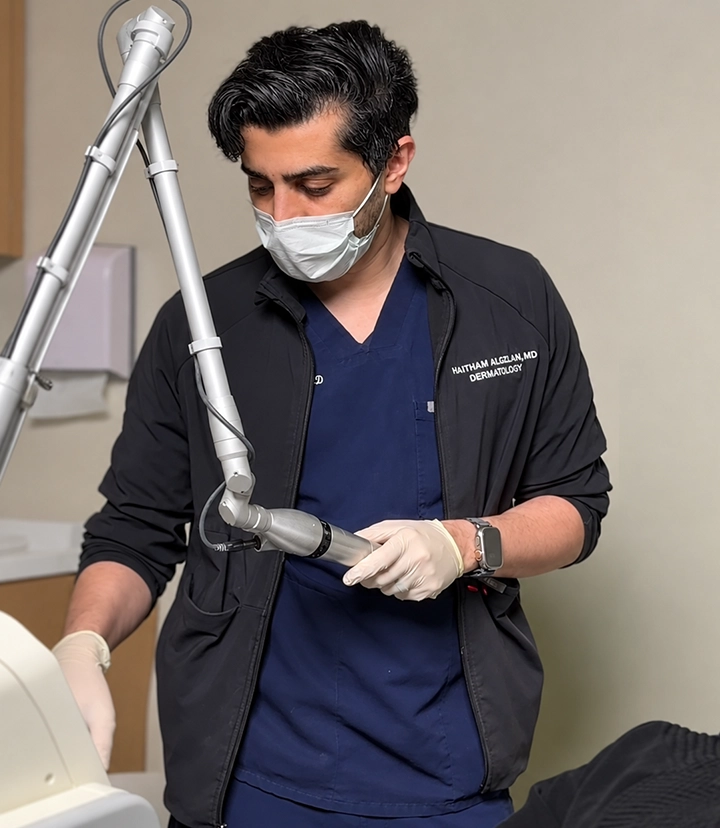
During treatment, the PicoWay laser machine delivers very short pulses of optical energy into the selected area. For pigmentation and tattoos, the target pigment absorbs the energy and undergoes rapid fragmentation through a primarily photoacoustic effect. Fractional PicoWay Resolve treatment creates microscopic laser-induced optical breakdown zones that trigger a tissue repair response rather than simply targeting a visible pigment spot. Dr. Haitham moves systematically across the planned treatment area while monitoring the skin response. Wavelength, spot size, fluence, and number of passes depend on the indication and skin type. The procedure length varies considerably between a small pigment spot, full facial treatment, and a large multicolored tattoo.
Step 5: Cooling and Soothing After PicoWay
After treatment, the skin may show temporary redness, warmth, swelling, or pinpoint changes depending on the PicoWay protocol used. Cooling may be applied when needed to improve comfort and reduce transient heat or swelling. A suitable soothing or protective product may also be used according to the treatment area and skin response. Pigmented spots can temporarily darken before gradually lightening or shedding, while tattoo-treated skin may appear whitened or swollen immediately after laser exposure. Fractional treatments may produce redness or petechiae that settle over the following days. Patients should avoid unnecessary rubbing, picking, or applying unapproved active skincare to the treated area.
Step 6: Aftercare Instructions and Follow-Up Plan
Aftercare depends on whether PicoWay was used for pigmentation, tattoo removal, melasma, acne scars, or fractional rejuvenation. Dr. Haitham provides guidance about cleansing, moisturization, sun protection, skincare products, and activities that may need to be temporarily limited. Strict UV protection is particularly important after pigmentation treatment because sun exposure can trigger recurrent or post-inflammatory pigmentation. Tattoo-treated areas may require additional wound-care instructions if blistering or crusting develops. Follow-up allows treatment response, side effects, and any pigment changes to be assessed before another session. Future PicoWay treatments are adjusted according to how the skin or tattoo responded rather than simply repeating identical settings.
What to Expect During PicoWay Laser Treatment
PicoWay treatment is generally performed as an outpatient laser procedure, but the experience varies according to the condition being treated. Small pigment spots may require only a focused treatment area, while full-face fractional treatment or tattoo removal can take longer. Patients commonly describe sensations such as snapping, warmth, tingling, or brief stinging during laser delivery. Temporary redness, swelling, darkening of pigment, whitening of tattoo ink, or pinpoint marks can occur immediately after treatment. Many PicoWay protocols have relatively limited social downtime compared with ablative CO2 resurfacing, although “no downtime” should not be guaranteed. Dr. Haitham explains the expected treatment response before the procedure so patients know what is normal.
Consultation and Personalized PicoWay Treatment Plan
A consultation is important because PicoWay can be configured for very different treatment objectives. Dr. Haitham first determines the diagnosis and whether the target is melanin, tattoo pigment, scar tissue, wrinkles, or another textural concern. Skin phototype, recent tanning, medical history, medications, previous lasers, and pigmentary response are reviewed before treatment. Tattoo patients also need assessment of ink colors and treatment history, while melasma patients require discussion of recurrence and long-term pigment control. A personalized plan can include the approximate number of sessions, expected downtime, and whether other treatments should be combined with PicoWay. Treatment begins only after the expected benefits, limitations, and risks have been discussed.
During the PicoWay Laser Treatment
The actual PicoWay laser treatment may be relatively brief for small areas, although there is no universal 15–30-minute treatment time for every indication. Protective eyewear is placed before laser energy is delivered, and comfort measures are used when needed. Dr. Haitham applies the selected wavelength and handpiece according to the treatment map and desired clinical endpoint. Patients may feel repeated snapping or prickling sensations as the laser pulses are delivered. Tattoo removal, pigmentation treatment, and fractional rejuvenation each produce different immediate skin responses. Treatment stops once the planned area and appropriate laser endpoint have been reached.
After PicoWay Laser Treatment
Immediately after PicoWay treatment, temporary redness, warmth, mild swelling, tenderness, or pinpoint marks can occur. Pigmentation may look darker before it lightens, and tattoo treatment can produce temporary whitening, swelling, crusting, or occasional blistering. Fractional PicoWay facial treatments may leave temporary redness or petechiae for several days. Most patients can return to many routine activities relatively quickly, although visible recovery depends on treatment intensity and indication. Sun protection and gentle skin care are particularly important while the treated skin settles. Dr. Haitham advises when makeup, active skincare, exercise, or other activities can safely be resumed.
PicoWay Aftercare and Recovery
Good PicoWay aftercare helps protect the treated skin and reduce avoidable inflammation or pigmentation changes. Use gentle skincare and avoid scratching, rubbing, peeling, or picking at crusts and darkened pigment as the area heals. Broad-spectrum sun protection is essential after facial pigmentation and rejuvenation treatments, particularly in Riyadh’s high-UV environment. Retinoids, exfoliating acids, scrubs, and other irritating skincare may need to be paused temporarily according to the treatment performed. Tattoo removal areas should be kept clean and managed according to the specific wound-care instructions provided by the clinic. Contact the clinic if you develop severe pain, spreading redness, unusual discharge, persistent blistering, or another unexpected reaction.
PicoWay Side Effects and Treatment Risks
PicoWay side effects are usually temporary but vary according to wavelength, energy, treatment area, and individual skin response. Common effects can include redness, swelling, tenderness, pinpoint bleeding or petechiae, temporary darkening of pigment, and mild crusting. Tattoo removal can also cause blistering, temporary whitening, scabbing, or changes in pigmentation. Less common risks include prolonged post-inflammatory hyperpigmentation, hypopigmentation, infection, scarring, or an unexpected pigmentary response. Melanin-rich skin requires particular care because post-inflammatory hyperpigmentation is more common after skin inflammation in darker phototypes. Appropriate patient selection, customized laser settings, sun protection, and post-treatment care help reduce—but cannot completely eliminate—these risks.
Who Is a Good Candidate for PicoWay Laser?
A good PicoWay candidate is someone with a condition that can reasonably respond to picosecond laser technology after proper diagnosis. This may include selected benign pigmentation, unwanted tattoo ink, acne scars, enlarged pores, wrinkles, or textural concerns. Patients should have realistic expectations because one treatment rarely solves every pigmentation, scar, or tattoo concern. Good candidates are also willing to follow sun protection, skincare, wound care, and follow-up instructions between sessions. Skin type alone does not determine candidacy because different PicoWay wavelengths have different skin-type indications and safety considerations. Dr. Haitham determines suitability after assessing your concern, skin type, medical history, and previous treatment response.
Who Should Avoid or Postpone PicoWay Laser?
PicoWay treatment may need to be postponed when there is an active infection, open wound, significant dermatitis, or active inflammatory skin disease within the treatment area. Recent tanning or strong sun exposure can affect the safety of pigment-targeting laser treatment and should be disclosed before a session. Pregnancy, breastfeeding, photosensitizing medications, previous pigment complications, and certain medical conditions should also be discussed during consultation. Suspicious or undiagnosed pigmented lesions should be evaluated medically before cosmetic laser treatment. Patients with unrealistic expectations about complete tattoo removal or permanent melasma clearance need appropriate counseling before proceeding. Dr. Haitham may recommend delaying PicoWay treatment or selecting another approach when the potential risk outweighs the expected benefit.
Why Choose Dr. Haitham Al-Gzlan for PicoWay Laser in Riyadh?
Dr. Haitham Al-Gzlan is a Consultant Dermatologist and Aesthetic Physician based in Riyadh with a clinical focus that includes laser dermatology, pigmentation, acne scars, and skin rejuvenation. His current technology portfolio includes PicoWay alongside Fraxel, UltraPulse CO2, M22 IPL, Excel V+, and other laser and energy-based systems. Having access to different technologies allows treatment selection to begin with the diagnosis rather than assuming PicoWay is automatically the best device for every concern. This is especially relevant for melasma, acne scars, and pigmentation, where skin type and the underlying cause can change the preferred treatment approach. PicoWay parameters can then be personalized according to pigment depth, scar type, skin phototype, previous treatment response, and desired recovery. The overall approach focuses on dermatologist-led diagnosis, individualized laser settings, realistic expectations, and appropriate follow-up in Riyadh.
PicoWay Treatment Common FAQs
Yes. PicoWay uses ultra-short laser pulses and multiple wavelengths to fragment a wide range of tattoo ink colors so the body can gradually clear the particles.
Some pigmentation or skin concerns may show visible improvement after one PicoWay treatment, but complete correction should not be expected. Most tattoos, acne scars, melasma, and persistent pigmentation require a treatment series.
Downtime is generally limited for many PicoWay protocols, but temporary redness, swelling, petechiae, darkening, crusting, or tattoo-related blistering can occur. Recovery depends on the wavelength, energy, treatment area, and indication.
Both are picosecond laser platforms, but they use different wavelength configurations, pulse characteristics, handpieces, and device designs. Treatment choice should depend on the condition, skin type, available wavelength, and clinician's treatment strategy rather than the brand name alone.
Some PicoWay configurations can be used across a broad range of skin types, but not every wavelength or indication is approved or equally appropriate for Fitzpatrick I–VI. Skin type and pigmentation tendency must therefore be considered before treatment.
PicoWay has established medical indications when used by appropriately trained practitioners, but no laser procedure is completely risk-free. Side effects can include redness, swelling, pigmentation changes, crusting, blistering, and rarely infection or scarring.
The number of sessions depends on whether you are treating pigmentation, melasma, acne scars, wrinkles, or a tattoo. Tattoo ink and deeper structural concerns usually require multiple treatments, while some superficial pigmentation may respond sooner.
No. Pigmentation should first be diagnosed because freckles, lentigines, melasma, post-inflammatory pigmentation, and suspicious pigmented lesions require different approaches. Laser treatment may be inappropriate until the cause has been identified.
No. In addition to pigmentation and tattoo removal, fractional PicoWay Resolve technology has indications for acne scars and wrinkles and is used for selected skin-rejuvenation concerns.
Fractional PicoWay can improve selected atrophic acne scars by triggering a controlled skin-remodeling response. Deeper or tethered scars may still require subcision or another scar-specific treatment.
Fractional picosecond treatment may improve the visible appearance of pores alongside overall skin texture. Pores cannot be permanently removed because their appearance is also influenced by genetics, sebaceous activity, and skin structure.
PicoWay can be considered for selected melasma patients, but melasma is chronic and can recur after treatment. Laser is often most useful as part of a broader plan involving sun protection, topical management, and maintenance.
Yes, certain PicoWay wavelengths and indications can be used in darker skin, including specific 1064 nm applications. Treatment must still be customized because darker skin has a greater tendency toward post-inflammatory pigmentation.
Complete tattoo removal cannot be guaranteed because clearance depends on ink color, composition, depth, tattoo density, skin type, and immune response. PicoWay treatment usually produces progressive fading over multiple sessions.
Treatment intervals depend on the indication and how quickly the skin or tattoo area recovers. Dr. Haitham determines the next session after allowing adequate healing and assessing the previous response.
Most patients describe PicoWay as repeated snapping, prickling, or heat rather than severe pain. Topical anesthetic or other comfort measures may be used depending on the treatment area and procedure.
Fractional picosecond lasers have been studied for stretch marks and may improve texture and depth in selected patients. Multiple sessions are usually required, and complete removal should not be expected.
PicoWay laser cost in Riyadh depends on the condition, treatment area, wavelength or handpiece required, and number of sessions. An accurate price can be provided after Dr. Haitham assesses your skin or tattoo and creates a treatment plan.
Transform Your Skin at Our PicoWay Clinic in Riyadh
PicoWay can address several different concerns, but successful laser treatment begins with understanding what is actually causing the pigmentation, scarring, or texture change. Dr. Haitham assesses your skin type, clinical concern, previous treatments, and pigmentation risk before recommending PicoWay. If another device such as Fraxel, fractional CO2, IPL, Excel V+, or a non-laser treatment better matches the condition, those alternatives can be discussed instead. For suitable PicoWay patients, treatment settings are customized according to wavelength, treatment depth, target pigment, and individual response. This diagnosis-first approach is particularly important for melasma and darker skin, where overly aggressive treatment can create new pigmentation problems. Consultations are available through Dr. Haitham’s practice in Riyadh, Saudi Arabia.
Book Your PicoWay Laser Appointment in Riyadh
If you are considering PicoWay laser treatment in Riyadh for pigmentation, acne scars, skin rejuvenation, or tattoo removal, the first step is a dermatological assessment. Dr. Haitham Al-Gzlan can determine whether PicoWay is suitable and which treatment approach best matches your concern and skin type. Your consultation covers expected results, number of sessions, downtime, side effects, aftercare, and alternative treatment options when appropriate. Treatment can then be personalized rather than relying on a standard Pico laser setting for every patient. The goal is to improve the target concern while protecting surrounding skin and maintaining realistic expectations. Book an appointment to discuss a personalized PicoWay treatment plan in Riyadh.