
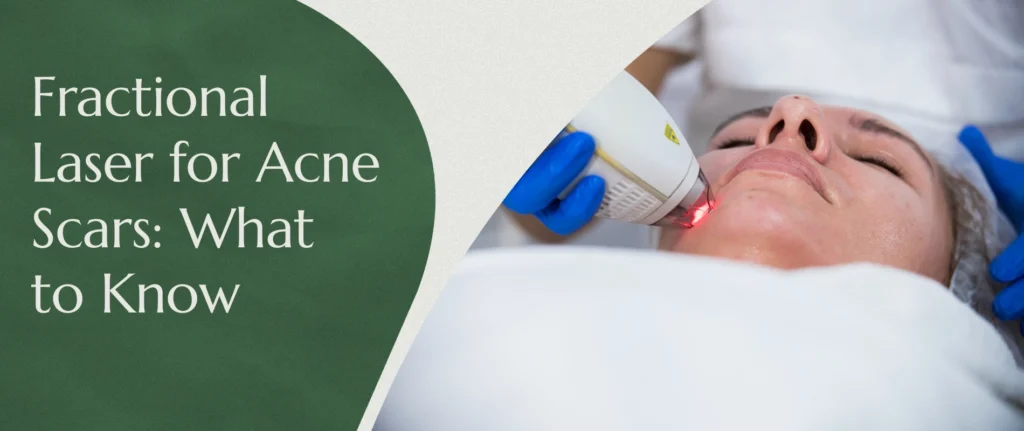
Fractional laser can improve selected acne scars by creating microscopic treatment zones that trigger controlled healing and collagen remodeling. It works best for certain atrophic scars and areas of uneven skin texture, but it does not treat every acne scar equally. Fractional CO₂ laser is an ablative form of fractional resurfacing, while non-ablative fractional lasers work differently and generally involve less surface injury and downtime. Rolling and boxcar scars may respond well when appropriately selected, while deep ice-pick scars or strongly tethered scars often need another treatment alongside or instead of laser. Results appear gradually as collagen remodels over the following months. The best fractional laser scar treatment therefore depends on scar type, skin tone, laser settings, active acne, recovery tolerance, and realistic expectations.
What Is Fractional Laser and How Does It Work?
Fractional laser treats microscopic columns of skin rather than resurfacing the entire treatment area at once. The laser leaves untreated tissue between these microscopic treatment zones, which helps the skin repair itself more efficiently than traditional full-field resurfacing. Within the treated columns, controlled thermal or ablative injury stimulates wound healing and collagen remodeling. Fractional CO₂ lasers remove microscopic columns of tissue and deliver heat into the dermis, while non-ablative fractional devices mainly create controlled thermal injury without removing as much surface tissue. As healing progresses, newly organized collagen can make selected scars look smoother and less sharply defined. This “fractional” approach explains why fractional laser skin resurfacing for acne scars can produce meaningful remodeling while still requiring less recovery than fully ablative resurfacing.
What fractional laser can and cannot do for scars
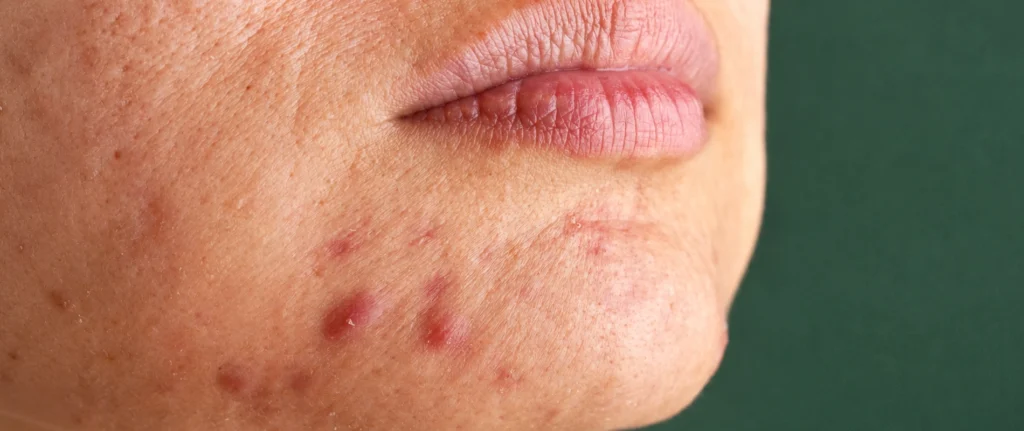
Fractional laser can improve skin texture, soften scar edges, and reduce the visibility of selected atrophic acne scars. It cannot guarantee complete scar removal or restore every area of acne-scarred skin to its original texture. Deep ice-pick scars, scars with significant tethering, and depressions caused by major volume loss may require CROSS, subcision, fillers, or surgical techniques rather than fractional laser alone. Fractional laser for hyperpigmentation may also have a role in selected situations, but pigment change and structural scarring should be assessed separately. The strongest treatment plan uses a laser where its remodeling mechanism fits the scar rather than assuming a stronger laser setting will fix every type of pimple scar.
Which Types of Acne Scars Respond Best to Fractional Laser?
Fractional laser generally works best on atrophic scars that can improve through resurfacing and collagen remodeling. Rolling and boxcar scars often respond more predictably than narrow, deep ice-pick scars, although depth and tethering influence the result. Most people with acne scarring have more than one scar pattern, which means a combination approach may be more appropriate than one repeated laser procedure. Scar location, density, pigmentation, and skin phototype also affect treatment planning. Raised hypertrophic or keloid scars follow a different biological process and are not treated in the same way as atrophic acne scars. Choosing a laser for acne scars therefore starts with identifying the scar structure rather than simply deciding to undergo resurfacing.
Rolling scars
Rolling scars are broad depressions with sloping edges that create a wavy skin surface. Fractional laser can help remodel collagen and soften the visible transitions between scarred and surrounding skin. However, rolling scars are often attached to deeper tissue by fibrous bands. When significant tethering is present, resurfacing the surface alone may produce limited improvement. A dermatologist may therefore consider subcision before or alongside fractional laser scar treatment when deeper attachments contribute to the depression.
Boxcar scars
Boxcar scars are broader depressions with more clearly defined edges than rolling scars. Shallow to moderately deep boxcar scars can respond well to fractional CO₂ laser resurfacing because collagen remodeling can soften their edges and reduce visible depth. Very deep boxcar scars may respond less completely because their structural defect extends further into the dermis. In those cases, focal scar treatment or combination therapy may provide a more appropriate result than increasing laser intensity alone. Scar depth should therefore influence both procedure choice and expectations.
Ice-pick scars
Ice-pick scars are narrow, deep depressions that extend farther into the skin than their small surface opening suggests. Fractional laser may improve surrounding texture but often cannot adequately correct the entire depth of these scars on its own. Targeted treatments such as TCA CROSS or selected punch procedures may be more appropriate for the deepest individual scars. Fractional CO₂ can still form part of a broader treatment plan after focal scars have been addressed. This is why ice-pick scars should not be treated as if they were simply deeper versions of boxcar scars.
Mixed scarring patterns
Mixed acne scarring is common, and one face may contain rolling, boxcar, ice-pick, pigmentation, and tethered scars at the same time. Fractional laser treatments may improve broader textural irregularity while other procedures target focal structural problems. A dermatologist might release tethering, treat narrow deep scars individually, and use fractional laser for the remaining surface texture. Pigmentation may also need its own treatment strategy. This scar-by-scar planning often makes more sense than applying the same fractional laser settings across every visible depression.
When fractional laser is less suitable
Fractional laser may be less suitable when active inflammatory acne remains uncontrolled, when raised scars or keloids are the main concern, or when the expected benefit does not justify the pigmentation risk or downtime. Strongly tethered rolling scars and very deep ice-pick scars may need another treatment before resurfacing. Active infection, significant skin-barrier disruption, recent intense sun exposure, or certain medical factors can also affect treatment timing. Darker skin tones do not automatically exclude someone from fractional laser treatment, but PIH risk needs more careful assessment. A dermatologist should therefore determine whether resurfacing actually addresses the patient’s main scar problem before treatment begins.
Fractional CO2 Laser for Acne Scars: What the Evidence Shows
Fractional CO₂ laser has evidence supporting improvement in atrophic acne scars, but results vary between patients and studies. A recent systematic review of fractional CO₂ treatment found that most patients in the included studies experienced roughly 30% to 70% improvement in scar appearance, while temporary redness, swelling, and post-inflammatory hyperpigmentation were among the most commonly reported adverse effects. That range should not be interpreted as a guaranteed individual result because studies used different laser settings, session numbers, scar classifications, and follow-up periods. Clinical evidence supports fractional CO₂ as an established acne scar treatment, not as the universally superior option for every scar. Scar morphology, skin tone, downtime, and adverse-effect risk still determine whether it is appropriate.
Efficacy of fractional CO2 laser in clinical studies
Clinical studies generally show measurable improvement in atrophic acne scarring after fractional CO₂ treatment. The 2025 systematic review identified improvement across seven included studies, with many patients falling within the 30% to 70% improvement range. However, the authors also noted variation in study methodology and treatment protocols. This makes it inappropriate to promise a fixed improvement percentage to an individual patient. Scar depth, laser intensity, number of treatments, healing response, and combination therapy all influence the final result.
Fractional CO2 versus microneedling and RF microneedling
Fractional CO₂, microneedling, and RF microneedling all stimulate collagen remodeling, but they differ in surface injury, downtime, discomfort, and pigment risk. Fractional CO₂ provides ablative resurfacing and can be more intensive, while microneedling creates mechanical channels without ablating the surface in the same way. RF microneedling adds controlled heat at selected dermal depths through the needles. The AAD states that microneedling and radiofrequency microneedling can be used across skin tones. This can make them attractive alternatives when pigmentation risk or recovery time weighs heavily in treatment planning. The best choice should therefore balance scar structure and expected benefit against downtime and safety rather than rely on a simple “laser versus microneedling” ranking.
Combining fractional CO2 with PRP or other adjuncts
Fractional CO₂ can be combined with other treatments when they address a separate part of the scar problem. PRP is sometimes used as an adjunct to support healing or enhance remodeling, although it should not be presented as necessary for every patient. Subcision may be more relevant when rolling scars are tethered, while CROSS or punch techniques may address individual deep ice-pick scars. Fillers can support selected depressions caused by volume loss. Combination therapy works best when each treatment has a defined structural purpose rather than simply adding more procedures to an already intensive laser plan. The AAD likewise notes that dermatologists often use more than one treatment to improve acne scars.
Are You a Good Candidate for Fractional Laser Acne Scar Treatment?
A good candidate for fractional laser usually has established atrophic acne scars, controlled active acne, stable skin, and realistic expectations about gradual improvement. Scar morphology should be suitable for resurfacing, rather than being dominated by raised scars, deep focal tracts, or untreated tethering. Skin phototype, pigmentation history, medical history, medication use, previous procedures, and willingness to follow aftercare also affect suitability. Patients who expect completely smooth skin after one fractional laser surgery session are unlikely to have realistic expectations. The goal should be measurable improvement in scar texture with an acceptable balance between benefit, recovery, and risk.
Ideal candidates: stable, inactive acne and realistic expectations
Fractional laser treatment is usually easier to plan once inflammatory acne is under control. Ongoing breakouts can create fresh scars while older ones are being treated and may complicate recovery. Candidates should also understand that visible scar improvement develops over several months rather than immediately after the procedure. One session may help, but many scar treatment plans use multiple treatments. Patients who understand that fractional laser scar treatment aims to soften rather than erase scars are better prepared to judge whether the procedure fits their goals.
Skin phototype considerations, especially Fitzpatrick III–VI
Fractional laser can be used in Fitzpatrick III–VI skin, but treatment requires greater attention to pigmentation risk as skin tone deepens. Post-inflammatory hyperpigmentation can develop when laser-induced inflammation stimulates additional melanin production. DermNet specifically notes that post-inflammatory pigmentation occurs more commonly in people with darker skin types or a history of melasma or PIH. Conservative settings, appropriate wavelength selection, strict photoprotection, and careful follow-up become particularly important in these patients. Darker skin therefore requires tailored treatment rather than automatic exclusion from laser therapy.
When to delay or avoid fractional laser
Fractional laser may need to be delayed when active inflammatory acne, skin infection, significant barrier damage, recent tanning, or another inflammatory skin condition is present. A history of keloids, recurrent herpes simplex, previous abnormal pigment responses, or certain medications may also change the treatment plan. Patients who cannot avoid intense sun exposure or follow wound-care instructions may need to postpone treatment. Medication history is particularly important because recent acne therapies can affect procedural decision-making. Contraindications should therefore be assessed individually rather than copied from a generic list.
Why a dermatologist-led assessment is essential before treatment
A dermatologist-led assessment determines whether a fractional laser actually matches the scar structure being treated. The examination should distinguish rolling, boxcar, ice-pick, tethered, raised, pigmented, and erythematous changes rather than labeling every post-acne concern as one type of scar. Medical history, skin tone, pigmentation tendency, previous acne treatments, and healing history also influence laser selection and settings. AAD guidance emphasizes individualized acne scar treatment because the type and number of scars, age, skin tone, budget, and other factors all affect planning. The assessment should therefore come before selecting the device, not after.
What Happens During a Fractional Laser Acne Scar Treatment?
A fractional laser session typically involves skin preparation, anesthesia where appropriate, delivery of controlled laser energy across selected scarred areas, and immediate post-treatment care. The exact experience differs between ablative fractional CO₂ and less intensive non-ablative fractional laser treatments. Protective eyewear is used during treatment, and patients commonly feel heat, prickling, or stinging even when topical numbing cream has been applied. Laser density, energy, number of passes, and treatment area determine how intensive the procedure feels and how much recovery follows. Ablative fractional treatment generally produces more visible downtime than non-ablative fractional resurfacing.
Pre-treatment preparation
Preparation begins with confirming the scar pattern and reviewing active acne, medications, previous laser procedures, pigmentation history, sun exposure, and any tendency toward cold sores or abnormal scars. Clinical photographs can help establish a baseline for later comparison. Some patients may receive specific preparation aimed at reducing pigment complications or viral reactivation, but these decisions should come from the treating dermatologist rather than a universal protocol. Irritating active skincare may need to be paused before treatment. Consistent sun protection is also important before fractional laser for face scars because recent tanning and inflammation can increase pigment risk.
During the procedure
During treatment, the laser creates a patterned series of microscopic columns through selected scarred areas. Topical anesthetic is commonly used beforehand, although the level of discomfort varies with device type and treatment intensity. Patients often describe heat, repeated pinpricks, or stinging during each pass. The dermatologist adjusts settings such as energy and treatment density according to scar depth, skin phototype, and treatment response. Higher settings can produce deeper injury but also increase thermal burden, downtime, and adverse-effect risk. More aggressive treatment is therefore not automatically more effective.
Immediately after treatment
Immediately after treatment, the skin may look red, swollen, and feel hot or tight. Fractional CO₂ can also cause pinpoint crusting, oozing, or a rough surface depending on treatment intensity. The skin barrier is temporarily compromised after ablative fractional resurfacing and needs gentle wound care. Cooling measures, moisturization, cleansing, and other aftercare should follow the treating dermatologist’s instructions. Visible redness at this stage reflects controlled inflammation and should gradually improve rather than progressively worsen.
Recovery Timeline After Fractional Laser for Acne Scars
Fractional laser recovery depends on whether treatment was ablative or non-ablative and on the energy and density used. Fractional CO₂ usually creates more visible downtime because it removes microscopic columns of tissue, while non-ablative fractional systems generally produce less surface disruption. Redness, swelling, dryness, roughness, peeling, and crusting are common early responses. Surface healing happens faster than deeper collagen remodeling, so the skin can look recovered before the treatment effect has finished developing. DermNet notes that results are slowly progressive as new collagen and healthy tissue develop after treatment. The timeline should therefore be viewed as a healing progression rather than a fixed schedule that every patient follows identically.
First 24–72 hours: redness, swelling, and warmth
Redness, swelling, warmth, tenderness, and a sunburn-like sensation are common during the first one to three days. Swelling may become most visible during the first 24 to 48 hours before beginning to settle. Stronger fractional CO₂ treatments may also produce pinpoint oozing or crusting. Gentle wound care is more important than trying to speed up peeling during this period. Pain or swelling that becomes progressively worse rather than gradually improving should be discussed with the treating dermatologist.
Days 3–7: peeling, crusting, and early skin renewal
Peeling, bronzing, roughness, dryness, or small crusts may become more visible as treated epidermal tissue sheds. DermNet notes that scaling, peeling, and crusting can occur after more aggressive fractional treatments. Patients should not scrub, scratch, or manually remove healing skin because extra inflammation can increase pigmentation and scarring risk. Gentle cleansing and appropriate moisturization support barrier repair. The amount of visible downtime varies widely between low-intensity fractional treatment and ablative fractional CO₂ resurfacing.
Weeks 2–4: barrier recovery and early texture changes
During the following weeks, the skin barrier generally becomes more stable and residual redness gradually decreases. Early improvements in surface smoothness may become easier to see after swelling and peeling resolve. Some patients with pigment-prone skin may notice PIH during this period rather than immediately after treatment. Continued sun protection remains important because recently treated skin can react strongly to ultraviolet and visible-light exposure. The deeper collagen remodeling responsible for scar improvement is still underway, so final results should not be judged at this stage.
Months 1–6: progressive collagen remodeling and scar improvement
Collagen remodeling continues for several months after fractional laser treatment. As newly produced collagen reorganizes, selected scars can gradually become shallower, smoother, and less sharply defined. DermNet describes fractional laser results as slowly progressive because healing and collagen replacement continue after the treatment session. This delayed response is one reason scar treatment is often spaced across several sessions instead of performed aggressively in rapid succession. Structural improvement should be assessed over months rather than days.
When to contact your dermatologist during recovery
Contact your dermatologist if redness, swelling, pain, or warmth becomes substantially worse rather than improving. Pus, spreading redness, fever, marked blistering, or other signs of infection also need prompt assessment. Patients with a history of cold sores should report new grouped blisters or burning sensations. Persistent or rapidly worsening pigmentation should also be reviewed, especially in darker skin tones. The clinic’s own post-procedure instructions should take priority over generic online advice.
How Many Fractional Laser Sessions Are Needed for Acne Scars?
There is no fixed number of fractional laser sessions because scar severity, device type, laser settings, skin response, and desired improvement all vary. Some fractional laser protocols use several sessions, while more intensive fractional CO₂ resurfacing may use fewer but stronger treatments. DermNet describes a commonly used Fraxel protocol of several sessions spaced around a month apart, while acne-scar studies use different treatment schedules. These published protocols are examples rather than prescriptions for every patient. Deeper mixed scarring may also need treatments other than laser, which changes the number of resurfacing sessions required. Session planning should therefore be adjusted according to response rather than determined before treatment starts.
Typical session ranges based on scar severity
Many acne scar treatment plans use a series of fractional laser treatments rather than one session. Mild, shallow scarring may require fewer treatments, while moderate, severe, or widespread atrophic scars may need several sessions or combination therapy. Treatment intensity also matters: three aggressive fractional CO₂ sessions are not equivalent to three low-density non-ablative treatments. The dermatologist should reassess texture, pigment response, and healing after each session. Quoting one universal number for all acne scars would therefore be misleading.
Why spacing sessions 4–8 weeks apart supports healing and collagen remodeling
Intervals of several weeks allow the epidermal barrier to recover and give the dermis time to begin collagen remodeling before the next treatment. Clinical fractional-laser protocols commonly use intervals around one month or longer, depending on treatment intensity. Your outline’s four- to eight-week range therefore reflects common clinical practice, but it should not be treated as an absolute rule. Persistent redness, PIH, slow wound healing, or stronger laser settings may justify a longer interval. The next session should be based on recovery rather than the calendar alone.
When combination therapy reduces the number of sessions needed
Combination treatment can sometimes reduce reliance on repeated fractional laser sessions because another procedure directly addresses a structural problem that resurfacing cannot fix efficiently. Releasing tethered rolling scars, treating deep ice-pick scars focally, or restoring volume beneath selected depressions may improve the overall result before or alongside resurfacing. This does not mean combination therapy always reduces the total number of visits. The purpose of combining treatments is better scar matching, not simply finishing faster. Each added procedure should solve a specific problem.
Results: What Improvement Can You Realistically Expect?
Fractional laser can produce meaningful improvement in selected acne scars, but complete scar removal is not a realistic promise. A 2025 systematic review of fractional CO₂ laser treatment reported that most patients in the included studies experienced approximately 30% to 70% improvement in scar appearance. That range demonstrates potential efficacy but should not be used as an individual guarantee because scar patterns, treatment settings, session numbers, and outcome measurements differed across studies. Deep ice-pick scars and heavily tethered scars may improve less with resurfacing alone than shallow rolling or boxcar scars. Results continue to develop after visible healing as collagen remodels over several months. The appropriate goal is progressive softening and smoothing of acne scars rather than erasing every scar.
Gradual, cumulative improvement rather than overnight change
Fractional laser works through wound healing and collagen remodeling, so meaningful improvement develops gradually. Temporary post-treatment swelling can initially make scars look smoother, but this should not be confused with the final result. As inflammation subsides, true structural changes become clearer over the following weeks and months. Repeated treatments can build on previous remodeling when the skin has fully recovered between sessions. Consistent photographs under similar lighting are more useful than daily mirror inspection for measuring improvement.
Factors that influence results: scar depth, skin type, adherence to aftercare
Scar depth, shape, and tethering strongly influence how much improvement fractional laser can produce. Skin type affects healing, laser selection, and pigmentation risk. Laser wavelength, energy, density, treatment passes, number of sessions, and session spacing also affect results. Poor aftercare can prolong inflammation, increase PIH, or interfere with normal barrier recovery. Patient adherence to sun protection, gentle skincare, and follow-up therefore contributes to the safety and quality of the final result.
Risks, Side Effects, and Safety Considerations
Fractional laser is widely used for acne scarring, but it remains a medical procedure with potential complications. Redness, swelling, warmth, peeling, dryness, and crusting are expected after more intensive treatment, particularly fractional CO₂. PIH is an important consideration in darker skin tones and in patients with a history of pigmentation after inflammation. Less common complications can include infection, herpes reactivation, acneiform eruptions, persistent redness, hypopigmentation, and additional scarring. DermNet specifically identifies pigmentation changes and infectious complications among possible adverse effects after aggressive fractional laser treatment. Safe treatment therefore depends on appropriate patient selection, conservative settings where needed, and careful aftercare.
Common short-term side effects: redness, swelling, crusting, and dryness
Redness, swelling, warmth, tenderness, dryness, peeling, and crusting are common during early healing. Their severity depends on whether the laser is ablative or non-ablative and how aggressively the skin was treated. Fractional CO₂ generally causes more visible recovery than gentler non-ablative fractional laser treatments. Swelling can persist for several days, while redness may last longer in some patients. These expected effects should gradually improve rather than become progressively more severe.
Post-inflammatory hyperpigmentation (PIH) risk, especially in darker skin tones
PIH occurs when inflammation stimulates excess pigment production during healing. It is more common in people with darker skin types and in those with a history of melasma or post-inflammatory pigmentation. DermNet specifically identifies these groups as having a higher risk after fractional laser procedures, while the AAD advises people with darkly pigmented skin to see a dermatologist experienced in laser treatment for skin of color. Fractional laser can still be used in appropriate darker skin tones, but conservative energy settings, strict sun protection, and careful monitoring become especially important.
Less common risks: prolonged erythema, infection, scarring, or pigment changes
Less common complications include prolonged erythema, bacterial or fungal infection, herpes simplex reactivation, persistent darkening or lightening, and new scar formation. Ablative fractional treatment temporarily disrupts the protective surface barrier, which makes wound care particularly important during early healing. Excessive heat, aggressive settings, picking crusts, and poor photoprotection can increase avoidable inflammation. Some complications require prescription treatment rather than simple home care. Patients should know which signs warrant early contact with their dermatologist.
How to minimize risks: experienced provider, conservative settings, strict aftercare
Risk reduction begins with accurate diagnosis and an experienced provider who understands both acne scar morphology and laser treatment across different skin tones. Conservative settings can be increased over later sessions if the skin responds safely rather than using maximum intensity from the beginning. The dermatologist should review active acne, medications, previous laser reactions, pigmentation history, keloid tendency, and sun exposure beforehand. After treatment, patients should follow cleansing, moisturizing, sun-protection, and medication instructions precisely. Avoiding unnecessary irritation during healing is as important as choosing appropriate laser settings.
Fractional Laser vs Other Acne Scar Treatments
Fractional laser is one option within acne scar treatment, not a universal replacement for microneedling, RF microneedling, subcision, CROSS, fillers, or surgical techniques. Fractional CO₂ provides surface resurfacing and deeper collagen remodeling but generally involves more visible downtime than conventional microneedling. RF microneedling delivers controlled heat through needles below the skin surface and may be considered when pigment risk or recovery time is a major concern. Subcision treats fibrous tethering beneath rolling scars, while CROSS or punch procedures can target narrow deep scars more directly. Fillers can restore support beneath selected depressions caused by volume loss. The best choice therefore depends on the layer and mechanism of the scar rather than which procedure sounds most advanced.
Aftercare: How to Protect Your Results
Aftercare supports normal healing and lowers the risk of preventable pigment or scar complications after fractional laser treatment. The treated area should remain clean, moisturized, and protected according to the dermatologist’s instructions. Direct sun exposure needs to be minimized because recently treated skin is especially vulnerable to pigmentation changes. Scrubbing, picking, exfoliating, or restarting strong active skincare too early can prolong inflammation. Follow-up allows the dermatologist to check healing and decide when the skin is ready for another procedure. Good aftercare cannot guarantee a specific amount of scar improvement, but it can prevent avoidable problems that interfere with results.
Gentle cleansing and moisturizing during the healing phase
Use gentle cleansing during the healing phase rather than exfoliating brushes, scrubs, or strongly foaming cleansers. Depending on treatment intensity, the dermatologist may recommend a bland moisturizer, petrolatum-based product, or another post-procedure barrier treatment. Keeping the healing surface appropriately moisturized can reduce cracking and discomfort. Avoid testing new cosmetic or skincare products on recently treated skin. Follow the exact wound-care routine provided for your fractional laser treatment.
Strict sun protection and avoidance of direct sun exposure
Photoprotection is essential because ultraviolet exposure can worsen inflammation-related pigmentation during recovery. DermNet recommends protecting fractional-laser-treated skin from sun exposure during healing and for an extended period afterward. Use the sunscreen recommended by your dermatologist once the skin has recovered enough for sunscreen application. Hats, shade, and avoiding intense midday sunlight add physical protection. Patients with darker skin tones or a history of PIH should be especially consistent.
Avoiding picking, exfoliation, and active skincare until cleared
Do not pick crusts, scrub peeling skin, or manually accelerate exfoliation after fractional laser. Premature removal of healing tissue can increase inflammation, pigmentation, infection risk, and scarring. Retinoids, exfoliating acids, benzoyl peroxide, strong vitamin C formulations, and similar active products may need to remain paused until the barrier has recovered. Restart timing varies according to treatment intensity and individual healing. The dermatologist who performed the procedure should decide when active skincare can safely resume.
Follow-up appointments and adherence to the treatment plan
Follow-up appointments allow the dermatologist to evaluate healing, PIH, scar response, and any signs of complications. Treatment settings can then be adjusted rather than repeated automatically. Persistent redness or pigmentation may require delaying the next fractional laser session or changing the treatment strategy. Standardized photographs can help document gradual changes in scar depth and texture. Follow-up is therefore part of treatment planning, not simply an administrative step after the procedure.
Is Fractional Laser Right for Your Acne Scars?
Fractional laser may be a good option when the main concern is atrophic acne scarring that can benefit from resurfacing and collagen remodeling. It is less likely to solve every problem when scars are deeply tethered, extremely narrow, raised, or associated with significant volume loss. A dermatologist should determine whether fractional CO₂, non-ablative fractional laser, microneedling, RF microneedling, subcision, CROSS, fillers, or combination treatment best matches the scar pattern. Skin tone, history of PIH, active acne, medications, downtime, budget, and treatment goals should also shape the decision. A fractional laser for acne scars should be chosen because it matches the structure of the scars not because it is newer, stronger, or more aggressively marketed. For patients considering treatment locally, Riyadh relevance belongs mainly at the consultation and conversion stage rather than being repeated throughout educational sections.
Conclusion
Fractional laser can improve selected acne scars by resurfacing microscopic areas of skin and stimulating collagen remodeling. Fractional CO₂ has the strongest role in more intensive ablative resurfacing, while non-ablative fractional systems offer different balances between remodeling, recovery, and pigmentation risk. Rolling and boxcar scars often respond better than narrow deep ice-pick scars, while tethered or mixed scars may need combination treatment. Current evidence supports fractional CO₂ as an effective option for atrophic acne scars, but results vary and complete scar removal should not be promised. Darker skin tones can be treated, but careful settings and pigment-aware aftercare are essential. The best fractional laser scar treatment is the one that matches the patient’s scar type, skin characteristics, recovery tolerance, and realistic goals.
Frequently Asked Questions About Fractional Laser for Acne Scars
No. Fractional laser can make appropriate acne scars smoother and less noticeable, but complete scar removal cannot be guaranteed. The realistic goal is meaningful reduction in scar depth and texture irregularity rather than restoration of perfectly unscarred skin.
Yes. Older acne scars can still respond because fractional laser stimulates a new wound-healing and collagen-remodeling response in existing scarred tissue. Scar type, depth, tethering, and skin characteristics are more important than scar age alone when deciding whether treatment is appropriate.
A structurally improved scar does not normally return in the same way active acne does, although normal ageing can change how scars appear over time. New acne can create new scars, so continued acne control remains important after fractional laser treatment.
Fractional laser can be used in darker skin tones, but PIH and other pigment changes require careful treatment selection and aftercare. Patients with darker skin should see an experienced dermatologist who regularly performs laser procedures in skin of color.
Scar-focused fractional laser is generally planned after significant inflammatory acne is controlled. Treating the acne first helps prevent new scars from forming while older scars are being treated.
Neither treatment is universally better because they differ in mechanism, recovery, pigmentation risk, and suitability for different scars. Fractional CO₂ may provide stronger resurfacing in selected atrophic scars, while microneedling or RF microneedling may offer advantages when minimizing surface injury or pigment risk matters.
Collagen remodeling can create lasting structural improvement in treated acne scars, although the skin continues to age normally. Maintaining acne control, sun protection, and appropriate skincare helps preserve the overall appearance of the result.
Fractional laser can cause heat, stinging, or repeated prickling sensations, but topical or local anesthesia is commonly used to improve comfort. Discomfort depends on the laser type, energy, treatment density, area treated, and individual pain sensitivity.