
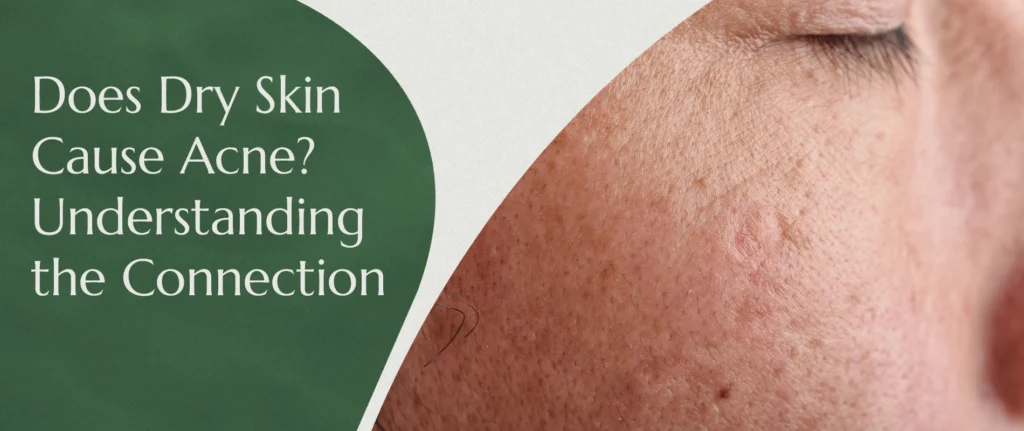
Dry skin does not directly cause acne, but dry, irritated, or dehydrated skin can create conditions that make breakouts harder to control. حب الشباب develops when hair follicles become blocked by sebum and skin cells and an inflammatory process develops within the follicle. At the same time, a weakened skin barrier can increase water loss, sensitivity, flaking, and irritation, especially when acne treatments are too aggressive. This combination explains why someone can have a dry, tight or flaky face and still develop blackheads, whiteheads, papules, pustules, or deeper pimples. Treating dry skin acne therefore requires two goals at the same time: support skin hydration and barrier function while continuing appropriate treatment for clogged pores and inflammation. Trying to solve acne simply by making the skin drier often makes the routine less tolerable and can worsen irritation.
Can Dry Skin Cause Acne? The Short Answer
No, dry skin is not considered a primary direct cause of acne. Acne vulgaris is a multifactorial inflammatory condition involving follicular plugging, sebum, changes in the follicular environment, and inflammation. However, dry skin can occur alongside acne and may indirectly contribute to a cycle of flaking, barrier damage, irritation, inappropriate product use, and poor tolerance of acne medication. Dry skin can also shed visibly around follicles, while some people remain oily in acne-prone areas despite feeling tight or dehydrated elsewhere. This is why searches such as dry skin cause pimples, acne from dry skin, or dry skin causes breakouts describe a real clinical problem even though dryness itself is not the root cause of acne. The practical answer is to control acne without repeatedly stripping the skin barrier.
Why Dry Skin and Acne Happen Together?
Dry skin and acne commonly occur together because acne-prone skin can already show abnormalities in barrier function, and many effective acne treatments add further dryness or irritation. The outer skin barrier, or stratum corneum, depends on skin cells surrounded by lipids such as ceramides, cholesterol, and fatty acids. When that barrier is disrupted, transepidermal water loss increases and the skin may become tight, flaky, sensitive, or prone to stinging. Acne treatment with retinoids, benzoyl peroxide, salicylic acid, or isotretinoin can intensify these symptoms when the routine is too aggressive. Visible flakes and irritation can then prompt over-exfoliation, frequent cleansing, or the use of unsuitable heavy products, creating a cycle in which the acne and dryness are managed poorly at the same time.
Dry skin may also coexist with substantial sebum production in particular areas of the face. A person can have tight, flaky cheeks while the forehead and nose remain oily and acne-prone. Some dermatology guidance notes that increased oil can occur when skin becomes excessively dry, but this response should not be treated as universal or as the sole explanation for dry skin breakouts. Hormones, genetics, acne severity, medication, and skincare practices can all influence sebum production. The important clinical point is that removing more oil is not automatically the solution when acne-prone skin already feels stripped.
Dry Skin vs Dehydrated Skin: Why the Difference Matters for Acne
Dry skin and dehydrated skin can look similar, but they describe different problems. Dry skin generally refers to skin that produces less surface lipid or has difficulty maintaining its lipid barrier, while dehydrated skin describes insufficient water in the outer skin and can occur in dry, normal, combination, or oily skin. Someone with dehydrated oily skin may therefore look shiny by afternoon while still feeling tight after cleansing. This distinction matters because dry skin often needs both humectants and lipid-rich barrier support, whereas oily but dehydrated skin may respond better to lightweight hydration plus a suitable moisturizer. Treating every tight face with a very heavy cream can be just as unhelpful as treating every shiny face with a harsh cleanser.
| الخاصية | Dry skin | Dehydrated skin |
|---|---|---|
| Main issue | Low lipid/oil content and impaired moisture retention | Low water content |
| Can it look oily? | Usually less oily overall | Yes |
| Common feel | Rough, flaky, tight, sometimes itchy | Tight, dull, sometimes oily at the same time |
| Can acne coexist? | Yes | Yes |
| Helpful approach | Humectants plus barrier lipids and suitable emollients | Hydration plus barrier support without unnecessary heaviness |
| Can it be temporary? | May be persistent but can fluctuate | Often changes with environment, products, and treatment |
For acne, the distinction prevents a common mistake: trying to “dry out” a face that is already dehydrated. Dehydrated skin pimples are still acne lesions and need acne treatment, but the surrounding skin also needs sufficient hydration to tolerate that treatment.
Common Causes of Dry Skin That Lead to Acne
The most important factors linking dry skin with acne are usually skincare habits, medication, environment, and product selection rather than dryness itself. Over-cleansing can remove barrier lipids, acne treatments can produce peeling, and dry environments can increase water loss from the skin. In response, patients often scrub more, add several active ingredients, or cover the face with products that do not suit their acne pattern. These habits can increase irritation and make acne on dry skin more difficult to control. Identifying what is drying the skin is therefore one of the first steps in choosing a good acne treatment for dry skin.
Over-cleansing and harsh products
Repeated washing, abrasive scrubs, astringents, high-alcohol formulas, and harsh cleansers can leave acne-prone skin tight and irritated. Acne is not caused by poor hygiene, so washing until the face feels “squeaky clean” does not remove the biological processes occurring inside a plugged follicle. Instead, excessive cleansing can increase dryness and make topical retinoids or benzoyl peroxide more difficult to tolerate. Most acne-prone skin does well with gentle cleansing up to twice daily and after heavy sweating, while very dry or sensitive skin may sometimes tolerate a simpler morning routine. Cleansing should leave the face comfortable rather than burning or noticeably tight.
Acne medications that cause dryness
Dryness is a well-recognized side effect of several effective acne treatments. Adapalene, tretinoin, and other topical retinoids may initially cause peeling, redness, or irritation. Benzoyl peroxide and salicylic acid can also increase dryness, especially when used too often or alongside several other exfoliating products. Oral isotretinoin commonly causes much more pronounced dryness because it significantly reduces sebaceous gland activity. These effects do not automatically mean the treatment is unsuitable; moisturizer, gradual introduction, formulation changes, or reduced frequency may improve tolerance. Patients should not assume that severe irritation is necessary for an acne medicine to work.
Environmental factors
Low humidity, cold weather, wind, indoor heating, and air conditioning can increase water loss and worsen facial dryness. Hot weather can create a different combination of sweating, sun exposure, air conditioning, and frequent cleansing that also stresses the skin barrier. This is relevant in Riyadh, where prolonged air-conditioning and a hot, dry outdoor environment may influence how skin feels and how well acne medications are tolerated. Environmental dryness does not directly create acne lesions, but it can alter barrier function and make skincare more difficult to balance. Adjusting moisturizer texture, cleanser frequency, and sun protection according to the environment can improve comfort without stopping acne treatment.
Hot showers and over-washing
Very hot water can remove surface lipids and make dry or sensitive skin feel tighter. Long hot showers, repeated face washing, and aggressive towel drying can therefore worsen dryness even when they are intended to make acne-prone skin feel cleaner. Use lukewarm water and gently pat rather than rub the face. Cleansing more frequently than necessary can increase irritation without preventing follicular blockage. If the face feels uncomfortable immediately after washing, the routine may be too stripping.
Using heavy, occlusive creams on acne-prone areas
Dry skin needs moisturizer, but the richest product is not automatically the best choice for acne-prone areas. Some patients tolerate creams or ointments well, while others develop congestion when a heavy formulation is used across areas already prone to blocked pores. The entire formulation matters more than whether one ingredient is technically an occlusive. Petrolatum, for example, is generally considered non-comedogenic and can be useful on severely dry areas, but a thick layer across a sweaty or very acne-prone T-zone may feel uncomfortable or unnecessary. A non-comedogenic cream, lotion, or gel-cream that provides enough hydration without repeatedly worsening breakouts is often easier to use.
Signs You May Have “Dry-Skin Acne”
“Dry-skin acne” is not a separate medical diagnosis, but several signs suggest that acne and barrier dryness are occurring together. The skin may feel tight or rough after cleansing, visible flakes may surround acne lesions, and products that previously felt comfortable may begin to sting. Some people notice redness or peeling around active pimples while the forehead or nose remains oily. Breakouts may become harder to treat because every acne product seems to create additional irritation. Makeup may also cling to dry patches, highlighting texture despite ongoing acne. Persistent itching, cracking, weeping, sharply defined patches, or widespread scaling should raise the possibility of eczema, irritant dermatitis, allergic contact dermatitis, or another condition rather than simple dry flaky acne.
Dry-Skin Acne vs Oily-Skin Acne
Dry-skin acne and oily-skin acne are both acne vulgaris; the difference lies mainly in the surrounding skin environment and treatment tolerance. Oily acne-prone skin may show obvious shine and greater sebum production, while dry acne-prone skin may feel rough, tight, or flaky. Combination skin can show both patterns at once, especially with an oily T-zone and dry cheeks. The acne lesions themselves — comedones, papules, pustules, or nodules — can occur with either skin type. Dry skin does not automatically produce smaller pores, cystic acne, or cheek-only acne, so those patterns should not be used as diagnostic rules.
How to Treat Dry Skin with Acne?
The best approach treats acne and barrier dryness at the same time. A gentle cleanser removes excess surface material without unnecessary stripping, a non-comedogenic moisturizer supports water retention, and an evidence-based acne treatment addresses follicular plugging or inflammation. Dry skin should not force a patient to abandon every active ingredient, but treatment intensity should match what the skin can tolerate. One or two carefully selected actives are usually better than stacking retinoids, benzoyl peroxide, salicylic acid, glycolic acid, and scrubs together. When irritation becomes severe, treatment may need temporary adjustment rather than simply adding more products.
Step 1 — Switch to a gentle, non-stripping cleanser
Choose a gentle cleanser appropriate for sensitive or dry acne-prone skin. A cleanser does not have to be completely non-foaming to be gentle; formulation matters more than foam alone. Fragrance-free options may be useful for sensitive patients, and strong astringent or abrasive cleansing should be avoided. Cleanse with fingertips and lukewarm water rather than a brush or rough washcloth. For very dry skin, a dermatologist may recommend a simpler morning cleanse while maintaining a proper evening cleanse to remove sunscreen and makeup.
Step 2 — Non-comedogenic moisturizing (non-negotiable)
Moisturizer is particularly important when acne medication causes dryness. Applying a non-comedogenic moisturizer after washing can reduce water loss, improve comfort, and make it easier to continue benzoyl peroxide, salicylic acid, adapalene, tretinoin, or other acne treatment. Humectants such as glycerin and hyaluronic acid can increase hydration, while ceramides, cholesterol, fatty acids, or other well-formulated lipids can support the skin barrier. Dry skin may need a cream, while combination or dehydrated acne-prone skin may prefer a lotion or gel-cream. “Oil-free” can be useful for some patients but is not a medical requirement for every person with acne.
Step 3 — Targeted acne treatments, used strategically
Dry acne-prone skin still needs evidence-based acne treatment. Adapalene can prevent comedones and inflammatory lesions, azelaic acid can address acne and post-inflammatory pigmentation, and salicylic acid may help selected patients with clogged pores. Benzoyl peroxide remains useful for inflammatory acne but may require a lower concentration, reduced frequency, or a different formulation when dryness is substantial. Retinoids should usually be applied as a thin layer over acne-prone areas rather than used only as spot treatment when the goal is prevention. Starting treatment gradually and using moisturizer can improve tolerance, but the exact schedule should follow product instructions or dermatologist advice.
Step 4 — Prescription and professional options when needed
Moderate, severe, scarring, painful, or persistent acne may require prescription treatment even when the skin is dry. Depending on the acne pattern, a dermatologist may consider prescription topical combinations, oral antibiotics for selected inflammatory acne, hormonal therapy for appropriate women, or isotretinoin for severe or treatment-resistant disease. Professional review is also valuable when dryness makes standard acne treatment impossible to tolerate. The dermatologist can determine whether the problem is simple xerosis, treatment-induced irritation, eczema, rosacea, contact dermatitis, or another acne mimic. Procedures are selected according to the actual acne concern and should not replace appropriate medical control of active disease.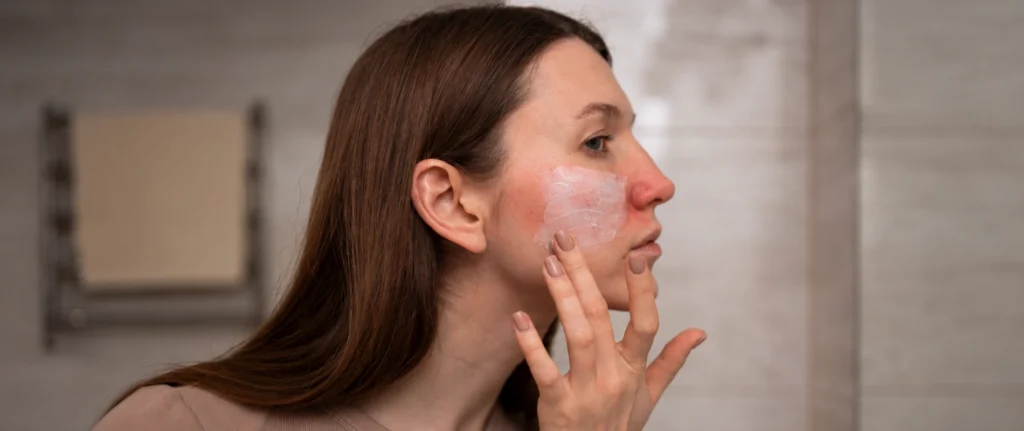
Building a Skincare Routine for Dry, Acne-Prone Skin
The most effective skincare for dry acne-prone skin is usually simple. The routine should protect the barrier, prevent clogged follicles, and reduce inflammation without forcing the skin through repeated cycles of stripping and repair. Introduce new products one at a time whenever possible so it is easier to identify irritation or breakouts. Acne medications take time to work, so constantly replacing treatments every week can create irritation before any one treatment receives a fair trial. A basic routine of cleanser, moisturizer, acne treatment, and sunscreen is sufficient for many patients.
Morning routine
Start with a gentle cleanse or, for selected very dry skin types, a simple rinse if that works with the treatment plan. Apply any morning acne medication such as azelaic acid or benzoyl peroxide according to instructions. Follow with a non-comedogenic moisturizer suited to the level of dryness. Finish with broad-spectrum SPF 30 or higher because ultraviolet exposure can worsen post-inflammatory pigmentation and contributes to cumulative skin damage. A moisturizing sunscreen can sometimes combine the final two steps when its formula provides enough hydration.
Evening routine
Remove makeup and sunscreen gently, then cleanse without scrubbing. Apply the prescribed acne active according to its instructions; for many patients this is when adapalene or another retinoid is used. Moisturizer can help reduce dryness and may be applied before or after a retinoid depending on the patient’s tolerance and clinician advice. Patients with sensitive skin often benefit from introducing retinoids gradually rather than immediately using them every night. If burning, marked redness, or cracking develops, the routine needs reassessment rather than more exfoliation.
Weekly care
Weekly exfoliation is optional, not mandatory. A patient already using adapalene or another retinoid may not need a separate acid exfoliant at all. Salicylic acid can be helpful for persistent comedonal acne, but frequency should reflect skin tolerance rather than an automatic “one to two times weekly” rule. Avoid gritty scrubs, cleansing brushes, and multiple strong acids on a damaged barrier. Hydration and treatment consistency are usually more useful than trying to remove every visible flake manually.
Ingredients to Look For (and Avoid) with Dry, Acne-Prone Skin
The best ingredients for dry pimple-prone skin support the barrier without abandoning proven acne treatment. Humectants increase water content, barrier lipids reduce moisture loss, and soothing ingredients can improve tolerability. Acne actives then address follicular blockage and inflammation. No ingredient list can guarantee that a product will never cause breakouts, because concentration, formulation, vehicle, and individual skin response all matter. Product selection should therefore focus on a well-tolerated finished formula rather than internet comedogenicity scores alone.
Helpful ingredients
Helpful ingredients include glycerin, hyaluronic acid, ceramides, cholesterol, fatty acids, niacinamide, panthenol, and appropriately selected acne actives. These ingredients have different jobs, so they should not all be treated as interchangeable “hydrators.” Humectants primarily increase water content, while barrier lipids support the structures that reduce water loss. Soothing ingredients can improve comfort but do not replace prescription acne therapy when disease is moderate or severe. The best formula is one that supports barrier function without repeatedly causing clogged pores or irritation.
Humectants: glycerin, hyaluronic acid
Glycerin and hyaluronic acid are humectants that help increase water within the outer skin. They are useful for dehydrated and dry acne-prone skin because they provide hydration without functioning as acne medications or heavy oils. Humectants are most effective when incorporated into a complete moisturizer or followed by a product that reduces water loss. They can make retinoid- or benzoyl-peroxide-treated skin feel more comfortable. They do not directly unclog pores or cure acne.
Barrier lipids: ceramides, cholesterol, fatty acids
Ceramides, cholesterol, and fatty acids are important components of the lipid structures in the stratum corneum. Well-formulated moisturizers containing these lipids can support water retention and barrier function, which is particularly useful when acne treatment causes xerosis or irritation. Acne-affected skin can also show alterations in stratum-corneum lipid composition, making barrier-supportive skincare a useful adjunct to medical therapy. However, simply seeing “ceramides” on a label does not guarantee that one formula will suit every skin type. Texture and complete formulation still matter.
Soothers: niacinamide, panthenol, allantoin, ectoin
Niacinamide, panthenol, allantoin, and ectoin are commonly used in products designed for barrier support or sensitive skin. Niacinamide can support epidermal barrier function and may also influence inflammation and surface oiliness in some formulations. Panthenol, allantoin, and ectoin can improve hydration or comfort, although they are supportive skincare ingredients rather than first-line treatments for moderate acne. Sensitive patients should still pay attention to the complete formula because fragrance, acids, or other actives can override the soothing effect. These ingredients are most useful when they make an evidence-based acne routine easier to tolerate.
Acne-friendly actives: low-strength salicylic acid, azelaic acid, adapalene
Salicylic acid, azelaic acid, and adapalene address different acne mechanisms. Salicylic acid helps clear follicular debris, azelaic acid has anti-inflammatory and comedolytic activity and can help post-inflammatory hyperpigmentation, and adapalene is a topical retinoid that helps prevent new comedones and inflammatory lesions. Dry skin may require lower frequency or gradual introduction rather than weaker treatment indefinitely. Adapalene and other retinoids can still cause dryness during the adjustment period. Pregnancy status also matters because topical retinoids should be avoided during pregnancy.
Ingredients to use cautiously or avoid
Dry acne-prone skin is most likely to struggle with products that create unnecessary irritation or are layered too aggressively. High-alcohol formulas, fragranced products, harsh surfactants, repeated exfoliation, and several strong actives used at once can compromise treatment tolerance. Rich products are not automatically bad for acne, just as lightweight products are not automatically safe. The relevant question is whether the finished formula repeatedly worsens congestion or irritation in that individual. Introducing products gradually makes those relationships easier to identify.
High alcohol content, strong fragrances, and harsh sulfates
High concentrations of drying alcohols and strong fragrance can irritate dry sensitive skin, while aggressive surfactants may leave the face feeling stripped. Fragrance-free formulas are particularly useful when sensitivity, eczema, or contact dermatitis is a concern. Not every alcohol or sulfate is inherently harmful because cosmetic formulas vary substantially, so the article should avoid treating ingredient names as absolute rules. The practical warning sign is a product that consistently leaves the skin burning, tight, red, or flaky. Acne treatment works better when unnecessary irritation is minimized.
Very heavy occlusives on acne-prone zones (e.g., thick petrolatum layers on the T-zone)
Occlusives reduce water loss and can be extremely useful for dry or damaged skin. Petrolatum itself is generally considered non-comedogenic, so it is inaccurate to describe it as inherently pore-clogging. However, a very thick occlusive layer may not be comfortable or necessary across a sweaty, oily, or highly acne-prone T-zone. Some patients do well with richer creams, while others prefer lighter textures on acne-prone areas and a more occlusive product only on dry patches or lips. Match the moisturizer to the area and skin response rather than assuming all occlusion causes acne.
Comedogenic oils such as coconut oil on acne-prone areas
Pure coconut oil is generally not an ideal facial moisturizer for acne-prone skin because some patients develop congestion with it. However, internet “comedogenic ratings” do not reliably predict how every finished skincare formula behaves on human skin. An ingredient can perform differently depending on concentration, processing, and the rest of the formulation. This is why a professionally formulated product containing oils is not automatically acnegenic. For acne-prone facial skin, choosing a product labeled non-comedogenic and observing individual response is more useful than ranking oils by a fixed numerical score.
Can Acne Treatments Cause Dry Skin?
Yes. Benzoyl peroxide, salicylic acid, topical retinoids such as adapalene and tretinoin, and oral isotretinoin can all cause dry skin or irritation. Dryness is especially likely when several actives are combined, excessive quantities are applied, or treatment is introduced too quickly. Moisturizer is therefore not an optional cosmetic extra for many patients; it can help improve comfort and treatment adherence. Severe burning, cracking, marked swelling, or persistent dermatitis should not simply be accepted as normal “purging.” A dermatologist can adjust frequency, strength, vehicle, or medication while maintaining effective acne control.
Prevention Strategies for Dry-Skin Acne
Preventing dry skin breakouts starts with avoiding unnecessary barrier damage. Use a gentle cleanser, lukewarm water, and a moisturizer appropriate for acne-prone skin. Avoid scrubbing, repeated washing, and stacking several exfoliating products simply because the skin feels rough. Apply moisturizer when the skin feels dry, especially after cleansing and when using retinoids, benzoyl peroxide, salicylic acid, or isotretinoin. Use broad-spectrum SPF 30 or higher and avoid picking lesions, which increases inflammation and post-acne marks. In very dry environments, a humidifier may improve general skin comfort, although it is not an acne treatment. A stable routine used consistently is more valuable than rotating between an aggressive “breakout routine” and an emergency “repair routine.”
Myths and Facts About Dry Skin and Acne
Myth: Acne only happens on oily skin.
Fact: Acne can occur in dry, oily, combination, sensitive, or dehydrated skin because acne involves the pilosebaceous follicle rather than simply the amount of visible facial oil.
Myth: Drying out acne makes it clear faster.
Fact: Excessive dryness and irritation can make treatment harder to tolerate and may contribute to additional inflammatory flares. Acne medication should be effective, not deliberately painful or stripping.
Myth: Moisturizer always clogs pores.
Fact: Acne-prone skin often benefits from an appropriate moisturizer, especially during treatment with retinoids, benzoyl peroxide, salicylic acid, or isotretinoin. Look for a non-comedogenic formula suited to your skin.
Myth: Dry skin automatically produces excess oil to compensate.
Fact: Some dermatology guidance describes increased oil production when the skin becomes dry, but sebum regulation is complex and strongly influenced by hormones, genetics, age, and medications. It should not be presented as a guaranteed response in every patient.
Myth: More exfoliation removes the dead skin that causes acne.
Fact: Excessive acids, scrubs, or cleansing can worsen barrier irritation. Follicular acne is not solved by repeatedly sanding away visible surface flakes.
Myth: Petrolatum and every rich moisturizer are comedogenic.
Fact: Petrolatum is generally considered non-comedogenic, and many people with acne tolerate creams well. Product formulation and individual response matter more than texture alone.
When to See a Dermatologist for Dry-Skin Acne
See a dermatologist when acne is painful, deep, scarring, widespread, repeatedly leaving dark marks, or not improving despite a consistent treatment plan. Professional assessment is also important when dryness causes persistent burning, cracking, bleeding, severe itching, weeping, or clearly defined scaly patches. These symptoms can indicate eczema, irritant contact dermatitis, allergic contact dermatitis, rosacea, or another condition alongside or instead of acne. A dermatologist can adjust drying acne medication without abandoning effective treatment and can distinguish a treatment reaction from ordinary temporary irritation. Patients using isotretinoin should report significant side effects to their prescribing dermatologist. For someone seeking acne treatment in Riyadh, a dermatology consultation becomes particularly useful when active acne and significant barrier damage need to be managed simultaneously.
الأسئلة الشائعة حول Dry Skin and Acne
No. Dry skin is not considered a direct primary cause of acne, but barrier disruption, irritation, flaking, and poorly tolerated skincare can create conditions that make existing acne more difficult to control.
It can indirectly worsen the situation. Dry, irritated skin may become more inflamed and less tolerant of effective acne treatments, and aggressive attempts to remove flaking can further disrupt the barrier.
Use a gentle cleanser, an appropriate non-comedogenic moisturizer, sunscreen, and one or more evidence-based acne treatments selected according to acne severity. Introduce potentially irritating treatments gradually rather than stripping the skin.
There is no single best moisturizer for everyone. Look for a non-comedogenic formula with ingredients such as glycerin, hyaluronic acid, ceramides, or other barrier-supporting lipids in a cream, lotion, or gel-cream texture your skin tolerates.
Dry skin can still develop ordinary acne because follicles continue to contain sebum and shed skin cells. Hormones, genetics, acne medications, product selection, and barrier irritation may all contribute, so dryness should not automatically be assumed to be the cause.
Yes. Moisturizer is often especially useful during acne treatment because it can reduce dryness and help patients continue medications that would otherwise become difficult to tolerate.
Yes. Benzoyl peroxide, salicylic acid, topical retinoids, and isotretinoin can all cause dryness or irritation. Moisturizer and treatment adjustment can usually reduce these effects.
People with naturally dry or sensitive skin may notice irritation from acne products sooner, while combination or oily skin can also become dehydrated after aggressive cleansing or treatment. Acne plus dryness can therefore occur in almost any skin type.
Diet may influence acne in some individuals, but there is no single diet proven to treat both acne and dry skin. High-glycemic dietary patterns have been studied in acne, but skincare and appropriate medical treatment remain more direct ways to manage active disease.
Seek dermatology care when acne is deep, painful, scarring, treatment-resistant, or causing significant distress, or when dryness becomes persistently itchy, cracked, bleeding, weeping, or painful. These features can require a diagnosis beyond routine dry skin care.
خاتمة
Dry skin does not directly cause acne, but acne, dehydration, barrier dysfunction, and treatment-related dryness can occur together and reinforce a difficult skincare cycle. The safest strategy is not to dry the skin further in an attempt to eliminate pimples. Instead, use a gentle cleanser, maintain hydration with an appropriate non-comedogenic moisturizer, protect the skin from excessive irritation, and continue evidence-based acne treatment at a tolerable intensity. Humectants such as glycerin and hyaluronic acid support hydration, while ceramides, cholesterol, and fatty acids can support barrier function. Adapalene, azelaic acid, salicylic acid, and benzoyl peroxide can each play different roles in acne management when selected and introduced appropriately.