
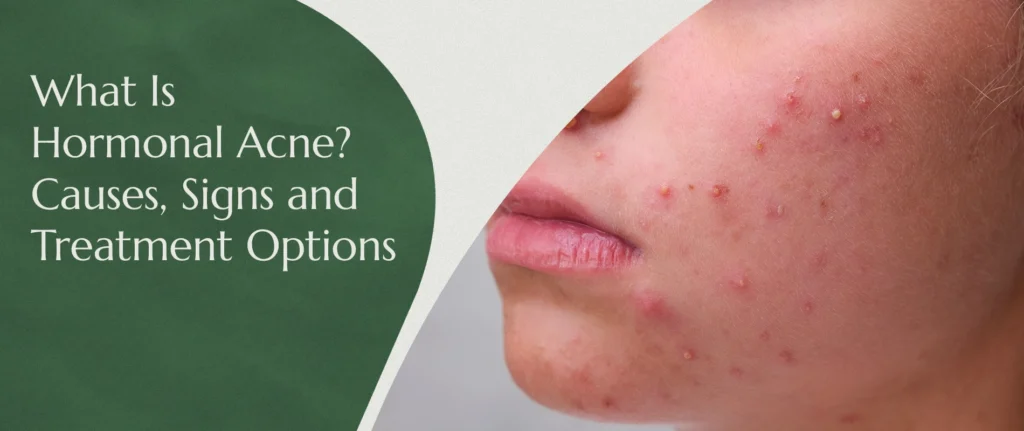
Hormonal acne is acne vulgaris in which hormonal fluctuations or sensitivity to androgen hormones play an important role in triggering or maintaining breakouts. It often appears as persistent or recurring pimples, papules, pustules, nodules, or deeper tender lesions, sometimes concentrated around the chin, jawline, lower cheeks, and neck. Adult women commonly notice hormonal breakouts around menstruation, pregnancy, changes in contraception, or perimenopause, although hormonal acne can also affect teenagers and men. Hormones influence sebaceous glands, sebum production, follicular plugging, and inflammation rather than acting as the only cause of acne. Treatment may include topical acne medicines, oral medication, hormonal therapy for selected women, and evaluation for conditions such as polycystic ovary syndrome when other signs are present. A dermatologist can distinguish hormonally influenced acne from other acne patterns or acne-like conditions and build treatment around acne severity, medical history, pregnancy potential, and treatment goals. When to suspect an underlying condition like PCOS. PCOS should be considered when persistent acne occurs with irregular or absent periods, hirsutism, female-pattern hair thinning, ovulatory dysfunction, fertility concerns, or other evidence of androgen excess. Acne alone is a relatively weak indicator of PCOS and should not be used to diagnose the condition. Rapid progression of acne together with virilization—such as voice deepening, rapid muscle changes, or rapidly progressive hair loss—requires more urgent medical assessment because rarer causes of marked androgen excess need exclusion. Other endocrine disorders can occasionally contribute to acne, but they are far less common than PCOS or ordinary acne vulgaris. The purpose of evaluation is to identify the patients who genuinely need broader medical investigation without over-testing everyone with adult acne.
FAQ
What Is Hormonal Acne?
Hormonal acne describes acne in which hormones, particularly androgens, have an important influence on recurring or persistent breakouts. It is not a completely separate disease from acne vulgaris because the same biological processes still occur: sebaceous glands produce oil, follicles become plugged with sebum and skin cells, Cutibacterium acnes contributes to the follicular environment, and inflammation produces visible acne lesions. What makes acne appear “hormonal” is the pattern of hormonal influence rather than a unique type of pimple. A person may have completely normal hormone blood levels but skin that responds strongly to androgen signaling. This helps explain why some adults experience persistent lower-face acne even without a diagnosed hormonal imbalance. Timing, distribution, associated symptoms, and treatment response provide useful clues, but no single feature can confirm hormonal acne by itself.Who does hormonal acne affect?
Hormonal acne can affect women, men, and teenagers, although persistent hormonally influenced acne is particularly common in adult women. Puberty increases androgen activity in both sexes, which helps explain why acne is so common during adolescence. Some women continue to have acne after adolescence, while others develop new acne for the first time in adulthood. Hormonal transitions related to menstruation, pregnancy, stopping or changing contraception, and perimenopause can alter acne activity. Men may also develop hormonally influenced acne through normal androgen activity, testosterone therapy, anabolic steroid exposure, or individual androgen sensitivity. Hormonal acne therefore reflects both hormone levels and how sebaceous glands respond to those hormonal signals.Most common in adult women, but can occur in men and teens. Adult women frequently report persistent lower-face acne or breakouts that predictably worsen around menstruation. Teenagers of all sexes commonly develop acne because rising androgen activity during puberty increases sebaceous gland output and follicular activity. Men can develop severe inflammatory acne because sebaceous glands respond strongly to circulating androgens, particularly during adolescence or androgen exposure. In women, however, adult hormonal acne often occurs even when laboratory androgen values fall within the normal range. Skin-level androgen sensitivity may therefore matter as much as the concentration of hormones in the bloodstream.Typical age groups: 20s, 30s, 40s, and perimenopause. Hormonal acne may persist through the 20s, 30s, and 40s and can change again around perimenopause. Some women have persistent acne that began during adolescence, while others develop adult-onset acne after years of clear skin. Hormonal shifts around menstrual cycles, pregnancy, postpartum periods, contraception, and perimenopause may alter sebaceous gland activity and inflammatory acne. Falling estrogen relative to androgen activity during perimenopause may contribute to breakouts in some women, although the mechanism is more complex than a simple estrogen deficiency. New severe acne after menopause, especially with rapid hair growth, voice changes, or scalp hair loss, deserves medical assessment rather than being assumed to represent ordinary hormonal acne.What Causes Hormonal Acne?
Hormonal acne develops when hormone-related signals interact with the same mechanisms responsible for acne vulgaris. Androgens can stimulate sebaceous glands, increase sebum output, and influence follicular keratinization, making blocked hair follicles more likely. Once the follicle becomes plugged, Cutibacterium acnes and the immune response contribute to inflammation and acne lesion formation. Menstrual fluctuations, puberty, pregnancy, perimenopause, PCOS, certain medications, and individual androgen sensitivity can all modify this process. Metabolic signals such as insulin and IGF-1 may also interact with androgen and sebaceous gland pathways. The cause of hormonal acne is therefore usually a combination of hormone activity, follicular biology, inflammation, genetics, and individual skin sensitivity rather than one isolated hormonal imbalance.The role of hormones in acne formation
Hormones influence acne largely through their effects on sebaceous glands and hair follicles. Androgens bind to receptors in sebaceous tissue and can increase oil production, while hormonal signaling may also influence how cells inside follicles mature and shed. Excess sebum and retained follicular cells help form comedones, while inflammatory pathways contribute to papules, pustules, nodules, and deeper lesions. This process explains why hormones cause acne more readily during periods of increased androgen activity, such as puberty. Hormones do not create acne independently of follicular plugging and inflammation. A patient’s genetic sensitivity to androgens can also determine how strongly otherwise normal hormone levels affect the skin.Main hormones involved
Androgens have the strongest established relationship with acne, but other hormonal and metabolic signals may modify sebaceous gland behavior and inflammation. Testosterone, DHT, adrenal androgens, insulin, and insulin-like growth factor 1 are all relevant to acne biology. Estrogen and progesterone also change across reproductive life and may influence how strongly androgen effects are expressed. Stress-related hormonal pathways can interact with inflammation, although cortisol should not be described as a direct universal cause of acne. Hormonal acne causes are therefore better understood as interacting biological pathways rather than a single “acne hormone.”Androgens (testosterone, DHT) increase sebum production and follicle plugging. Testosterone and dihydrotestosterone, or DHT, are among the most important androgens affecting sebaceous glands. Increased androgen signaling can enlarge or stimulate sebaceous glands, raise sebum output, and contribute to conditions that favor follicular plugging. This relationship helps explain testosterone and acne during puberty, testosterone therapy, anabolic steroid use, and certain endocrine disorders. DHT is a more potent androgen produced from testosterone through enzymes present in tissues, including skin. However, many women with hormonal acne do not have abnormally high testosterone, which means androgen sensitivity at the skin level is also clinically important.Androgens, insulin/IGF-1, and their interaction with sebaceous glands. Androgens can directly stimulate sebaceous glands, while insulin and IGF-1 may enhance pathways related to androgen signaling, sebum production, and follicular growth. This interaction is particularly relevant in conditions such as PCOS, where insulin resistance and hyperandrogenism may coexist. High-glycemic dietary patterns have been associated with acne in some studies, but diet does not cause hormonal acne in everyone. Dairy has also been investigated, but evidence is inconsistent enough that universal dairy avoidance is not justified. These metabolic relationships should therefore guide individualized assessment rather than rigid dietary rules.Factors influencing hormones
Hormonal acne can change with menstrual cycles, puberty, pregnancy, postpartum hormonal shifts, perimenopause, stress, sleep disruption, medication use, and significant metabolic changes. Premenstrual flares are especially common because hormone levels change throughout the menstrual cycle. Stress may worsen acne through inflammatory and neuroendocrine pathways, while inadequate sleep may indirectly affect inflammatory and metabolic regulation. Significant weight changes can accompany endocrine changes, particularly in people with PCOS or insulin resistance, but weight alone does not explain acne. These factors influence susceptibility rather than acting as guaranteed triggers. Tracking acne over time may help identify whether breakouts repeatedly follow hormonal transitions.Menstrual cycle phases, stress, sleep, and weight changes. Many women notice acne before menstruation, during menstruation, or shortly afterward. Because a visible lesion develops over time, pimples after menstruation can still reflect follicular changes that began earlier in the cycle. Stress and poor sleep may amplify inflammation or existing hormonal susceptibility rather than directly causing clogged pores in everyone. Significant weight changes can sometimes accompany changes in insulin sensitivity or ovarian hormone function, particularly when another endocrine condition is present. Recording cycle dates, new medications, sleep disruption, and breakout timing can provide a dermatologist with useful clinical information without assuming every fluctuation has a hormonal cause.Underlying hormonal conditions
Most people with acne do not have an endocrine disease, but persistent or unusually severe adult acne can sometimes accompany androgen excess or another hormonal disorder. PCOS is the most common endocrine condition considered when acne occurs with irregular periods, hirsutism, fertility concerns, or female-pattern scalp hair thinning. Less common disorders such as non-classic congenital adrenal hyperplasia, Cushing syndrome, or androgen-secreting tumors may occasionally produce acne alongside other distinctive symptoms. These conditions are far less common than ordinary acne and should not be suggested from jawline breakouts alone. Sudden severe acne with rapid virilizing features deserves prompt medical assessment because it differs from the usual gradual pattern of adult hormonal acne.Polycystic ovary syndrome (PCOS): acne with irregular periods, hirsutism, hair thinning. PCOS becomes more relevant when acne occurs together with irregular or absent periods, excess coarse facial or body hair, female-pattern hair thinning, ovulatory problems, or other signs of androgen excess. Acne can be one feature of PCOS, but acne alone does not diagnose the condition. Some women with PCOS have no acne, while many women with hormonal acne do not have PCOS. Diagnosis requires a broader clinical and sometimes laboratory assessment, and pelvic ultrasound is not automatically required in every patient. When several PCOS features occur together, coordinated care with dermatology, gynecology, or endocrinology may be appropriate.Medication-induced hormonal acne
Certain medicines and hormone-containing products can trigger or worsen acne by altering androgen activity or other pathways involved in follicular inflammation. Testosterone treatment and anabolic-androgenic steroids are well-recognized triggers and can produce abrupt inflammatory acne on the face, chest, shoulders, or back. Some progestin-only contraceptive methods may worsen acne in susceptible individuals, while combined oral contraceptives can improve acne in appropriate women. Corticosteroids can produce acneiform eruptions through mechanisms that are not identical to ordinary hormonal acne. Lithium and some other drugs can also produce acne-like eruptions through non-hormonal mechanisms. Medication history is therefore essential before assuming that new adult acne reflects spontaneous hormonal imbalance.Androgenic progestins, anabolic steroids, some IUDs, and other drugs. Some progestins have more androgenic activity than others and may affect acne differently depending on the formulation and individual response. Levonorgestrel-containing hormonal IUDs have been associated with acne in some users, but it would be inaccurate to say that every hormonal IUD causes acne. Anabolic steroids and testosterone exposure can strongly stimulate sebaceous glands and may produce widespread inflammatory acne. Corticosteroids and certain anticonvulsants or other medications can also trigger acneiform eruptions, although the mechanisms vary. Patients should not stop prescribed medication on their own; a dermatologist and the prescribing clinician can determine whether medication is contributing and whether an alternative is appropriate.Acne and pregnancy
Pregnancy can worsen acne, improve it, or have little effect because reproductive hormones change substantially throughout pregnancy. Increased androgen and progesterone-related signaling may stimulate sebaceous activity in susceptible skin, while other hormonal changes may offset these effects in some women. People with a previous history of acne may be more likely to notice recurrence, but the course remains unpredictable. Pregnancy also changes the treatment options available because several effective acne medications can harm a developing fetus. Treatment should therefore focus on both disease control and medication safety. Pregnant patients should review prescription and non-prescription acne treatments with their dermatologist or obstetric clinician.Why acne can worsen or improve during pregnancy due to hormonal shifts. Pregnancy produces major changes in estrogen, progesterone, androgen-related pathways, placental hormones, and skin physiology. These shifts can alter sebum production and follicular behavior, producing new hormonal pimples or worsening existing acne in some women. Other patients notice clearer skin, showing that hormone changes do not affect everyone in the same direction. Treatment must be adjusted because isotretinoin, spironolactone, and topical retinoids are not appropriate during pregnancy. Pregnancy-related acne should therefore be managed with treatments selected specifically for maternal and fetal safety rather than simply continuing a pre-pregnancy routine.Signs and Symptoms of Hormonal Acne
Hormonal acne commonly presents as persistent or recurring inflammatory breakouts, but there is no single lesion that proves hormones are the cause. Patients may develop blackheads, whiteheads, papules, pustules, nodules, or deeper tender lesions. Adult women often notice a lower-face pattern involving the chin, jawline, lower cheeks, or neck, especially when acne flares around menstruation. Hormonal acne can also involve the forehead, chest, shoulders, and back, so location should not be used as a strict diagnostic map. Oily skin and post-inflammatory hyperpigmentation frequently accompany repeated breakouts. Timing, lesion type, associated endocrine symptoms, and overall pattern provide more useful evidence than the location of one pimple.Typical locations
Hormonal acne areas often include the jawline, chin, lower cheeks, and upper neck in adult women. However, hormonal pimples on cheeks, forehead acne, chest acne, shoulder acne, and back acne can occur as part of acne vulgaris with hormonal influence. Pimples on the forehead are not automatically hormonal, and jawline acne is not automatically caused by PCOS. Hair products, friction, occlusive cosmetics, medication, sweating, and other factors can create similar distributions. Dermatologists therefore evaluate acne location alongside lesion type, timing, and medical history.Jawline, chin, lower cheeks, and neck predominance. Lower-face acne is commonly associated with persistent adult female acne and can consist of tender papules, pustules, nodules, or deeper cyst-like lesions. Hormonal acne on the chin or jawline becomes more suggestive when it repeatedly worsens at a similar time in the menstrual cycle. However, some patients with hormonally influenced acne have widespread facial or truncal disease, while some patients with lower-face acne have no identifiable endocrine abnormality. This pattern should therefore be treated as a useful clue rather than a diagnostic rule. A dermatologist can also distinguish acne from perioral dermatitis, folliculitis, rosacea, or other conditions affecting similar areas.Timing and patterns
Predictable timing is one of the more useful clues that hormonal fluctuations are affecting acne. Premenstrual worsening is common, and some women notice recurrent breakouts at approximately the same point in each cycle. Acne can also change after starting or stopping hormonal contraception, during pregnancy, postpartum, or through perimenopause. Persistent adult hormonal acne does not need to disappear between menstrual periods to have a hormonal component. Acne may remain present throughout the month and simply become more inflammatory during hormonal shifts. Tracking acne patterns over several cycles can provide useful information during clinical evaluation.Cyclical flares before periods or with hormonal changes. Many women notice hormonal breakouts several days before menstruation, although lesions may also appear during or after the period because follicular inflammation develops before it becomes visible. Starting, stopping, or changing hormonal contraception can temporarily alter acne patterns. Pregnancy and perimenopause may also change the frequency or severity of breakouts. A recurring cycle relationship supports hormonal influence but does not reveal whether hormone blood levels are abnormal. Clinical context remains necessary before labeling acne as a hormonal imbalance.Associated features
Hormonal acne often coexists with oily skin, inflammatory lesions, enlarged-looking pores, post-inflammatory hyperpigmentation, or acne scars. Oily skin reflects sebaceous activity, while repeated inflammatory lesions can make pores appear more prominent and leave persistent dark marks. Deep nodules and cyst-like lesions carry a greater risk of structural scarring than superficial comedones. Associated symptoms such as irregular periods, hirsutism, scalp hair thinning, or fertility concerns are more informative for possible androgen excess than oily skin alone. Identifying these accompanying features helps determine whether the patient needs routine acne treatment or a broader endocrine evaluation.Oily skin, enlarged pores, and post-inflammatory hyperpigmentation. Higher sebaceous activity can make skin appear oily and can increase the visibility of pores, although actual pore size depends on genetics, age, skin structure, and other factors. Repeated hormonal pimples can leave brown, grey-brown, or darker post-inflammatory marks after inflammation resolves. These marks represent post-inflammatory hyperpigmentation rather than true depressed acne scars, although both may occur together. PIH is particularly persistent in darker skin tones and can sometimes bother patients more than active lesions. Controlling new inflammatory acne is therefore essential before focusing only on pigmentation.Hormonal Acne vs Other Types of Acne
Hormonal acne is still acne vulgaris, but hormones appear to play a stronger role in driving or maintaining the condition. “Regular” acne and hormonal acne share the same underlying processes of excess sebum, follicular plugging, Cutibacterium acnes, and inflammation, which is why topical acne treatments can help both. Hormonal influence becomes more likely when acne persists into adulthood, follows menstrual cycles, clusters on the lower face, or appears with signs of androgen excess. Non-hormonal aggravating factors can include comedogenic products, friction, occupational exposure, sweating, and certain medications. Conditions such as Malassezia folliculitis—sometimes called “fungal acne”—can mimic acne but often produce more uniform, itchy bumps and require a different approach. Rosacea, perioral dermatitis, bacterial folliculitis, and hidradenitis can also resemble acne, so recurrent “hormonal bumps on face” should not automatically be self-diagnosed.What Can Make Hormonal Acne Worse?
Hormonal acne may worsen when hormonal susceptibility combines with skin irritation, picking, inconsistent treatment, pore-clogging products, friction, stress, poor sleep, or certain medications. High-glycemic diets may worsen acne in some patients, but food is not a universal cause and there is not enough evidence to recommend rigid acne diets for everyone. Dairy has been studied, but associations remain inconsistent and do not justify automatically eliminating dairy. Humid environments and heavy sweating can also aggravate some acne-prone skin, particularly when combined with occlusive products or friction. Over-cleansing is another common problem because harsh washing can damage the skin barrier without correcting the hormonal mechanism. The most useful strategy is to identify repeatable individual aggravating factors while maintaining evidence-based acne treatment.Lifestyle and controllable factors
Use non-comedogenic skincare and makeup, cleanse gently rather than scrubbing, and avoid squeezing hormonal cysts or deep pimples. Wash after heavy sweating when practical and keep oily hair products away from acne-prone facial skin. Adequate sleep and stress management may help people who notice clear stress-related flares, although neither is a substitute for medical treatment. A balanced diet that limits frequent high-glycemic foods may help some patients, but there is no universal list of foods that causes hormonal acne. Rather than changing many habits at once, consistent skincare and targeted treatment usually provide more useful information about what is helping.How Is Hormonal Acne Diagnosed?
Hormonal acne is usually diagnosed from the clinical pattern rather than one specific laboratory test. A dermatologist evaluates acne lesion type, severity, distribution, age of onset, menstrual timing, medication use, reproductive history, pregnancy status, and response to previous treatment. The clinician also looks for hirsutism, irregular menstrual cycles, female-pattern hair loss, acanthosis nigricans, or other signs that may suggest hyperandrogenism or insulin resistance. Most people with ordinary acne do not need a broad endocrine workup. Hormonal testing becomes more relevant when the pattern is unusual or accompanied by other endocrine features. Diagnosis should therefore identify both the acne and whether there is enough evidence to investigate an underlying hormonal condition.Clinical evaluation by a dermatologist
A dermatologist first confirms that the lesions are acne rather than folliculitis, rosacea, perioral dermatitis, or another acne-like condition. The examination identifies comedones, inflammatory lesions, nodules, cyst-like lesions, scarring, PIH, and the areas involved. History includes menstrual patterns, pregnancy plans, medications, contraception, anabolic steroid or testosterone exposure, skincare products, and previous acne treatments. In adult women, questions about excess facial hair, scalp thinning, and menstrual regularity help assess whether androgen excess may be present. This clinical evaluation often provides enough information to begin treatment without automatically ordering laboratory tests.History, lesion pattern, cycle correlation, and treatment response. Persistent lower-face inflammatory acne, cyclical menstrual flares, and acne that changes with hormonal medication can support a hormonal component. However, none of these features alone establishes a laboratory hormone abnormality. Previous response to topical retinoids, benzoyl peroxide, antibiotics, combined oral contraceptives, or spironolactone can help guide the next treatment step but should not be used as a diagnostic test. The dermatologist also considers whether acne began abruptly, became unusually severe, or appeared after a new medication. Combining timing, morphology, distribution, and treatment response gives a more accurate picture than relying on an acne face map.When hormonal testing is considered
Hormonal testing is considered more strongly when acne is severe, unusually sudden, resistant to appropriate treatment, or accompanied by irregular menstruation, hirsutism, female-pattern hair loss, infertility concerns, or other signs of androgen excess. Tests may include total or free testosterone and other androgen-related measurements depending on the clinical question and local practice. Additional testing can be considered when symptoms raise suspicion for PCOS, non-classic congenital adrenal hyperplasia, thyroid disease, hyperprolactinemia, or another endocrine disorder. Expert groups differ somewhat in how broadly adult women with acne should undergo androgen testing, so routine testing practices vary. Laboratory testing should answer a specific clinical question rather than be ordered simply because acne appears on the jawline.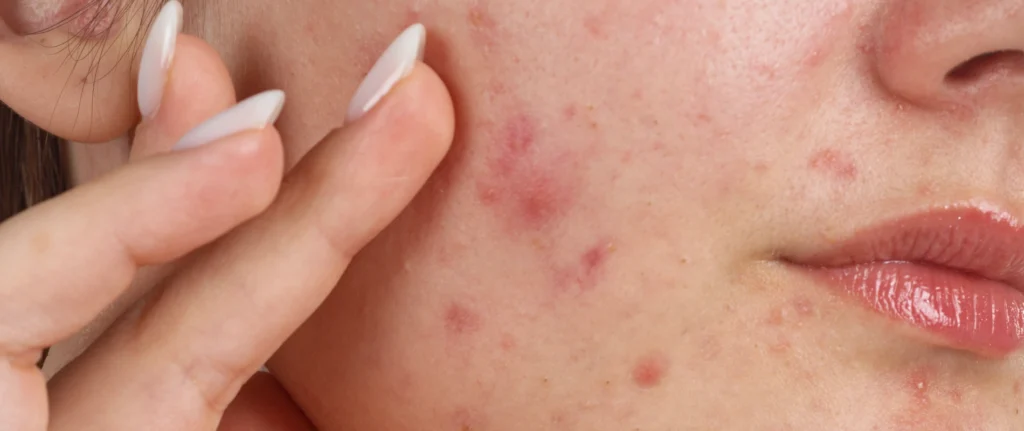 When to suspect an underlying condition like PCOS. PCOS should be considered when persistent acne occurs with irregular or absent periods, hirsutism, female-pattern hair thinning, ovulatory dysfunction, fertility concerns, or other evidence of androgen excess. Acne alone is a relatively weak indicator of PCOS and should not be used to diagnose the condition. Rapid progression of acne together with virilization—such as voice deepening, rapid muscle changes, or rapidly progressive hair loss—requires more urgent medical assessment because rarer causes of marked androgen excess need exclusion. Other endocrine disorders can occasionally contribute to acne, but they are far less common than PCOS or ordinary acne vulgaris. The purpose of evaluation is to identify the patients who genuinely need broader medical investigation without over-testing everyone with adult acne.
Treatment Options for Hormonal Acne
Hormonal acne treatment usually combines standard acne therapy with hormone-directed treatment when appropriate. Topical retinoids, benzoyl peroxide, azelaic acid, salicylic acid, clascoterone, and selected topical antibiotics can address follicular plugging, inflammation, bacteria, and androgen signaling within the skin. Oral antibiotics may help selected moderate-to-severe inflammatory acne, while isotretinoin is an important option for severe, scarring, or treatment-resistant disease. Combined oral contraceptives and spironolactone can be effective for appropriate adult women with hormonally influenced acne. Most treatment plans use more than one mechanism because acne itself has several interacting biological drivers. Improvement takes time, and patients commonly need six to eight weeks or longer before judging whether a treatment is beginning to work.General principles of acne treatment
The first goal is to control active acne before it causes more post-inflammatory pigmentation or permanent scars. Dermatologists often combine topical treatments with different mechanisms rather than relying on spot treatment alone. Oral antibiotics should generally be limited in duration and combined with benzoyl peroxide or other topical treatment to reduce antibiotic resistance. Patients should use treatment consistently because visible improvement commonly takes several weeks, while hormonal therapies may take two to three months or longer to show their full effect. Once acne is controlled, maintenance therapy may help prevent recurring hormonal breakouts.Topical treatments
Topical retinoids such as adapalene or prescription retinoids reduce follicular plugging and help prevent new comedones and inflammatory lesions. Benzoyl peroxide reduces acne-associated bacteria and inflammation, while azelaic acid can treat both acne and post-inflammatory hyperpigmentation. Salicylic acid can help unclog pores, although tolerance differs between patients. Clascoterone is a topical androgen-receptor inhibitor that offers another option for moderate-to-severe acne in eligible patients and addresses androgen signaling directly within the skin. Topical antibiotics are generally used with benzoyl peroxide rather than as long-term monotherapy. The best products for hormonal acne are therefore selected according to lesion type, severity, skin tolerance, and pregnancy status rather than marketing labels.Oral medications
Oral treatment may be appropriate for moderate-to-severe inflammatory acne, deep nodules, scarring disease, or acne that has not responded adequately to topical treatment. Oral antibiotics can reduce inflammation but are usually used for a limited course rather than indefinitely. Hormonal therapies can be especially useful for appropriate women with persistent or cyclical acne. Isotretinoin is recommended for severe, scarring, or treatment-resistant acne and requires careful medical supervision because of its potential adverse effects and major pregnancy risk. The choice between these options depends on acne severity, previous treatment response, pregnancy potential, medical history, and patient preferences.Professional procedures
Procedures can support acne management but generally do not replace medications that control the ongoing hormonal and follicular process. Dermatologists may inject selected large painful nodules with an intralesional corticosteroid to reduce inflammation more rapidly. Chemical peels, laser or light treatments, and other procedures are sometimes offered, but evidence for procedures in active acne is less established than for standard topical and systemic medication. Once active acne is controlled, procedural treatment may become more relevant for acne scars, persistent erythema, or post-inflammatory pigmentation. The purpose of a procedure should therefore be clearly defined rather than treating “hormonal acne” as something that can be removed with one device.Hormonal Therapy for Adult Women with Acne
Hormonal therapy can be particularly useful for adult women with persistent, cyclical, lower-face, or treatment-resistant acne. Combined oral contraceptives and spironolactone are supported treatment options in current acne guidelines for appropriately selected patients. They work by reducing androgen production or limiting androgen effects on sebaceous glands rather than simply drying individual pimples. Hormonal therapy often takes several months to produce its full effect, so topical treatment is frequently continued during the early treatment period. These medicines have contraindications and potential side effects, which means prescribing should follow appropriate medical screening. Men are generally not treated with these anti-androgen approaches for acne because of unwanted hormonal effects.Combined oral contraceptives (COCs)
Combined oral contraceptives can improve acne by suppressing ovarian androgen production and increasing sex hormone-binding globulin, which reduces biologically active free androgens. Several formulations have clinical evidence for acne treatment, but the safest choice depends on the patient’s cardiovascular risk, migraine history, smoking status, blood-clot risk, blood pressure, pregnancy plans, and other medical conditions. Some contraceptive methods may improve acne while others can worsen it in susceptible patients, so “birth control for acne” should not be treated as one uniform therapy. Improvement is gradual and may take several treatment cycles. Contraceptive choice should address the patient’s broader health and reproductive goals in addition to acne.Spironolactone
Spironolactone is an oral anti-androgen medication commonly prescribed for persistent hormonal acne in women. It reduces androgen signaling at sebaceous glands and is particularly useful for lower-face, cyclical, or treatment-resistant acne. Clinical improvement usually develops over several months rather than within the first few weeks. Possible adverse effects include increased urination, dizziness, breast tenderness, menstrual changes, and blood-pressure effects, while potassium monitoring is individualized according to age, kidney function, medical history, and interacting medications. Spironolactone should not be used during pregnancy, so patients who can become pregnant need appropriate pregnancy counseling.Treatment of Acne in Pregnant and Breastfeeding Women
Pregnancy and breastfeeding require individualized acne management because several commonly used hormonal acne treatments are unsuitable. Isotretinoin, spironolactone, and tazarotene must not be used during pregnancy, and experts generally recommend stopping other topical retinoids such as tretinoin and adapalene. Azelaic acid is commonly considered compatible with pregnancy, while limited benzoyl peroxide, topical clindamycin, or limited salicylic acid may sometimes be used after clinician review. Oral tetracycline-class antibiotics have pregnancy restrictions and should not be self-started for acne. Breastfeeding recommendations differ from pregnancy recommendations for some medicines, so treatment should be reviewed again after delivery. Anyone who is pregnant, trying to conceive, or breastfeeding should tell their dermatologist and obstetric clinician before using prescription or over-the-counter acne treatment.How to Prevent or Minimize Hormonal Acne
Hormonal fluctuations cannot always be prevented, but consistent acne management can reduce how strongly they appear on the skin. Gentle cleansing, non-comedogenic products, appropriate treatment, and avoiding picking all help reduce follicular irritation and inflammation. Lifestyle measures such as adequate sleep, stress management, and a balanced dietary pattern may help some patients but should not be promoted as a hormonal pimples cure. Maintaining treatment even when acne temporarily improves can also reduce recurrent breakouts in people with ongoing hormonal susceptibility. Patients should avoid switching products repeatedly because irritation can make acne and PIH look worse. Prevention is therefore more about controlling follicular inflammation and avoiding aggravating factors than eliminating normal hormone fluctuations.Skincare habits
Cleanse gently once or twice daily and after significant sweating when practical, rather than scrubbing repeatedly in an attempt to remove acne-causing “dirt.” Acne is not a sign of poor hygiene, and over-washing can irritate the skin barrier without reducing androgen activity. Choose non-comedogenic moisturizer, sunscreen, makeup, and hair products when possible. Avoid picking or squeezing deep hormonal pimples because extra tissue injury increases inflammation, PIH, and scarring risk. A simple, consistent skincare routine generally works better than frequent aggressive exfoliation or multiple spot treatments.Diet and lifestyle
A balanced diet can support general health, but there is no universal hormonal acne diet. High-glycemic dietary patterns may worsen acne in some people, while evidence for dairy and individual foods is less consistent and does not support automatically eliminating entire food groups. Stress management and adequate sleep can be useful when patients notice these factors repeatedly coincide with flares. Exercise supports general metabolic health, but sweat and friction should be managed with gentle cleansing rather than harsh scrubbing. Patients with PCOS or insulin resistance may receive more specific lifestyle advice as part of managing the underlying condition.Sun protection
Sun exposure does not treat the underlying cause of hormonal acne and can make post-inflammatory pigmentation more persistent. Use a broad-spectrum, non-comedogenic sunscreen regularly, particularly when acne medications increase skin sensitivity or when PIH is a concern. Tinted sunscreens with visible-light-protective pigments may be helpful for some pigment-prone patients. Sunscreen should feel comfortable enough for consistent use because an overly heavy formula may discourage adherence. Sun protection supports acne care by protecting healing lesions and reducing the contrast of dark post-acne marks.When to See a Dermatologist for Hormonal Acne
See a dermatologist when hormonal acne is persistent, painful, recurring, leaving dark marks or scars, or failing to improve despite consistent treatment. Earlier assessment is also appropriate when acne occurs with irregular periods, hirsutism, scalp hair thinning, fertility concerns, or other possible signs of androgen excess. Deep nodules and cyst-like lesions deserve prompt treatment because they carry a greater risk of permanent scarring. Acne that significantly affects confidence or quality of life is also a valid reason to seek professional treatment even when the lesion count is not severe. A dermatologist can determine whether standard acne treatment, hormonal therapy, laboratory evaluation, or referral for an underlying endocrine condition is appropriate. For patients seeking hormonal acne treatment in Riyadh, local relevance is most useful at this consultation stage rather than being repeated throughout general educational content.Do I need to see a dermatologist to treat my hormonal acne?
Mild acne can sometimes improve with appropriate non-prescription treatment, but persistent hormonal breakouts often benefit from professional assessment. A dermatologist can confirm that the lesions are acne, assess scar and pigmentation risk, and determine whether prescription topical therapy or systemic treatment is appropriate. Women with stubborn lower-face or cyclical acne may be candidates for spironolactone or a combined oral contraceptive after medical screening. A consultation is also useful when several products have failed because the problem may be acne severity, incorrect treatment selection, poor tolerance, or an acne mimic rather than a simple lack of stronger skincare. Early treatment can reduce the risk of persistent marks and structural scars.Red flags that warrant prompt evaluation
Sudden severe acne accompanied by rapid hirsutism, voice deepening, marked scalp hair loss, muscle changes, or major menstrual disturbance warrants prompt medical assessment. These features can indicate significant androgen excess and differ from the usual gradual course of adult hormonal acne. Rapidly developing nodules, widespread cyst-like lesions, or early scarring also justify faster dermatology care. New acne after beginning testosterone, anabolic steroids, corticosteroids, or another medication should be discussed with the prescribing clinician. Pregnancy also requires prompt treatment review because several common acne medications need to be stopped or replaced.What questions should I ask my healthcare provider?
Ask whether your acne pattern truly suggests a significant hormonal component and whether an underlying endocrine disorder should be investigated. Discuss which treatments target active acne, which address hormonal signaling, how long improvement should take, and what side effects or monitoring each option requires. If hormonal testing is suggested, ask what specific condition the test is intended to evaluate and whether the result would change treatment. Patients with irregular periods or possible PCOS should ask whether gynecology or endocrinology input is appropriate. Also discuss how active acne treatment will be coordinated with later treatment for PIH or acne scars.Frequently Asked Questions About Hormonal Acne
Hormonal acne is still acne vulgaris, but hormonal fluctuations or androgen activity appear to play a stronger role in recurring breakouts. Location and cycle timing can offer clues, but both hormonal and other acne types involve follicular plugging, sebum, Cutibacterium acnes, and inflammation.
Hormonal acne can last for months or years because hormonal susceptibility may persist through adulthood. Treatment often begins showing improvement after several weeks, while hormonal therapies may need two to three months or longer for their full effect.
Not necessarily. Acne may appear or worsen during perimenopause as the hormonal environment changes, but acne alone does not indicate menopause. New severe acne after menopause, particularly with other androgenic signs, should be evaluated.
Hormonal acne may improve when the hormonal trigger changes, but persistent adult acne often continues without effective treatment. Waiting is less appropriate when breakouts are painful, recurrent, leaving PIH, or starting to scar.
Seek medical care when acne is persistent, painful, scarring, resistant to appropriate treatment, or accompanied by irregular periods, hirsutism, hair thinning, or other possible endocrine symptoms. Professional care is also appropriate whenever acne is having a significant emotional or social impact.
Yes. Androgens influence male sebaceous glands, and hormonal acne can occur with normal testosterone activity, puberty, testosterone therapy, anabolic steroid exposure, or individual androgen sensitivity. Anti-androgen treatments commonly used for women are generally not used for men because of their hormonal side effects.
Hormonal influence is very common in acne, particularly during puberty and in adult female acne. However, “hormonal acne” is not defined as one precisely measurable disease subtype, so exact prevalence figures vary depending on how studies classify it.