
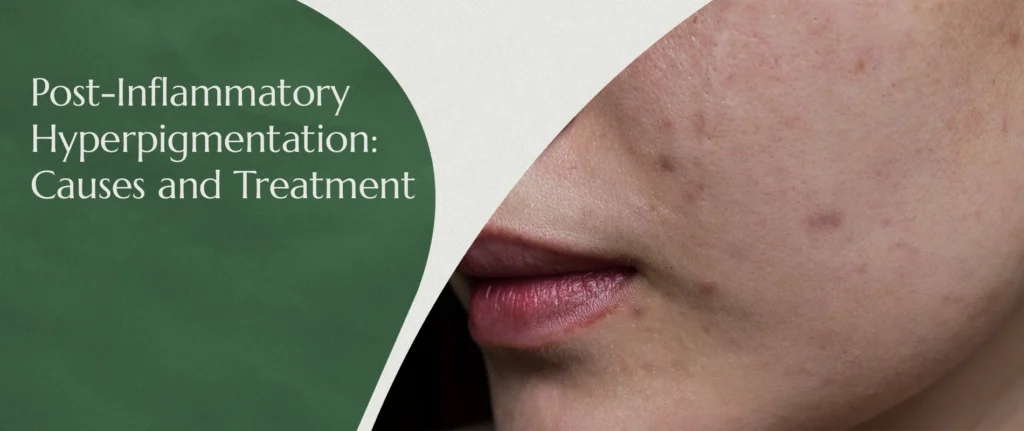
Post-inflammatory hyperpigmentation, or PIH, is a common form of skin discoloration that develops after inflammation or injury. It usually appears as flat brown, dark-brown, grey-brown, or blue-grey marks where acne, eczema, burns, rashes, or other skin damage previously occurred. Acne is one of the most frequent causes, but almost any inflammatory process can leave excess pigment behind. PIH can affect every skin tone, although it is often more noticeable and persistent in medium and darker skin. Superficial pigmentation may fade over several months, while pigment deposited deeper in the dermis can remain for years. Treatment begins by controlling the inflammation that created the dark spots, protecting the skin from light, and using carefully selected topical treatments. Persistent PIH may also respond to dermatologist-guided التقشير الكيميائي, lasers, الميكرونيدلينغ, or combination therapy when the risk of further pigmentation is carefully managed.
What Is Post-Inflammatory Hyperpigmentation (PIH)?
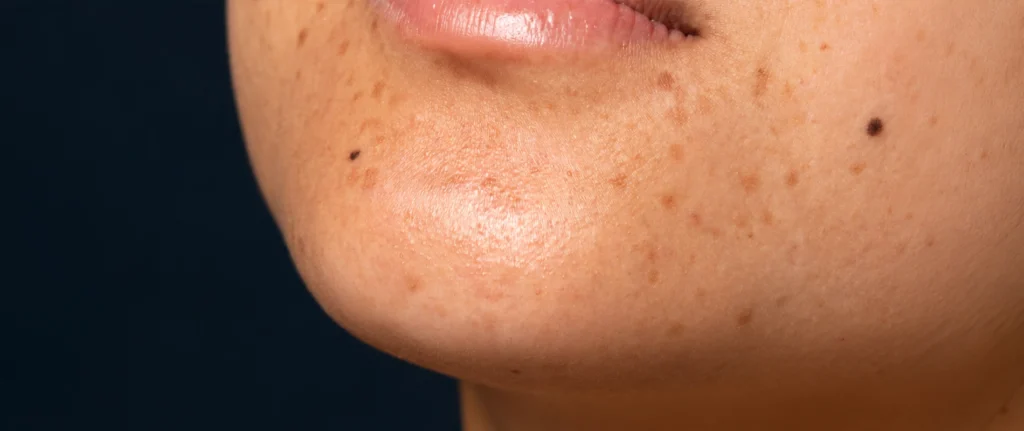
Post-inflammatory hyperpigmentation is a reactive increase in skin pigment that appears after inflammation, irritation, or injury. It develops when inflammatory signals stimulate melanocytes to produce additional melanin or disrupt the normal distribution of pigment within the skin. The resulting marks occur in the same locations as the pimples, eczema patches, burns, wounds, or other inflammatory lesions that came before them. PIH is flat, meaning it changes skin color rather than creating the depressed or raised texture seen with true scars. Superficial epidermal PIH usually appears tan to dark brown, while deeper dermal pigmentation may look grey, blue-grey, or very dark brown. PIH itself is generally harmless, although it can persist long after the original skin condition has resolved. Its course and treatment depend strongly on pigment depth, skin phototype, continuing inflammation, sun exposure, and how readily the individual’s skin produces pigment.
What Does Post-Inflammatory Hyperpigmentation Look Like?
PIH usually appears as flat areas of discoloration in the exact locations where the skin was previously inflamed or injured. The marks can be tan, brown, dark brown, grey-brown, or blue-grey depending on the natural skin tone and depth of melanin deposition. Dark spots after acne commonly appear on the cheeks, forehead, chin, jawline, or other breakout-prone areas. Red or pink marks after acne may instead represent post-inflammatory erythema, which involves vascular changes and should not automatically be treated as excess melanin.
How Does Inflammation Cause Excess Melanin Production?
Inflammatory signals released during acne, dermatitis, burns, wounds, or other skin injury can stimulate melanocytes in the epidermis. These cells increase melanin production and transfer additional pigment to nearby keratinocytes, leaving the healed area darker than surrounding skin. More intense inflammation can disrupt the junction between the epidermis and dermis and allow melanin to fall into deeper tissue. Dermal macrophages then take up this pigment, which explains why deeper PIH can remain visible much longer than superficial discoloration.
What Is the Difference Between Epidermal and Dermal PIH?
Epidermal PIH occurs when excess melanin remains mainly within the upper layers of the skin and usually appears tan, brown, or dark brown. Dermal PIH develops when inflammation damages the lower epidermis and melanin becomes deposited within the dermis, often producing grey or blue-grey discoloration. Epidermal pigmentation generally fades more readily and responds better to topical treatments than deeper dermal pigment. Many patients have a mixed pattern, so pigment depth is useful for prognosis but should not be treated as the only factor determining therapy.
Is Post-Inflammatory Hyperpigmentation Permanent?
Most PIH is not necessarily permanent, particularly when pigment remains superficial and the inflammatory trigger has stopped. Mild epidermal marks may gradually fade over several months as pigmented skin cells turn over naturally. Dermal PIH can persist for years because pigment within deeper tissue is cleared much more slowly. Continued acne, eczema, sun exposure, picking, or irritating treatment can also make PIH appear permanent by repeatedly creating new pigmentation.
What Causes Post-Inflammatory Hyperpigmentation?
PIH can follow almost any inflammatory skin condition or injury capable of activating melanocytes. Acne vulgaris is one of the most common causes, particularly when pimples are inflamed, squeezed, or picked. Eczema, contact dermatitis, psoriasis, lichen planus, infections, burns, insect bites, cuts, and other injuries can produce a similar pigment response. Cosmetic treatments such as chemical peels, lasers, waxing, or microneedling can also cause PIH when they create excessive inflammation. Harsh skincare products may contribute by damaging the skin barrier and provoking dermatitis. The risk increases with the depth and intensity of inflammation and with an individual’s tendency to pigment after injury. Preventing PIH therefore requires controlling the original inflammation as carefully as treating the dark spots that remain afterward.
Acne and Pimples
Inflammatory pimples can stimulate melanocytes while acne lesions are healing and leave flat dark spots after the swelling resolves. Picking or squeezing acne increases tissue damage and can make the resulting PIH darker or longer lasting. PIH should be distinguished from الندبات الهيكلية لحب الشباب because pigmentation changes color while scars alter skin texture. Effective acne treatment is therefore a core component of acne-related pigmentation treatment rather than a separate concern.
Eczema and Contact Dermatitis
Eczema and contact dermatitis produce inflammation that can leave darker patches after itching, redness, or scaling settles. Repeated scratching adds physical injury to the inflammatory process and can further increase pigment production. Irritant or allergic reactions to skincare, hair products, fragrances, or other substances can create the same problem. Preventing repeated dermatitis episodes is usually more effective than continually fading new areas of pigmentation after each flare.
Skin Injuries, Cuts, Burns, and Insect Bites
Cuts, burns, abrasions, insect bites, and other forms of trauma can leave PIH as the skin repairs itself. The likelihood and intensity of pigmentation generally increase with the amount of inflammation and depth of injury. Scratching an insect bite or repeatedly disturbing a healing wound can prolong inflammation and increase discoloration. Appropriate wound care and avoidance of unnecessary trauma can reduce the chance of a temporary injury becoming a long-lasting pigment mark.
Skin Irritation From Skincare Products and Over-Exfoliation
Strong acids, abrasive scrubs, poorly tolerated retinoids, fragrances, and excessive exfoliation can damage the skin barrier and trigger inflammatory pigmentation. Combining several brightening ingredients too quickly can create the same problem even when each ingredient is useful when used correctly. Persistent burning, stinging, redness, or peeling should not be interpreted as evidence that a pigmentation product is working better. Pigmentation-prone skin often improves more reliably when effective actives are introduced gradually and irritation is minimized.
Pigmentation After Chemical Peels and Laser Treatments
Chemical peels, lasers, IPL, and other energy-based treatments deliberately create controlled skin changes, but excessive inflammation can result in PIH. This complication is particularly important in Fitzpatrick skin types III–VI and in people with a previous history of pigmentation after procedures. Aggressive treatment settings, recent tanning, inadequate aftercare, and uncontrolled sun exposure can further increase risk. Professional treatment should therefore balance the potential pigment improvement against the possibility of creating new discoloration.
Other Inflammatory Skin Conditions and Infections
Psoriasis, lichen planus, folliculitis, fungal infections, and many other inflammatory disorders can leave discoloration after the active disease settles. The color and pattern may vary depending on skin tone, inflammation depth, and the condition responsible. Treating pigment while an infection or inflammatory disease remains active can produce incomplete results because new lesions continue creating new PIH. A dermatologist can help identify the underlying condition when dark marks appear without an obvious history of acne or injury.
Who Is More Likely to Develop Post-Inflammatory Hyperpigmentation?
PIH can occur in every skin tone, but it is particularly common and visually prominent in medium and darker skin. Fitzpatrick skin types III–VI frequently develop stronger or more persistent pigment responses after acne, eczema, burns, and cosmetic procedures. This does not mean darker skin contains more melanocytes, because melanocyte numbers are broadly similar across skin tones. Differences in melanin production, melanosome characteristics, pigment distribution, and melanocyte responsiveness influence how visible the pigmentation becomes. The depth and severity of inflammation also matter, so two people with similar skin tones may develop very different PIH after the same type of acne lesion. Sun exposure can deepen existing pigmentation and make fading slower, particularly when photoprotection is inconsistent. Repeated inflammation further increases the chance that new dark marks will appear before older pigmentation has had time to clear.
PIH in Medium and Darker Skin Tones
PIH is especially important in melanin-rich skin because inflammatory signals can produce a more visible and prolonged pigment response. Dark marks may last much longer than the pimple, rash, or injury that originally caused them. Grey or blue-grey pigmentation can indicate deeper pigment that is particularly slow to resolve. Treatment should therefore focus on controlling inflammation while avoiding overly aggressive procedures that can generate another pigment response.
How Does Skin Phototype Affect PIH Risk?
Fitzpatrick skin types III–VI have a greater tendency to develop noticeable pigmentation after inflammation or procedural injury. Skin phototype helps dermatologists estimate how cautiously peels, lasers, and other treatments should be performed. However, phototype alone does not predict every patient’s response because previous PIH and individual skin sensitivity also matter. A personal history of darkening after acne, waxing, burns, peels, or laser treatment is often especially useful when planning therapy.
Can Sun Exposure Make PIH Darker?
Yes, ultraviolet radiation can stimulate melanocytes and make existing PIH darker or more persistent. Visible sunlight may also contribute to pigment persistence, particularly in melanin-rich skin. Broad-spectrum sunscreen is therefore important even when the original pigmentation was caused by acne rather than sunlight. Tinted sunscreen containing iron oxides may provide additional visible-light protection when appropriate.
Can Repeated Inflammation Cause New Dark Spots?
Yes, every new inflammatory lesion creates another opportunity for excess melanin production. Someone with uncontrolled acne may therefore develop new dark marks while older PIH is still gradually fading. Repeated eczema flares, scratching, shaving irritation, or harsh skincare can create a similar cycle. Breaking this cycle by controlling the inflammatory condition is one of the most important steps in PIH treatment.
How Is Post-Inflammatory Hyperpigmentation Diagnosed?
PIH is usually diagnosed clinically through examination of the discoloration and a history of inflammation or injury in the same area. A dermatologist looks at the color, distribution, pattern, depth, and timing of the marks and asks what skin problem occurred before they appeared. Acne-related PIH commonly follows individual pimples, whereas melasma usually produces broader symmetrical facial patches without preceding acne lesions. Acne scars alter the contour or texture of the skin, while PIH remains flat. Dermoscopy may provide a magnified view of pigmentation and other skin structures when the diagnosis is uncertain. A Wood’s lamp can sometimes provide additional information about superficial pigment, although it does not reliably classify every case or every skin tone. Biopsy or laboratory testing is rarely required for typical PIH but may be considered when the pigmentation is atypical or another diagnosis needs to be excluded.
What Does a Dermatologist Look for When Diagnosing PIH?
The dermatologist looks for a clear relationship between a previous inflammatory lesion and the current area of discoloration. Color can provide clues because superficial PIH is commonly brown while deeper pigmentation may appear grey or blue-grey. Skin texture is also examined to determine whether acne scars, active dermatitis, or another condition is present alongside the pigment. Medical history, medications, skincare, previous procedures, and reactions to injury can further help establish the diagnosis.
When Are Dermoscopy or a Wood’s Lamp Examination Helpful?
Dermoscopy can help visualize pigment distribution, vascular features, inflammation, and patterns that may not be obvious to the naked eye. A Wood’s lamp may enhance the appearance of some epidermal pigment and can occasionally support assessment of pigmentation depth. Neither tool is required for every PIH diagnosis, and Wood’s lamp findings can be less informative in darker skin or mixed-depth pigmentation. These tests therefore complement clinical examination rather than replacing it.
How Is PIH Different From Melasma, Acne Scars, and Other Pigmentation Disorders?
PIH develops after a recognizable inflammatory event and usually follows the exact location of acne, eczema, injury, or another preceding lesion. Melasma typically forms broader symmetrical patches influenced by light and hormones rather than individual pimples or wounds. Acne scars create depressions, raised tissue, or other structural changes, whereas PIH changes color while leaving the surface relatively flat. Solar lentigines, freckles, drug pigmentation, and other disorders can also look brown, making diagnosis important before procedures are selected.
When Should You See a Dermatologist for Dark Spots?
Seek dermatological assessment when pigmentation is persistent, spreading, recurrent, very dark, or difficult to connect to a previous inflammatory condition. A consultation is also useful when active acne, eczema, or another skin disorder continues producing new marks despite home treatment. Spots that are raised, bleeding, crusted, painful, rapidly changing, or markedly different from surrounding pigmentation should not simply be assumed to be PIH. Professional assessment is especially valuable before stronger prescription creams, peels, lasers, IPL, or other procedures are used.
What Is the Best Treatment for Post-Inflammatory Hyperpigmentation?
There is no single best PIH treatment for every patient because the cause, pigment depth, skin type, severity, and ongoing inflammation all vary. The first priority is to treat the acne, eczema, dermatitis, infection, or other inflammatory condition that is still creating new dark spots. Consistent photoprotection helps prevent existing pigment from becoming darker and supports natural fading. A gentle skincare routine can then include topical ingredients that reduce pigment production or improve epidermal turnover without repeatedly irritating the skin. Dermatologist-prescribed medications may be useful when over-the-counter care is insufficient or pigmentation is more persistent. Chemical peels, lasers, and other procedures are generally considered adjuncts for selected cases rather than automatic first-line treatments. The most effective PIH strategy is therefore stepwise: stop new inflammation, protect the skin, treat existing pigment, and escalate cautiously when necessary.
Treat the Underlying Cause of Inflammation
Active acne, eczema, psoriasis, dermatitis, or infection should be controlled before focusing exclusively on pigment removal. Otherwise, new inflammatory lesions can continue producing fresh PIH while existing marks are being treated. Acne-associated pigmentation often improves more efficiently when an effective acne regimen is started early rather than waiting until all breakouts have stopped. Treatment should therefore target both the trigger and the discoloration when they coexist.
Use Sunscreen to Prevent Further Darkening
Broad-spectrum sunscreen with SPF 30 or higher is an important part of PIH treatment because ultraviolet radiation can deepen existing pigment. Water-resistant sunscreen is useful for prolonged outdoor exposure, sweating, or activities where the product may wear off. Tinted formulas containing iron oxides can add visible-light protection, which may be particularly useful in melanin-rich skin. Photoprotection helps treatment work more effectively but should not be described as directly bleaching existing pigment.
Choose a Skincare Routine for Pigmentation-Prone Skin
A practical PIH routine should use gentle cleansing, an appropriate pigment treatment, moisturizer when needed, and daily sunscreen. Introduce new active ingredients gradually rather than layering multiple acids, retinoids, and brightening agents at once. Barrier-supporting moisturizers can improve tolerance when treatment produces dryness. The best routine is one strong enough to influence pigmentation but gentle enough to avoid generating new inflammation.
Consider Dermatologist-Prescribed Pigmentation Treatments
Prescription therapy may include hydroquinone, tretinoin, azelaic acid, combination formulations, or other selected pigment treatments depending on the diagnosis. A dermatologist can also determine whether newer agents such as cysteamine or topical tranexamic acid are appropriate for a particular patient. Stronger treatment is not automatically better because excessive irritation can generate new PIH. Prescription choice should therefore account for skin sensitivity, pregnancy status, active acne, pigmentation depth, and previous treatment response.
When Should PIH Treatment Be Adjusted?
Treatment should be reconsidered if the skin develops persistent burning, dermatitis, increased pigmentation, or significant peeling. A regimen may also need adjustment when active acne or eczema remains poorly controlled and continues creating new dark spots. Lack of meaningful progress after an adequate period of consistent treatment can justify reassessing the diagnosis or adding another modality. The goal is gradual improvement without producing enough inflammation to restart the pigment cycle.
Which Creams and Ingredients Help Fade Post-Inflammatory Hyperpigmentation?
Topical treatments remain the usual first-line approach for established PIH because they can influence pigmentation without the procedural inflammation associated with lasers or deeper peels. Hydroquinone, azelaic acid, and topical retinoids are among the most established medical options. Niacinamide and vitamin C may support improvement in uneven skin tone with generally milder treatment intensity. Cysteamine, kojic acid, and topical tranexamic acid provide additional options that can be considered according to skin tolerance and available evidence. Acne-related PIH may benefit particularly from treatments that control both active acne and pigment production. Every effective pigment ingredient can still cause irritation when introduced too aggressively or combined poorly. Choosing the right PIH cream therefore involves balancing pigment reduction with preservation of a calm, intact skin barrier.
Azelaic Acid for Acne-Related PIH and Dark Spots
Azelaic acid can help reduce abnormal pigmentation while also providing anti-inflammatory benefits for acne-prone skin. This makes it particularly useful when active acne and post-acne dark spots occur at the same time. Mild stinging, dryness, or irritation can occur initially, so treatment frequency may need to increase gradually. Azelaic acid can also be considered in some pregnancy skincare plans, although individual medical advice remains appropriate.
Hydroquinone for Hyperpigmentation
Hydroquinone inhibits pathways involved in melanin production and remains one of the most established topical treatments for hyperpigmentation. It can be effective for epidermal PIH but should be used according to dermatologist guidance because irritation and abnormal pigment changes can occur with inappropriate or prolonged use. Long-term unsupervised treatment has also been associated with the rare complication exogenous ochronosis. Hydroquinone is generally avoided during pregnancy because adequate safety data are lacking and systemic absorption can be significant.
Topical Retinoids Such as Adapalene and Tretinoin
Retinoids increase epidermal turnover, affect melanosome transfer, and can gradually improve PIH while also treating acne. Adapalene is particularly useful when ongoing acne is the main source of new dark marks, while tretinoin may be incorporated into dermatologist-guided pigmentation regimens. Dryness, peeling, and irritant dermatitis can occur, especially when treatment is started too frequently. Topical retinoids should generally be avoided during pregnancy.
Niacinamide and Vitamin C for Uneven Skin Tone
Niacinamide can help support the skin barrier and reduce melanosome transfer within the epidermis, making it useful in gentle pigmentation routines. Vitamin C provides antioxidant effects and can influence tyrosinase-related pigment production. Both ingredients can support gradual improvement but generally have less evidence for established PIH than prescription-strength approaches such as hydroquinone or retinoids. Their tolerability and ability to fit into a sustainable routine often make them useful adjuncts rather than standalone cures for deep pigmentation.
Topical Tranexamic Acid and Other Depigmenting Ingredients
Topical tranexamic acid has emerging evidence for improving hyperpigmentation and may offer an alternative or adjunct when conventional treatment is unsuitable. Cysteamine, kojic acid, thiamidol, and other pigment-modulating ingredients have also been studied with varying levels of evidence. These ingredients work through different melanogenesis pathways, so they should not all be assumed to provide identical results. Product formulation, concentration, diagnosis, skin sensitivity, and combination with other treatments influence both effectiveness and tolerability.
How to Choose a PIH Cream Without Irritating Your Skin
Choose one or two evidence-based ingredients that address both your pigment and any active inflammatory condition rather than buying several dark-spot products simultaneously. Begin potentially irritating treatments slowly and use a moisturizer when dryness or barrier sensitivity is likely. If a product repeatedly burns, stings, causes dermatitis, or makes pigmentation darker, continuing it more frequently is unlikely to improve PIH. Dermatologist guidance is useful when several active ingredients, prescription medication, pregnancy, or highly reactive skin make product selection more complicated.
Which Professional Treatments Can Help Persistent PIH?
Professional procedures can help selected persistent PIH, but they require more caution than topical treatment because procedural inflammation can generate new pigmentation. Superficial chemical peels may improve epidermal PIH when acid type, concentration, and contact time are selected appropriately. Pigment-targeting lasers such as picosecond or selected Nd systems can be considered for resistant pigmentation after careful skin assessment. Fractional lasers may have a role when pigmentation coexists with textural concerns, but their ability to create inflammation increases the importance of conservative settings. Microneedling and radiofrequency microneedling can be useful for selected acne-scar or texture concerns, although they are not pigment-specific treatments. IPL may treat some superficial pigment conditions but should also be used cautiously because it can trigger PIH in susceptible skin. Professional treatment should therefore follow a diagnosis and risk assessment rather than being chosen simply because a procedure promises faster pigment removal.
Chemical Peels for Post-Inflammatory Hyperpigmentation
Superficial glycolic acid, salicylic acid, and other carefully selected peels can promote epidermal turnover and improve some cases of superficial PIH. Skin of color can be treated, but deeper or more aggressive peeling increases the possibility of additional post-inflammatory discoloration. Recent reviews continue to support cautious superficial peeling while noting limited high-quality evidence in Fitzpatrick IV–VI skin. Peels are therefore best used as an adjunct after the inflammatory trigger is controlled rather than as a first response to every dark mark.
Pico Laser and Other Pigment-Targeting Lasers
Picosecond lasers deliver very short pulses that can fragment melanin through a strong photoacoustic effect with limited unnecessary thermal exposure. Systems such as PicoWay may be considered for selected pigmentation concerns when topical treatment has not provided adequate improvement. Nd and other pigment-targeting laser technologies may also have a role, particularly when wavelength and parameters are chosen for the patient’s skin type. Lasers remain an adjunctive or second-line option for PIH because studies show improvement in some patients but also document cases of treatment-induced worsening.
Fractional Laser Treatments for Selected Cases
Fractional lasers create microscopic treatment zones and may be useful when PIH occurs alongside acne scars, photoaging, or texture irregularities. Non-ablative fractional systems generally create less surface injury than ablative fractional CO2 treatment but can still provoke PIH. Darker and pigmentation-prone skin usually requires more conservative energy and treatment density. The presence of pigment alone does not mean fractional resurfacing is preferable to a pigment-focused topical or laser treatment.
Microneedling and Radiofrequency Microneedling
Microneedling creates controlled micro-injuries and is more commonly selected for texture and acne-scar remodeling than for isolated PIH alone. RF microneedling adds radiofrequency energy at depth and similarly targets remodeling rather than selectively absorbing melanin. Either procedure can be useful when structural acne scars coexist with pigmentation, but excessive inflammation can generate new dark marks. PIH should therefore not be treated with aggressive needling simply because it followed acne.
How Does a Dermatologist Choose the Right PIH Treatment?
The dermatologist considers whether pigment is epidermal or deeper, what caused the inflammation, and whether the original condition remains active. Fitzpatrick skin type, prior PIH, recent tanning, skin sensitivity, medications, and previous procedure responses also influence treatment selection. Patients with mild superficial PIH may need only topical therapy and sunscreen, while resistant cases can justify a carefully selected procedure. The goal is to obtain meaningful pigment reduction while creating as little additional inflammation as possible.
Can Laser Treatments Make Hyperpigmentation Worse?
Yes, lasers and other energy-based devices can themselves cause PIH when treatment produces excessive inflammation or epidermal injury. The risk is particularly relevant in darker skin tones and in people with a previous history of post-procedure pigmentation. Conservative parameters, correct device selection, photoprotection, and appropriate aftercare can reduce but not eliminate this risk. A laser should therefore be chosen because its expected benefit exceeds the pigmentary risk, not simply because it is more aggressive than topical treatment.
How Long Does Post-Inflammatory Hyperpigmentation Take to Fade?
PIH often fades gradually after the underlying inflammation has stopped, but the timeline varies widely. Superficial pigmentation may begin improving over several months as pigmented keratinocytes naturally turn over. A dark spot only a few shades deeper than the surrounding skin may commonly take around six to twelve months to fade without faster intervention. Dermal pigmentation can last for years because melanin located deeper in the skin is cleared much more slowly. Appropriate topical treatment can accelerate improvement, but most products still require several weeks or months before their full effect can be judged. Continued acne, eczema, sun exposure, scratching, or irritating treatments can delay progress by creating additional pigment. Treatment expectations should therefore be based on the cause, pigment depth, skin type, and control of new inflammation rather than a fixed promise of complete clearance.
How Long Do Superficial Dark Spots Usually Last?
Epidermal PIH often fades more quickly than deeper pigmentation once the inflammatory trigger has resolved. Spots only a few shades darker than the surrounding natural skin tone may commonly improve within approximately six to twelve months. Appropriate sunscreen and topical treatment can support or accelerate this process in some patients. New inflammation can reset the timeline by creating additional pigmentation in the same area.
Why Can Deeper Pigmentation Take Longer to Fade?
Dermal PIH develops when melanin passes through a disrupted epidermal-dermal junction and becomes trapped within deeper tissue. Macrophages take up the pigment, which produces grey, blue-grey, or very dark discoloration. The dermis does not clear pigment through ordinary epidermal turnover, so improvement is much slower. Deep PIH can therefore remain visible for years even after the original acne, rash, or injury has completely resolved.
How Long Do PIH Treatments Take to Show Results?
Topical pigmentation treatments commonly require several weeks of consistent use before early improvement becomes noticeable. Eight to twelve weeks is often a reasonable point to review tolerance and determine whether a regimen is beginning to work. More substantial clearing may require several additional months, particularly for longstanding or mixed-depth pigmentation. Lack of immediate improvement is not a reason to intensify every active ingredient if the skin is already irritated.
What Factors Can Delay Improvement?
Ongoing acne, eczema, dermatitis, or infection can continually create new pigment and slow visible progress. Sun exposure and inadequate photoprotection can darken existing marks even while treatment is reducing melanin production. Skin picking, excessive exfoliation, or overly aggressive procedures can similarly add new inflammation. Deeper pigment, darker phototypes, longstanding PIH, and inconsistent treatment can also lengthen the recovery timeline.
How Can You Prevent Post-Inflammatory Hyperpigmentation?
Preventing PIH begins with minimizing the severity and duration of inflammation before excess pigment has time to become established. Treating acne, eczema, dermatitis, and other inflammatory conditions early can reduce the number of new dark spots that form. Broad-spectrum sunscreen helps prevent existing marks from becoming darker and is one of the most consistently supported preventive measures after procedures. Avoiding skin picking, scratching, squeezing, and harsh exfoliation reduces unnecessary trauma to melanocytes and the skin barrier. Professional procedures should use parameters appropriate for the patient’s skin type and history of PIH. Careful aftercare after lasers or peels can limit additional inflammation while treated skin is healing. Prevention is particularly valuable in pigmentation-prone skin because stopping one new dark mark can avoid months or years of subsequent treatment.
Use Broad-Spectrum Sunscreen Consistently
Use a broad-spectrum sunscreen with SPF 30 or higher on exposed skin and choose a water-resistant formula when substantial sweating or outdoor activity is expected. Sunscreen is particularly important after inflammatory lesions or procedures because newly pigmented areas may darken further with light exposure. Tinted iron-oxide sunscreen can add visible-light protection when appropriate for the patient’s pigmentation pattern and skin type. Reapply during prolonged outdoor exposure and after swimming or significant sweating according to product directions.
Avoid Picking Pimples or Scratching Inflamed Skin
Picking acne increases inflammatory damage and can push the skin toward darker and longer-lasting PIH. Scratching eczema, insect bites, or healing wounds creates the same additional trauma. Keeping nails away from inflamed skin is therefore a genuine pigment-prevention strategy rather than simply cosmetic advice. Appropriate treatment for itching or acne can make this behavior easier to avoid.
Treat Acne, Eczema, and Other Inflammatory Conditions Early
Early effective treatment shortens the period during which inflammation can stimulate melanocytes. Acne-related PIH is easier to prevent when new inflammatory pimples are controlled instead of fading each mark after it appears. Eczema and dermatitis likewise require control of both inflammation and triggers that repeatedly reactivate the rash. Dermatologist assessment can be useful when ordinary skincare is not adequately controlling the inflammatory condition.
Avoid Harsh Exfoliation and Irritating Skincare Products
Strong home peels, abrasive scrubs, or multiple active ingredients can create inflammatory damage that leads directly to PIH. Sensitive or darker skin is not protected from pigmentation simply because a product is marketed as a brightener. Introduce acids and retinoids slowly and avoid increasing frequency when the skin is already sore or peeling. A calm barrier usually creates a better environment for gradual pigment correction.
Follow Aftercare Instructions After Chemical Peels and Laser Treatments
Aftercare helps control inflammation and protect a temporarily more vulnerable skin barrier following professional treatment. Use gentle cleansing, recommended moisturizers, and sun protection according to the treating clinician’s instructions. Avoid picking crusts or restarting retinoids, acids, and other irritating products before the skin is ready. Contact the clinic if blistering, severe pain, infection, persistent swelling, or progressive darkening develops after treatment.
الأسئلة الشائعة حول فرط التصبغ التالي للالتهاب
Yes, superficial PIH can gradually fade after the inflammation that created it has completely resolved. Mild epidermal spots may take roughly six to twelve months, while deeper dermal pigmentation can remain for years.
The most efficient approach is usually to stop ongoing inflammation, use consistent photoprotection, and select a proven topical treatment that the skin can tolerate. Trying to accelerate fading with aggressive peeling or laser energy can backfire by creating more PIH.
Neither is universally better: azelaic acid directly supports pigment control and inflammation reduction, while adapalene can be especially useful when active acne is still creating new marks. Some patients may use both within a carefully designed acne and pigmentation routine, depending on skin tolerance and medical guidance.
Mild PIH can often be managed with sunscreen, control of the underlying acne or irritation, and appropriate over-the-counter ingredients such as azelaic acid, niacinamide, vitamin C, or selected retinoids. Seek dermatological advice when pigmentation is deep, persistent, worsening, or difficult to diagnose.
Sunscreen does not bleach existing melanin, but it prevents UV exposure from continually making PIH darker and allows natural fading or treatment to progress more effectively. Tinted sunscreen with iron oxides may provide additional visible-light protection for some pigmentation-prone skin tones.
A successfully faded mark can darken again if the skin in that area becomes inflamed or exposed to significant pigment-triggering light. New acne, eczema, burns, picking, or irritating treatments can also create entirely new PIH.
Yes, laser-induced inflammation can produce or worsen PIH, particularly in darker skin tones or when treatment parameters are too aggressive. This is why lasers are generally considered an adjunct for resistant pigmentation rather than the automatic first treatment.
See a dermatologist when dark spots persist despite a sensible skincare routine, when active acne or dermatitis continues creating new pigmentation, or when you are considering prescription or procedural treatment. Prompt assessment is also appropriate for a spot that changes, becomes raised, painful, scaly, bleeding, or otherwise does not behave like ordinary PIH.
Where Can You Get Treatment for Post-Inflammatory Hyperpigmentation in Riyadh?
Patients seeking post-inflammatory hyperpigmentation treatment in Riyadh can begin with a dermatological assessment to confirm that the dark spots are truly PIH and identify what is continuing to trigger them. Dr. Haitham Al-Gzlan is a Consultant Dermatologist and Aesthetic Physician in Riyadh whose practice includes acne, eczema, pigmentation, acne scars, laser dermatology, and skin rejuvenation. His current approach starts with the skin condition and medical history before selecting a procedure or technology. Mild or moderate PIH may be managed with control of the underlying condition, photoprotection, and dermatologist-guided topical treatment. More persistent cases can be assessed for procedures such as chemical peels, PicoWay or another appropriate laser, while fractional or microneedling treatments may be considered when pigmentation occurs alongside acne scars or texture concerns. Darker and melanin-rich skin requires careful treatment selection because overly aggressive energy or inflammation can create additional PIH. A consultation in Riyadh can therefore help determine whether skincare, prescription treatment, a procedure, or a combination offers the most appropriate balance of pigment improvement and safety.