
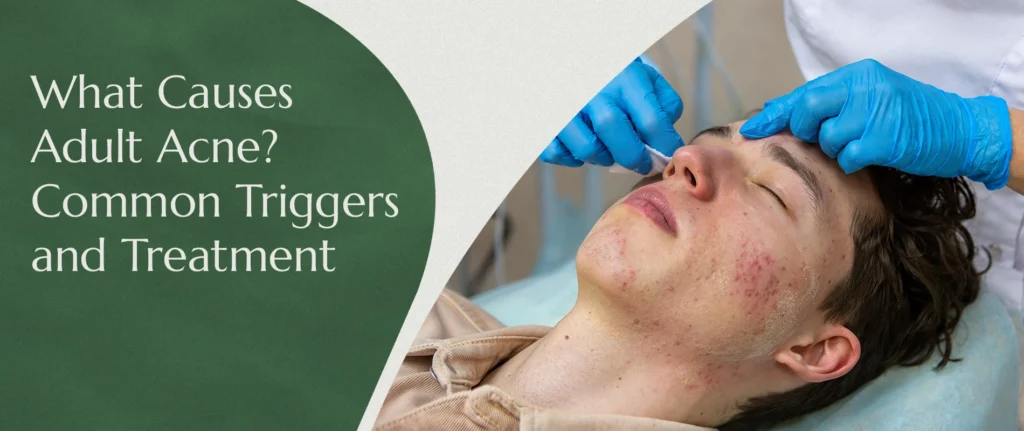
Adult acne can appear long after the teenage years, even in people who had relatively clear skin when they were younger. The main causes of adult acne include clogged hair follicles, excess sebum, inflammation, hormonal changes, genetics, certain skincare products, medications, and other individual triggers. Some adults have persistent acne from adolescence, while others develop adult-onset acne for the first time in their 20s, 30s, 40s, or later. Hormonal fluctuations, stress, products, and lifestyle factors can influence how often acne flare-ups occur. Understanding the cause, type, location, and severity of adult acne helps a dermatologist choose treatment that fits the individual rather than relying on the same approach for every breakout.
What Is Adult Acne and Why Does It Happen After Your Teens?
Adult acne is acne vulgaris that continues beyond adolescence or begins for the first time during adulthood. It develops when sebaceous glands produce sebum that combines with dead skin cells and contributes to blocked hair follicles. Inflammation and acne-associated bacteria within these follicles can then contribute to blackheads, whiteheads, papules, pustules, nodules, or deeper inflammatory lesions. Hormonal status remains important because androgens continue to influence sebaceous gland activity after the teenage years. Women may notice changes around the menstrual cycle, pregnancy, postpartum period, perimenopause, menopause, or after starting or stopping some forms of birth control. Adult acne therefore rarely has one universal cause; it usually reflects several interacting biological and external factors.
How Adult Acne Differs from Teenage Acne
Adult and teenage acne share the same basic disease process, but their patterns, triggers, and treatment needs can differ. Teenage acne often appears during puberty, when rising androgen levels increase sebaceous gland activity and oil production. Adult acne, particularly in women, may have a stronger relationship with cyclical hormonal changes and can occur even when the skin is not very oily. Breakouts in adults often affect the lower face, chin, jawline, and sometimes the neck, although adult acne on the cheeks or forehead also occurs. Adults may also be managing sensitivity, pigmentation, early skin ageing, or previous acne scars alongside active breakouts. A dermatologist therefore considers age, lesion type, location, severity, hormonal history, skincare routine, and treatment response rather than treating adult and teenage acne identically.
Core Causes of Adult Acne
The core causes of adult acne involve follicular blockage, sebaceous gland activity, inflammation, and microbial activity in acne-prone skin. Excess sebum can combine with dead skin cells and make it easier for pores and follicles to become blocked. Once a follicle becomes clogged, inflammation can contribute to papules, pustules, painful nodules, or deeper lesions. These processes are influenced by factors such as hormones, genetics, stress, medications, skincare products, and lifestyle. This is why two adults with similar-looking breakouts can have different underlying triggers. Identifying the most relevant factors helps guide treatment toward the actual pattern of acne rather than treating every breakout in the same way.
Hormonal fluctuations and androgen activity
Hormonal fluctuations are an important trigger for adult acne because androgens can stimulate sebaceous glands and increase sebum production. In women, hormonal acne may flare around menstrual periods, pregnancy, postpartum changes, perimenopause, or menopause. Starting or stopping some forms of birth control can also affect breakouts. PCOS may occur alongside persistent acne in some women, particularly when other signs of androgen excess are present. Repeated adult chin acne, jaw and neck acne, or cyclical flares can suggest a hormonal component, although location alone cannot confirm the cause.
Genetics and family history
Genetics can influence whether someone develops persistent acne or experiences adult-onset acne later in life. A family history of acne may reflect inherited differences in sebaceous gland activity, inflammation, and individual susceptibility to breakouts. Someone with close relatives who experienced persistent or severe acne may therefore have a greater tendency toward acne-prone skin. Genetics do not mean that severe adult acne is inevitable because hormones, products, medications, and other factors still influence disease activity. Family history is one of several attributes a dermatologist may consider when assessing acne duration, severity, and recurrence.
Stress, sleep, and cortisol-related flares
Stress can worsen existing adult acne, but it should not be described as the sole cause of acne. During stressful periods, hormonal responses can affect oil glands and inflammatory activity in acne-prone skin. Adults may notice flared-up acne during demanding work periods, travel, emotional stress, or major changes in routine. Poor sleep may occur alongside stress and can make consistent skincare and treatment more difficult. Because stress is usually one contributing factor, treatment should still address follicular blockage, inflammation, and other relevant triggers.
Skincare, cosmetics, and hair products
Some skincare products, cosmetics, sunscreens, styling products, and hair oils can contribute to breakouts when they clog acne-prone follicles. Heavy products may be particularly relevant when forehead acne, adult acne on the cheeks, or hairline breakouts appear after a change in routine. Products labeled non-comedogenic, non-acnegenic, oil-free, or “won’t clog pores” are generally better choices for acne-prone skin. However, even a non-comedogenic product may not suit every individual. Looking at when a product was introduced and where the breakouts occur can help identify whether skincare or hair care is contributing.
Medications and medical conditions
Certain medications can trigger acne or acneiform eruptions that resemble acne vulgaris. Corticosteroids, lithium, and testosterone-containing therapies are examples that can contribute to acne-like breakouts in some people. Acneiform pustules that appear suddenly, look unusually uniform, or start after a new medication deserve medical assessment. Some underlying medical conditions can also contribute to persistent adult acne, particularly when other hormonal symptoms occur at the same time. Never stop a prescribed medicine because of breakouts without speaking to the clinician who prescribed it.
Diet, lifestyle, and environmental factors
Diet may influence acne in some individuals, but food should not automatically be treated as the main cause of adult breakouts. Some studies suggest that high-glycemic dietary patterns may worsen acne, although evidence does not support one universal acne diet for everyone. Sweat, friction, humidity, and repeated exposure to oily products may also aggravate acne-prone skin in certain people. Acne is not caused by dirty skin, and aggressive cleansing can actually increase irritation. Instead of imposing broad dietary restrictions, it is more useful to identify consistent personal patterns while maintaining appropriate acne treatment.
Recognizing Adult Acne: Symptoms and Patterns
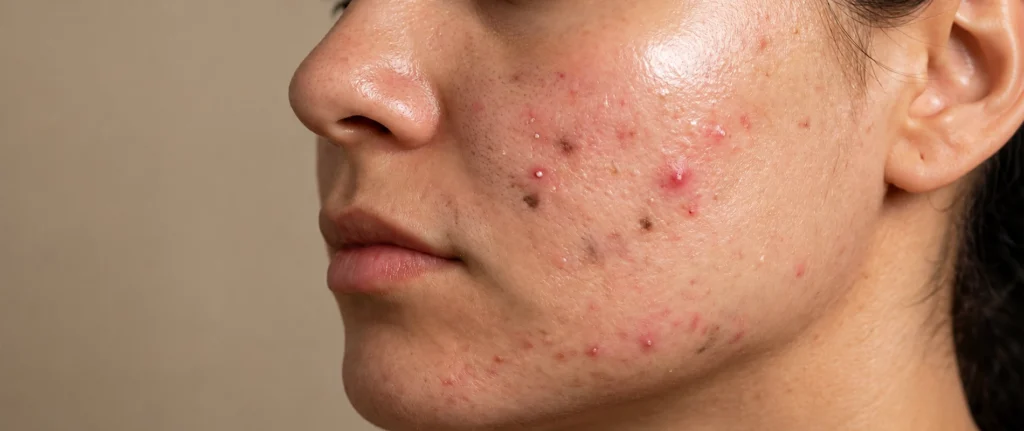
Adult acne can range from a few blocked pores to widespread inflammatory acne with painful nodules and a higher risk of scarring. The type, depth, location, and frequency of the lesions provide more useful information than the presence of pimples alone. Adults may develop acne on the face, jawline, chin, forehead, chest, shoulders, or back. Repeated breakouts may also leave post-inflammatory hyperpigmentation or permanent acne scars. A lower-face pattern can suggest hormonal influence in some women, but it does not prove that hormones are the cause. Recognizing these patterns helps distinguish mild adult pimples from acne that may benefit from earlier prescription treatment.
Common lesion types: comedones, papules, pustules, nodules, and cysts
Comedones form when material blocks the follicle, producing whiteheads or blackheads. Papules are small inflamed bumps, while pustules are inflammatory lesions that contain visible pus. Deeper inflammation can produce painful nodules that sit beneath the skin and take longer to resolve. Very deep inflammatory lesions are often described by patients as cystic acne, although dermatologists assess lesion type more precisely during examination. Identifying the dominant lesion type helps determine whether treatment should mainly target clogged pores, inflammation, or deeper disease.
Typical adult patterns: lower-face predominance and cyclical flares
Adult acne can occur across the face, chest, shoulders, or back. In adult women, persistent breakouts may be particularly noticeable along the chin, jawline, lower face, and sometimes the neck. A pattern that worsens around menstrual periods can suggest that hormonal fluctuations are contributing. However, adult acne on the cheeks, forehead, and other facial areas is also common. A dermatologist therefore combines breakout location with hormonal history, medications, skincare, symptoms, and lesion type before deciding which factors are most relevant.
Post-inflammatory hyperpigmentation in darker skin tones
Inflamed acne can leave flat brown, grey-brown, or darker areas called post-inflammatory hyperpigmentation after the lesion heals. These dark spots are different from indented or raised acne scars because they mainly represent a change in pigment rather than skin structure. Post-inflammatory hyperpigmentation can be more noticeable and persistent in darker skin tones. Picking, squeezing, irritation, and ongoing inflammatory acne can increase the chance that marks remain after breakouts. Controlling active acne while minimizing unnecessary irritation can help reduce the cycle of new pimples followed by new dark spots.
Understanding acne severity: mild, moderate, and severe
Mild acne generally involves blackheads, whiteheads, and smaller inflammatory pimples without extensive deep disease. Moderate acne usually includes more frequent inflammatory papules and pustules and may affect a larger area of the face or body. Severe acne can include painful nodules, extensive inflammation, or acne that is already causing significant scarring. Severity is not determined only by counting pimples because lesion depth, pain, distribution, persistence, pigmentation, and scarring also matter. Deep, painful, or scar-forming acne should generally be assessed earlier rather than managed indefinitely with over-the-counter products.
How Dermatologists Diagnose Adult Acne
A dermatologist usually diagnoses adult acne by examining the skin and reviewing when, where, and how the breakouts developed. The assessment can include lesion type, acne severity, distribution, duration, scarring, pigmentation, oil production, and signs of irritation. The dermatologist may also ask about menstrual cycles, pregnancy status, menopause, PCOS symptoms, medications, supplements, birth control, family history, and skincare products. Sudden acneiform pustules or an unusual breakout pattern can prompt consideration of conditions that resemble acne vulgaris. Routine testing is not necessary for every patient, but further investigation may be appropriate when the history suggests an underlying hormonal or medical condition. Accurate diagnosis helps prevent months of using pimple treatment that does not match the actual acne pattern.
Treatment Options for Adult Acne
Adult acne treatment should match lesion type, severity, skin sensitivity, hormonal status, pigmentation risk, medical history, and previous treatment response. Mild acne may improve with carefully selected topical or over-the-counter treatment, while persistent, moderate, severe, or scarring acne may require prescription therapy. Common acne active ingredients include retinoids, benzoyl peroxide, salicylic acid, and azelaic acid. Hormonal acne may require a different strategy from mainly comedonal or severe inflammatory acne. Dermatologists often combine treatments because several acne mechanisms can occur at the same time. The aim is to control active lesions, prevent new breakouts, and reduce the risk of acne scars and post-inflammatory hyperpigmentation.
Foundational skincare for adult acne
A gentle acne skincare routine starts with cleansing without harsh scrubbing, picking, or repeatedly stripping oil from the skin. Non-comedogenic moisturizers and sunscreen can support the skin barrier while active ingredients target acne. Adapalene can help clear blackheads, whiteheads, and pimples, while benzoyl peroxide can help treat inflammatory breakouts. Salicylic acid helps unclog pores, and azelaic acid can support both acne control and post-inflammatory pigmentation. Introduce active ingredients carefully because excessive exfoliation or combining too many products can cause irritation without improving results.
Oral and hormonal therapies
Moderate, severe, persistent, or scarring adult acne may require prescription medication in addition to topical treatment. Dermatologists may prescribe oral antibiotics for selected inflammatory acne while considering treatment duration and antimicrobial stewardship. For suitable women with hormonal acne, certain combined oral contraceptives or spironolactone may be considered after medical assessment. Isotretinoin may be appropriate for severe acne or disease that has not responded adequately to other treatments. These medications have different indications, side effects, interactions, and pregnancy considerations, so they require medical supervision.
In-clinic procedures and adjunctive therapies
In-clinic procedures can complement an adult acne treatment plan in selected patients, but they do not replace appropriate medical management. Depending on the treatment goal, a dermatologist may consider selected chemical peels, light-based treatments, or other procedures. Treatments for active acne should also be distinguished from procedures designed mainly for acne scars or pigmentation. Skin type, inflammation, acne severity, medication use, sensitivity, and pigmentation risk all influence procedure selection. A personalized plan can sequence treatment so active breakouts are controlled before scar-focused procedures become the main priority.
Daily Habits That Help Control Adult Acne
Daily habits cannot correct every biological cause of adult acne, but they can reduce avoidable irritation and make treatment more effective. Gentle skincare is preferable to aggressive scrubbing because acne is not caused by dirty skin. Use products that suit acne-prone skin and avoid adding multiple harsh active ingredients every time a new breakout appears. Consistency matters because acne treatments need time to prevent new lesions from forming. Protecting the skin from picking, friction, heavy products, and repeated irritation can also reduce post-acne marks. These habits support treatment but do not replace dermatologist care when acne is painful, persistent, or severe.
Do not pick or squeeze lesions
Picking or squeezing a pimple can increase inflammation and damage surrounding tissue. This may make a small breakout larger, redder, and more irritated. Manipulating deep inflammatory acne can also increase the risk of persistent dark marks and acne scars. Allow the appropriate topical or prescribed treatment to work instead of repeatedly extracting lesions at home. Painful nodules or acne that repeatedly scars should be assessed by a dermatologist.
Keep hair products off the face and cleanse after sweating
Hair oils, styling creams, pomades, sprays, and leave-in products can reach the forehead, temples, cheeks, and hairline. Repeated exposure to heavy or pore-clogging products may contribute to breakouts in acne-prone individuals. Keep styling products away from facial skin when possible and regularly clean items that collect product residue. After heavy sweating, cleanse or rinse the skin gently rather than leaving sweat, sunscreen, cosmetics, and oil on the face for prolonged periods. Avoid harsh scrubbing because friction can irritate already inflamed acne.
Use non-comedogenic makeup and remove it gently
Adults with acne do not necessarily need to stop wearing makeup. Choose products labeled non-comedogenic or oil-free and pay attention to whether specific products consistently precede breakouts. Remove makeup before sleeping using gentle cleansing instead of vigorous rubbing or abrasive brushes. Repeated washing that leaves the skin tight or irritated is unlikely to improve acne. If breakouts occur mainly where cosmetics are applied most heavily, reviewing the product routine may help identify a contributing trigger.
Maintain consistent treatment for 8–12 weeks
Acne treatment requires patience because preventing new clogged follicles takes longer than drying one visible pimple. Many acne products need several weeks of consistent use before meaningful improvement becomes apparent. The AAD recommends giving an appropriate non-prescription acne product about 6–8 weeks before deciding whether it is helping. Changing products every few days can cause irritation and make treatment response difficult to judge. Seek help sooner if acne becomes painful, rapidly worsens, or starts leaving scars.
When to See a Dermatologist in Riyadh for Adult Acne
Consider seeing a dermatologist when adult acne is persistent, painful, moderate to severe, or leaving dark marks and scars. Professional assessment is also useful when over-the-counter treatment has not produced adequate improvement after consistent use. Sudden severe acne, unusual acneiform pustules, or breakouts associated with menstrual irregularity or other hormonal symptoms also deserve evaluation. Adults who are pregnant, planning pregnancy, breastfeeding, or taking other medications should seek medical advice before starting certain acne treatments. A dermatologist can distinguish acne vulgaris from conditions that resemble it and match treatment to lesion type, severity, skin type, and medical history. Earlier treatment can help limit further inflammation, pigmentation, and scarring.
Personalized assessment with Dr. Haitham Al-Gzlan
Patients seeking adult acne treatment in Riyadh can arrange an assessment with Dr. Haitham Al-Gzlan for persistent or recurring breakouts. The consultation can review acne severity, lesion type, location, duration, hormonal patterns, pigmentation, scarring, skincare products, medications, and previous treatment. This information helps identify which triggers and biological factors are most relevant to the individual patient. Treatment can then be adapted according to current acne activity, skin characteristics, medical history, and previous response. A personalized plan is particularly useful when acne continues to return despite consistent self-treatment.
Frequently Asked Questions About Adult Acne
Acne in the 40s or 50s can relate to persistent acne susceptibility, hormonal changes, perimenopause or menopause, stress, medications, products, and other individual triggers.
A dermatologist can assess whether the breakout represents adult acne, hormonally influenced acne, an acneiform eruption, or another skin condition.
Yes. Some cosmetics, moisturizers, sunscreens, hair oils, and styling products can contribute to clogged follicles or aggravate breakouts in susceptible skin.
Choosing non-comedogenic products and reviewing recent product changes can help identify whether skincare or hair care is contributing.
Prescription treatment may be appropriate when acne is persistent, painful, moderate to severe, scarring, or not improving with suitable non-prescription care.
Treatment may include prescription topicals, hormonal therapy, oral antibiotics, isotretinoin, or a combination chosen according to the acne pattern.
Some acne treatments may be used during pregnancy, while others need to be avoided or reviewed carefully. Isotretinoin and spironolactone must not be used during pregnancy, and experts generally recommend stopping topical retinoids such as adapalene or tretinoin.
Anyone who is pregnant, breastfeeding, or planning pregnancy should discuss topical and oral acne medication with their dermatologist and obstetric clinician before treatment.