
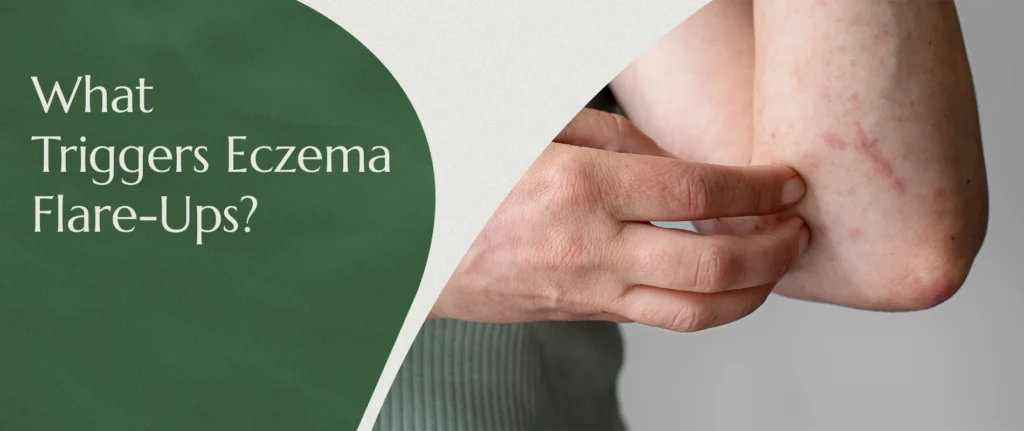
What Is an Eczema Flare-Up?
An eczema flare-up is a period when existing eczema symptoms become more active, uncomfortable, or widespread. The skin may become increasingly itchy, dry, red, swollen, cracked, or scaly compared with its usual condition. Some people experience a mild eczema rash, while others develop more extensive inflammation that interferes with sleep and daily activities. Flare-ups may affect different eczema types, including atopic dermatitis and contact dermatitis, and can occur in both children and eczema in adults. External triggers can aggravate the skin barrier, while immune activity contributes to the inflammation associated with the condition. Recognizing early symptoms and following a suitable treatment plan can help reduce discomfort and manage recurring flare-ups.Common Signs and Symptoms of an Eczema Flare-Up
Common eczema symptoms include itching, dryness, redness, irritation, scaling, and patches of inflamed skin. An eczema rash may also develop swelling, cracks, small blisters, oozing, or crusting, depending on its severity. Some people experience eczema scaly skin, eczema dry skin, or irritated eczema before a more noticeable flare develops. Symptoms can range from an eczema mild rash to severe eczema that affects larger areas, including the hands, face, skin folds, or eczema on legs.How Long Does an Eczema Flare-Up Last?
An eczema flare-up may last several days or weeks, depending on symptom severity, the trigger, and how well treatment controls inflammation. Mild symptoms may settle sooner when the skin is protected, irritants are avoided, and the recommended treatment plan is followed. Persistent scratching, ongoing exposure to triggers, or a secondary infection can prolong a flare-up. If symptoms continue, spread, or repeatedly return, a dermatologist can reassess the condition and recommend appropriate eczema rash treatment.What Triggers Eczema Flare-Ups?
The most common eczema flare-up causes include dry skin, low humidity, temperature changes, sweating, skin irritants, allergens, stress, and infections. These factors may increase moisture loss, damage the skin barrier, or aggravate inflammation in people who are susceptible to eczema. Some triggers cause immediate irritation, while others contribute to skin flare-ups over time. Food allergies and hormonal changes can also be relevant for certain individuals, although they do not explain every flare. Riyadh weather, hot and dry conditions, and transitions between outdoor heat and air-conditioned environments may aggravate symptoms in some residents. Identifying your own pattern is more useful than attempting to avoid every possible trigger.Dry Skin and Moisture Loss
Dry skin is a common contributor to eczema flare up causes because an impaired skin barrier struggles to retain moisture and protect against irritants. As moisture loss increases, the skin may become tight, itchy, cracked, or inflamed, worsening eczema skin dryness. Low humidity, frequent washing, and inadequate moisturization can contribute to dryness and make existing symptoms more uncomfortable. Applying a suitable fragrance-free moisturizer regularly helps support the skin barrier and may reduce irritation and flare-ups.Weather Changes, Heat, and Low Humidity
Weather changes and temperature fluctuations can aggravate eczema, particularly when cold, dry air increases moisture loss or heat causes excessive sweating. Low humidity may leave skin rough and cracked, while hot and humid conditions can increase perspiration and irritation in sensitive skin folds. In Riyadh and across Saudi Arabia, outdoor heat and air-conditioned indoor environments can create changes that some people find aggravating. Adjusting your skincare routine to the weather, avoiding overheating, and moisturizing regularly can help manage these environmental eczema triggers.Sweat and Physical Activity
Sweating and eczema can be closely linked because salt in perspiration, overheating, and friction may irritate sensitive skin. Exercise and outdoor activities can cause a flare-up when sweat remains on the skin or clothing rubs against inflamed areas. You do not need to avoid physical activity; instead, choose breathable clothing, take cooling breaks, and gently rinse away sweat when needed. After exercise, pat the skin dry and apply moisturizer to help maintain hydration without excessive washing.Soaps, Detergents, Fragrances, and Skincare Products
Harsh soaps, scented laundry detergents, fabric softeners, bubble baths, perfumes, and some skincare products can strip natural oils or irritate sensitive skin. Other potential irritants include shampoos, disinfectants, household cleaners, alcohol-based hand sanitizers, cosmetics, and certain topical products. Irritant contact dermatitis develops through direct irritation or skin damage, whereas allergic contact dermatitis involves an immune reaction to a specific substance. Choosing gentle cleansers, fragrance-free moisturizers, and suitable laundry products can help reduce exposure to common irritants that trigger eczema.Allergens, Including Dust Mites, Pollen, and Pet Dander
Dust mites, pollen, mold, and pet dander may contribute to symptoms in some people, especially those who also have allergic conditions. Contact allergens, including nickel jewelry and certain cosmetic ingredients, can cause allergic contact dermatitis and may resemble or aggravate eczema. However, atopic dermatitis is not simply an allergy, and exposure to an allergen does not automatically explain every eczema breakout. If symptoms repeatedly worsen after a particular exposure, a healthcare professional can help determine whether allergy assessment or targeted avoidance is appropriate.Stress and Anxiety
Stress and eczema flare-ups can be connected because emotional distress may influence itching, scratching, sleep, and inflammatory responses. Stress hormones, including cortisol, are involved in the body’s response to emotional pressure, although eczema is not caused by stress alone. Anxiety can also make itching more difficult to manage, creating a cycle in which scratching damages the skin barrier and increases discomfort. Relaxation techniques, adequate sleep, regular activity, and professional support when needed may help reduce the impact of stress on symptom management.Clothing Materials and Skin Friction
Rough fabrics, wool, some synthetic materials, and tight clothing can irritate sensitive skin through friction and heat retention. Polyester and other fabrics may feel uncomfortable for some people, particularly when combined with sweating or repeated rubbing. Loose, breathable clothing made from soft materials such as cotton may reduce irritation during everyday activities and exercise. Washing new clothes before wearing them and using a gentle, fragrance-free detergent can also help limit exposure to potential irritants.
Hot Showers and Excessive Bathing
Hot water and prolonged showers can remove protective oils from the skin and increase moisture loss. Frequent bathing with harsh cleansers, scrubbing, or abrasive exfoliation may worsen dryness, itching, and inflammation in people with eczema. Short, lukewarm showers and gentle cleansing help protect the skin barrier without unnecessarily drying the skin. Apply moisturizer after bathing while the skin is still slightly damp to help retain moisture and reduce irritation.Skin Infections
Bacterial, viral, and other skin infections can aggravate eczema or complicate an existing flare-up. Bacteria such as Staphylococcus aureus may contribute to infection in damaged skin, while certain viral infections can cause serious complications in people with eczema. Warning signs include increasing pain, warmth, pus, yellow crusts, rapidly spreading redness, or unusual painful blisters. Seek prompt medical assessment if infection is suspected, because treatment depends on the cause and may require more than routine eczema care.التغيرات الهرمونية
Hormonal fluctuations during puberty, pregnancy, menstruation, and menopause may influence eczema symptoms in some individuals. Changes in hormones such as estrogen and progesterone may coincide with increased skin sensitivity or recurring inflammation, although patterns differ from person to person. If you notice dermatitis flare ups at a particular stage of your menstrual cycle or another hormonal transition, recording the timing can help identify a possible pattern. Discuss persistent or troublesome symptoms with a healthcare professional rather than starting hormonal treatments or changing prescribed medication independently.Food Allergies and Dietary Triggers
Food allergies can aggravate eczema in some individuals, particularly children with a confirmed allergy, but food is not the cause of every flare-up. Potential allergens include cow’s milk, eggs, peanuts, tree nuts, wheat, soy, fish, shellfish, and sesame, although individual reactions vary. Removing foods without a clear reason may create nutritional problems and does not necessarily improve eczema symptoms. If you suspect a food allergy, consult a healthcare professional or allergy specialist before beginning an elimination diet or making major dietary changes.Saliva and Other Skin Irritants
Saliva, drooling, nasal secretions, smoke, dust, cleaning chemicals, and other irritating substances can aggravate sensitive skin. In babies and young children, saliva around the mouth, chin, and cheeks can cause irritation when moisture and friction persist. Metals such as nickel, latex, certain topical products, and environmental pollutants may also contribute to irritation or contact dermatitis in susceptible people. Gently clean affected areas, pat them dry, and seek advice about suitable protective products if the irritation continues.How Can You Identify Your Eczema Triggers?
Identifying eczema triggers involves looking for consistent patterns between exposures and changes in your skin rather than assuming every flare has the same cause. Weather, sweat, skincare products, stress, allergens, and infections may contribute individually or in combination. A symptom diary can help you record when symptoms begin, which areas are affected, and what may have happened beforehand. Avoid changing several products or dietary habits at once, as this can make it harder to identify a meaningful pattern. Clinical assessment can help distinguish eczema from contact dermatitis, infection, and other skin conditions with similar symptoms. A personalized approach helps you manage flare-ups without unnecessary restrictions.Track Symptoms and Possible Triggers
Keep a symptom diary that records the timing of each flare, itching severity, affected areas, weather, stress, sleep, activities, and products used. Note whether symptoms follow sweating, bathing, exposure to detergents, particular clothing, or contact with animals and other potential allergens. Photographs can help document changes, especially if a sudden eczema flare up improves before your appointment. Review the information with a healthcare professional to identify plausible triggers and refine your treatment plan.When Is Allergy Testing Necessary?
Allergy testing may be appropriate when your history suggests a specific allergy, such as a reaction to food or a substance that contacts the skin. Patch testing can help investigate allergic contact dermatitis, while other allergy tests may be considered when symptoms suggest an immediate allergic reaction. Broad testing without a clear clinical reason can produce results that are difficult to interpret and may lead to unnecessary avoidance. A dermatologist or allergy specialist can determine which tests, if any, are appropriate and explain how the results should guide your care.How Can You Prevent Eczema Flare-Ups?
Eczema flare-up prevention focuses on protecting the skin barrier, reducing known irritants, and managing factors that repeatedly worsen symptoms. Regular moisturizing can reduce moisture loss, while gentle products help limit unnecessary irritation. Avoiding confirmed triggers is usually more practical than attempting to eliminate every possible exposure from daily life. Heat, sweat, stress, and changes in humidity may require adjustments to routines, especially during Riyadh’s hot weather. Following your prescribed treatment plan can also help control inflammation and reduce the risk of more severe symptoms. If flare-ups continue despite these measures, a dermatologist can review your diagnosis and treatment options.Keep Your Skin Moisturized
Apply a suitable fragrance-free moisturizer regularly, especially after bathing or washing, to help retain moisture and support skin barrier function. Creams and ointments may provide longer-lasting protection than lighter lotions for people with significant dryness. Choose products that suit your skin and avoid ingredients that have previously caused irritation or an allergic reaction. Consistent moisturization can help manage eczema dry skin, although active inflammation may also require prescribed eczema treatment.Avoid Known Irritants and Fragranced Products
Reduce contact with products that consistently worsen symptoms, including fragranced skincare, harsh soaps, strong detergents, and irritating cleaning chemicals. Choose gentle cleansers and fragrance-free moisturizers, and introduce new products one at a time so any reaction is easier to identify. If a rash develops after exposure to a particular substance, record the product and discuss possible contact dermatitis with a clinician. Avoiding confirmed irritants can help prevent skin flare-ups without requiring unnecessary changes to your entire routine.Manage Sweat, Heat, and Weather-Related Triggers
During hot weather, wear breathable clothing, take cooling breaks during physical activity, and avoid staying in sweaty garments for long periods. After sweating, gently rinse the skin if needed, pat it dry, and moisturize according to your usual routine. In Riyadh, air-conditioned indoor environments may offer relief from heat but can contribute to dryness for some people. Adjust your routine to temperature changes and low humidity while avoiding excessive washing or other measures that may irritate the skin.Use Gentle Skincare and Bathing Habits
Use lukewarm water, keep showers relatively short, and choose gentle cleansers instead of harsh soaps or abrasive scrubs. Pat your skin dry with a soft towel rather than rubbing, then apply moisturizer while the skin is slightly damp. Avoid excessive washing and exfoliation, especially on areas that are already inflamed, cracked, or itchy. These simple sensitive skin care habits help protect the skin barrier and reduce everyday irritation that can contribute to eczema flare-ups.Follow Your Prescribed Eczema Treatment Plan
Follow the treatment plan recommended by your healthcare professional, including instructions for using prescribed topical medicines. Treatments for eczema may include moisturizers, topical corticosteroids, topical calcineurin inhibitors, phototherapy, or systemic medicines for selected moderate-to-severe cases. The appropriate option depends on your age, eczema type, affected areas, medical history, and symptom severity. Do not stop, increase, or change prescribed medication without discussing it with your clinician, and arrange a review if your symptoms remain uncontrolled.When Should You See a Dermatologist?
Consult a dermatologist if eczema symptoms persist, repeatedly return, spread, or interfere with sleep and daily activities. Medical assessment is also important when a rash does not improve with your usual care or when you are unsure whether it is eczema, contact dermatitis, or another skin disorder. Severe eczema may require prescription treatment or specialist supervision, especially when large areas are affected. A dermatologist in Riyadh can assess your symptoms, possible environmental triggers, and medical history to develop an individualized eczema treatment plan. Seek prompt medical care if symptoms worsen rapidly or signs of infection appear. You can also consult the Saudi Ministry of Health for general health guidance, while relying on a qualified clinician for individual diagnosis and treatment.Signs of a Possible Skin Infection
Seek prompt medical assessment if affected skin becomes increasingly painful, warm, swollen, or rapidly red, or if pus or yellow crusts appear. Fever, feeling generally unwell, or rapidly worsening symptoms may indicate an infection that needs urgent attention. Clusters of painful blisters or unusual sores may indicate a potentially serious viral infection and should be assessed urgently. Do not rely on moisturizer alone when infection is suspected, because treatment depends on the cause and severity.Persistent, Severe, or Worsening Eczema Symptoms
Arrange a dermatology appointment if symptoms persist despite following your treatment plan or if flare-ups repeatedly disrupt sleep, work, school, or daily comfort. A severe eczema flare up, extensive eczema all over the body, intense itching, significant swelling, or painful cracks may require prompt clinical review. A sudden eczema breakout or a new rash that looks different from previous episodes should also be assessed when the cause is unclear. A dermatologist can review the possible eczema types and recommend appropriate eczema rash treatment, further investigations, or specialist care for the worst cases of eczema.خاتمة
Eczema flare-ups can be triggered by dry skin, weather changes, heat, sweating, stress, allergens, irritants, infections, and other individual factors. The root cause of eczema is complex and involves skin barrier dysfunction, immune activity, and genetic susceptibility rather than one universal trigger. Recognizing early symptoms and keeping track of potential exposures can help you understand the reasons for eczema to flare up. Regular moisturization, gentle skincare, and avoiding confirmed irritants can reduce irritation and support the skin barrier. Food allergies and other specific triggers should be investigated when the history suggests a genuine connection, rather than through unnecessary restrictions. If symptoms persist, spread, or become severe, a dermatologist can recommend appropriate treatments for eczema and assess whether another condition is involved. With an individualized care plan and consistent prevention habits, many people can manage flare-ups and improve their day-to-day comfort.الأسئلة الشائعة حول Eczema Flare-Ups
Dry skin and skin barrier irritation are common contributors to eczema flare-ups, but there is no single trigger that affects everyone. Heat, sweat, stress, allergens, infections, and fragranced products may also worsen symptoms depending on the individual.
Stress does not directly cause every case of eczema, but it can aggravate symptoms by affecting itching, scratching, sleep, and inflammatory responses. Stress management may support symptom control, but it does not replace appropriate eczema treatment.
Yes, hot weather can worsen eczema for some people because overheating and sweating may increase itching and irritation. Staying cool, wearing breathable clothing, and gently washing away sweat may help reduce discomfort.
Certain foods can aggravate symptoms in people with a confirmed food allergy, but food is not a trigger for everyone with eczema. Seek professional advice before eliminating foods, particularly from a child’s diet, to avoid unnecessary restrictions and nutritional deficiencies.
Eczema may feel worse at night because warmth, skin dryness, and the natural daily pattern of itching can make symptoms more noticeable. A consistent moisturizing routine, a comfortable sleeping environment, and following your prescribed treatment plan may help.
Eczema flare-ups cannot always be prevented, but regular moisturizing, avoiding known irritants, and following your treatment plan may reduce their frequency and severity. Tracking symptoms and consulting a dermatologist when symptoms remain uncontrolled can help you identify triggers and improve long-term management.