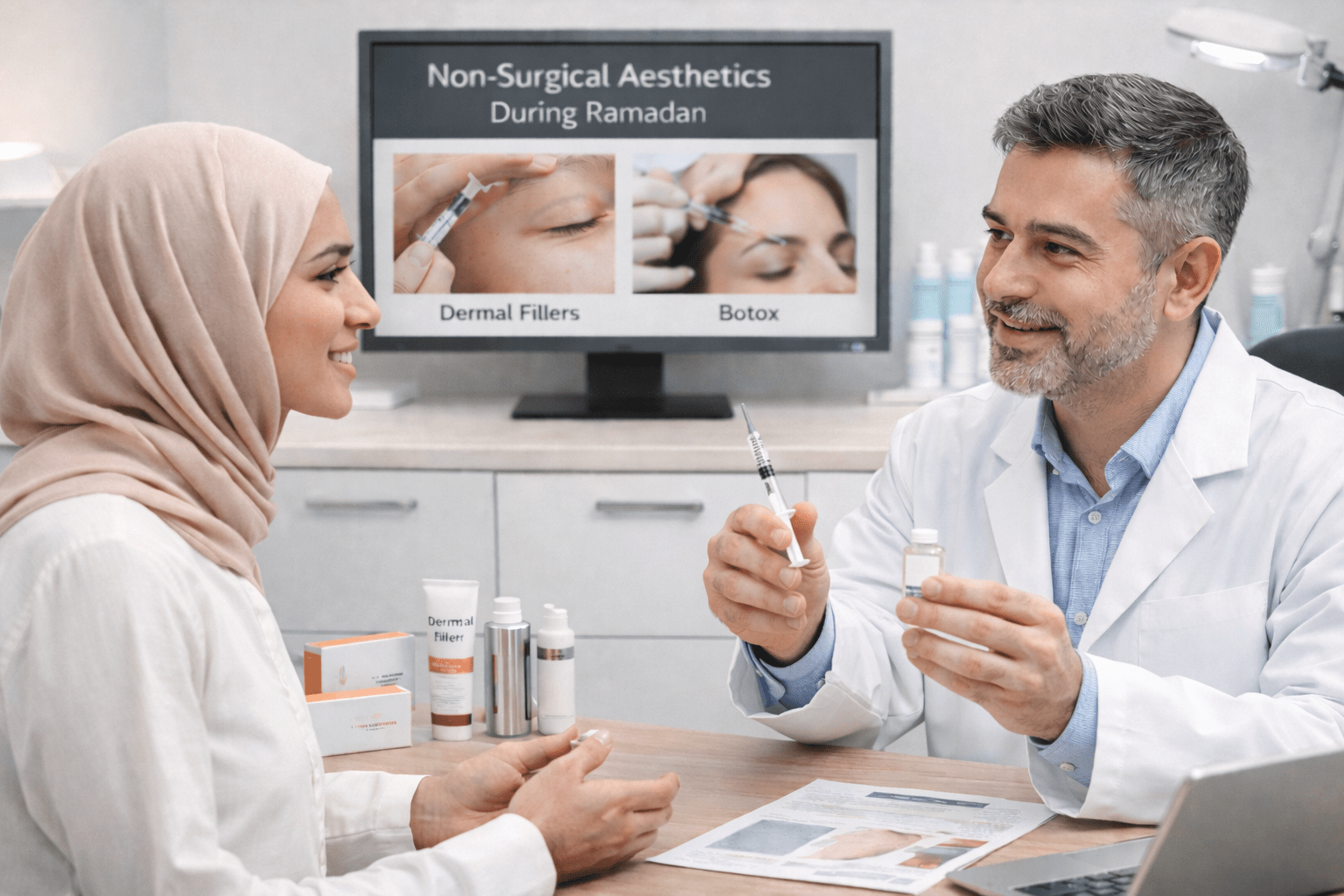
Non-Surgical Treatments You Can Safely Do During Ramadan in Riyadh
During Ramadan, many patients in Riyadh want to maintain their skin health and prepare for Eid — but they also want to ensure that treatments are safe while fasting.
According to Dr. Haitham Al-Gzlan, Consultant Dermatologist at Reveal Clinics Riyadh, many non-surgical aesthetic procedures can be performed during Ramadan when carefully selected and medically supervised.
The key is choosing treatments that are:
- Low downtime
- Conservative
- Non-invasive or minimally invasive
- Safe for dehydrated skin
- Appropriately timed
Why Non-Surgical Treatments Are Preferred During Ramadan
Ramadan is a month of balance and discipline. Aggressive procedures that require extended downtime or intensive recovery may not be ideal.
Non-surgical treatments are often preferred because they:
- Do not interfere with fasting
- Allow quick return to routine
- Provide gradual improvement
- Support skin stability
- Can be scheduled strategically before Eid
However, suitability varies from patient to patient.
Non-Surgical Treatments Often Considered Safe During Ramadan
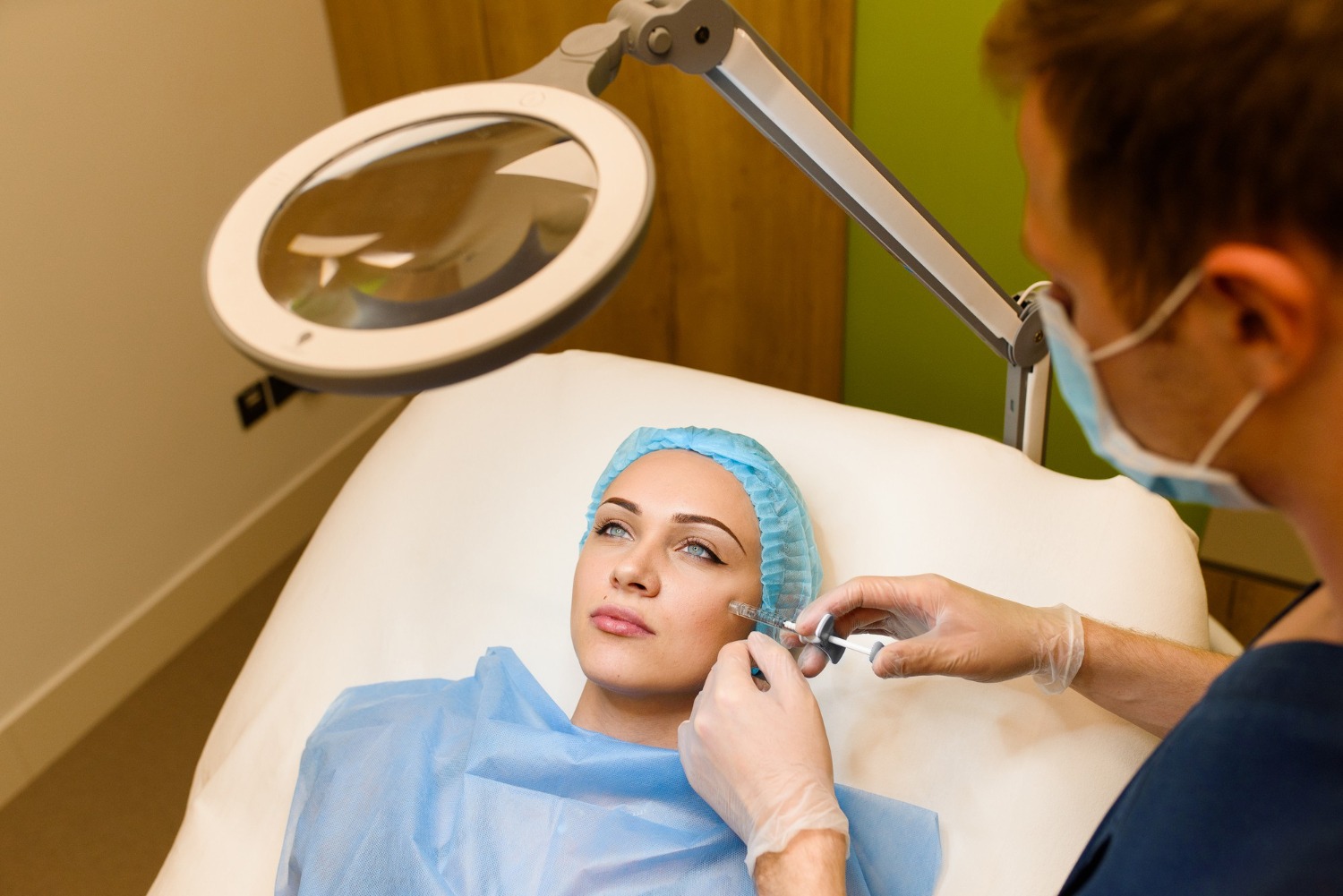
1️⃣ Botox (Neuromodulators)
- Localized treatment
- Minimal downtime
- Does not affect hydration
- Suitable for subtle refresh before Eid
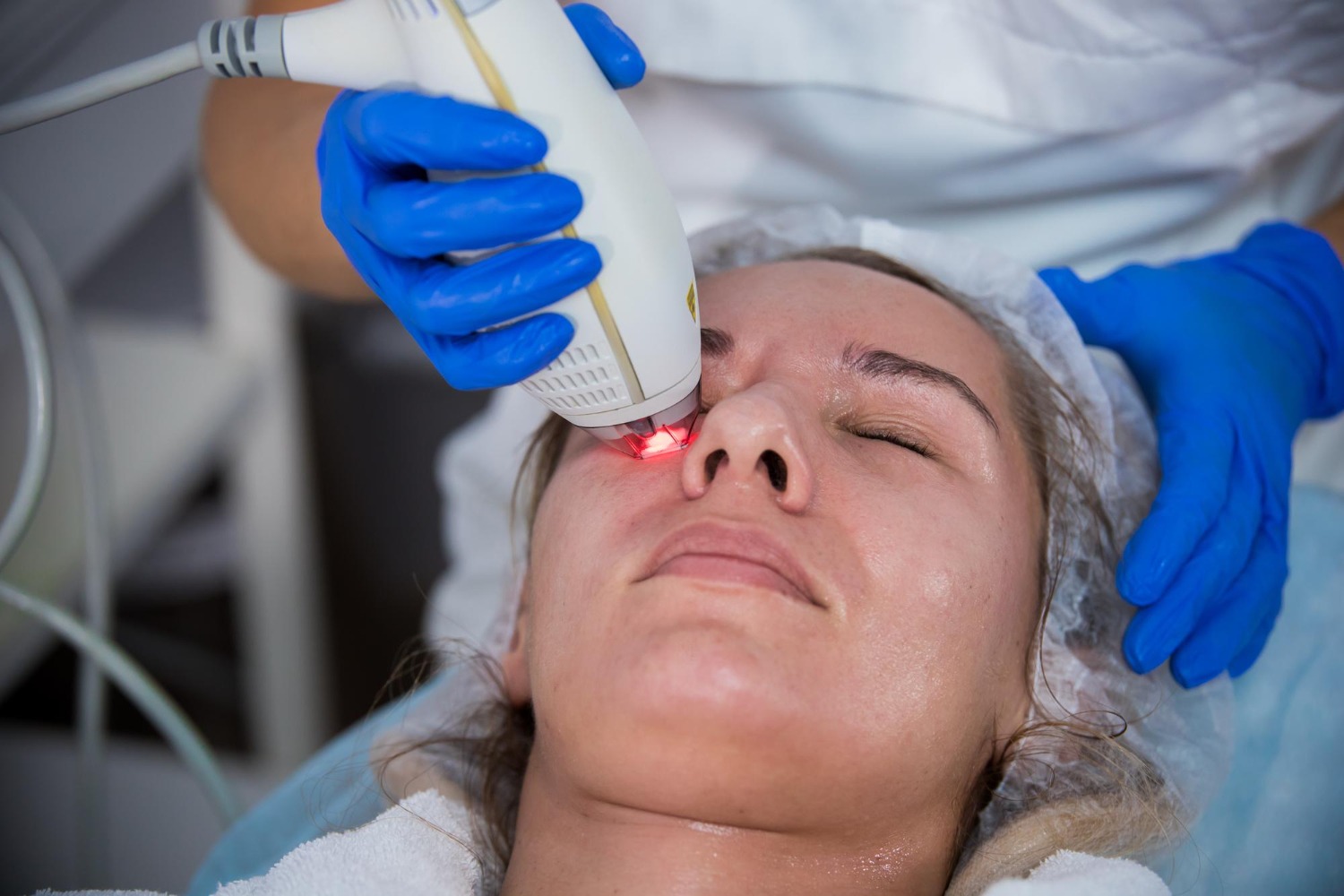
2️⃣ Light-Based Treatments (IPL & Vascular Laser)
- Address pigmentation and redness
- Minimal recovery time
- Performed with conservative settings
3️⃣ Gentle Collagen Stimulation
- Non-ablative technologies
- Gradual improvement
- Controlled parameters for safety
4️⃣ Selected Hydration Treatments
- Improve dull or dehydrated skin
- Performed conservatively
- Planned according to skin condition
Each treatment must be evaluated based on individual health and skin stability.
Treatments That May Require Postponement
Some procedures are better delayed until after Ramadan, including:
- Deep fractional resurfacing
- High-downtime laser treatments
- Aggressive chemical peels
- Intensive scar revision procedures
Ramadan favors maintenance and subtle refinement rather than dramatic change.
Timing Matters: When Should You Schedule?
Many patients prefer:
- Evening appointments
- Earlier sessions in the month
- Allowing buffer time before Eid
- Avoiding peak dehydration hours
Gradual planning helps avoid rushed decisions close to celebrations.
Is It Safe to Combine Treatments During Ramadan?
Combination treatments may be performed in selected cases, but:
- Conservative approach is preferred
- Skin stability must be confirmed
- Hydration status must be considered
Consultant evaluation ensures safe sequencing and spacing.
Ramadan Strategy: Subtle, Controlled Improvement
The safest aesthetic strategy during Ramadan is:
- Stabilize chronic conditions
- Maintain hydration
- Perform low-downtime procedures
- Avoid over-treatment
- Prepare gradually for Eid
This balanced approach aligns with both medical safety and the spirit of the month.
Frequently Asked Questions (FAQ)
Can I do Botox during Ramadan?
Yes, in most cases Botox can be performed safely during Ramadan.
Is laser safe while fasting?
Many light-based treatments are safe when performed under medical supervision.
Should I avoid all procedures during Ramadan?
Not necessarily. Non-surgical treatments are often appropriate with careful planning.
Is it better to treat earlier in Ramadan before Eid?
Yes, gradual planning produces better results.
Can dehydration affect recovery?
Hydration status may influence recovery, which is why timing and evaluation are important.
Read More insights about Dr. Haitham Al-Gzlan
Choose the Right Treatment, the Right Way
If you are considering non-surgical aesthetic treatments during Ramadan, personalized medical evaluation ensures safety and optimal timing.
Consult Dr. Haitham Al-Gzlan at Reveal Clinics Riyadh to receive a customized Ramadan treatment plan aligned with your skin condition and fasting considerations.
📍 Reveal Clinics, 2484 Muhammad Al Maqdimi, An Nafal, Riyadh 13312
🌐 byhaitham.com 📞 +966 56 262 4285
🌐 reveal-clinics.com 📞 +966 11 504 8687
