
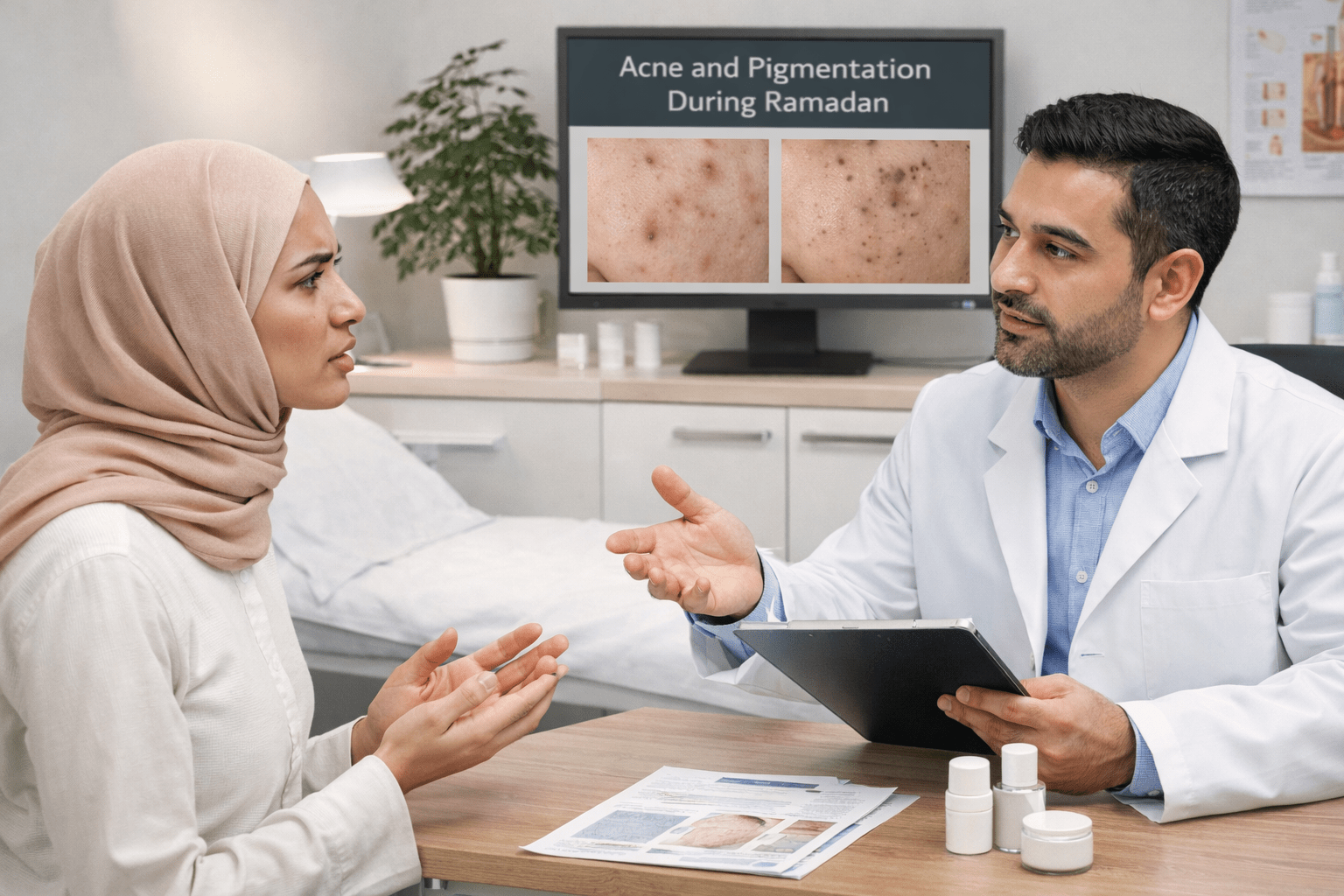
Does Fasting Affect Acne, Pigmentation & Rosacea?
During Ramadan, many patients in Riyadh notice changes in their skin and wonder:
- “Why is my acne worse?”
- “Why did my pigmentation darken?”
- “Why is my rosacea flaring up?”
According to Dr. Haitham Al-Gzlan, Consultant Dermatologist at Reveal Clinics Riyadh, fasting itself does not directly cause skin disease — but lifestyle and environmental shifts during Ramadan may influence skin behavior.
Understanding these changes helps prevent unnecessary worry and allows for safe, strategic care.
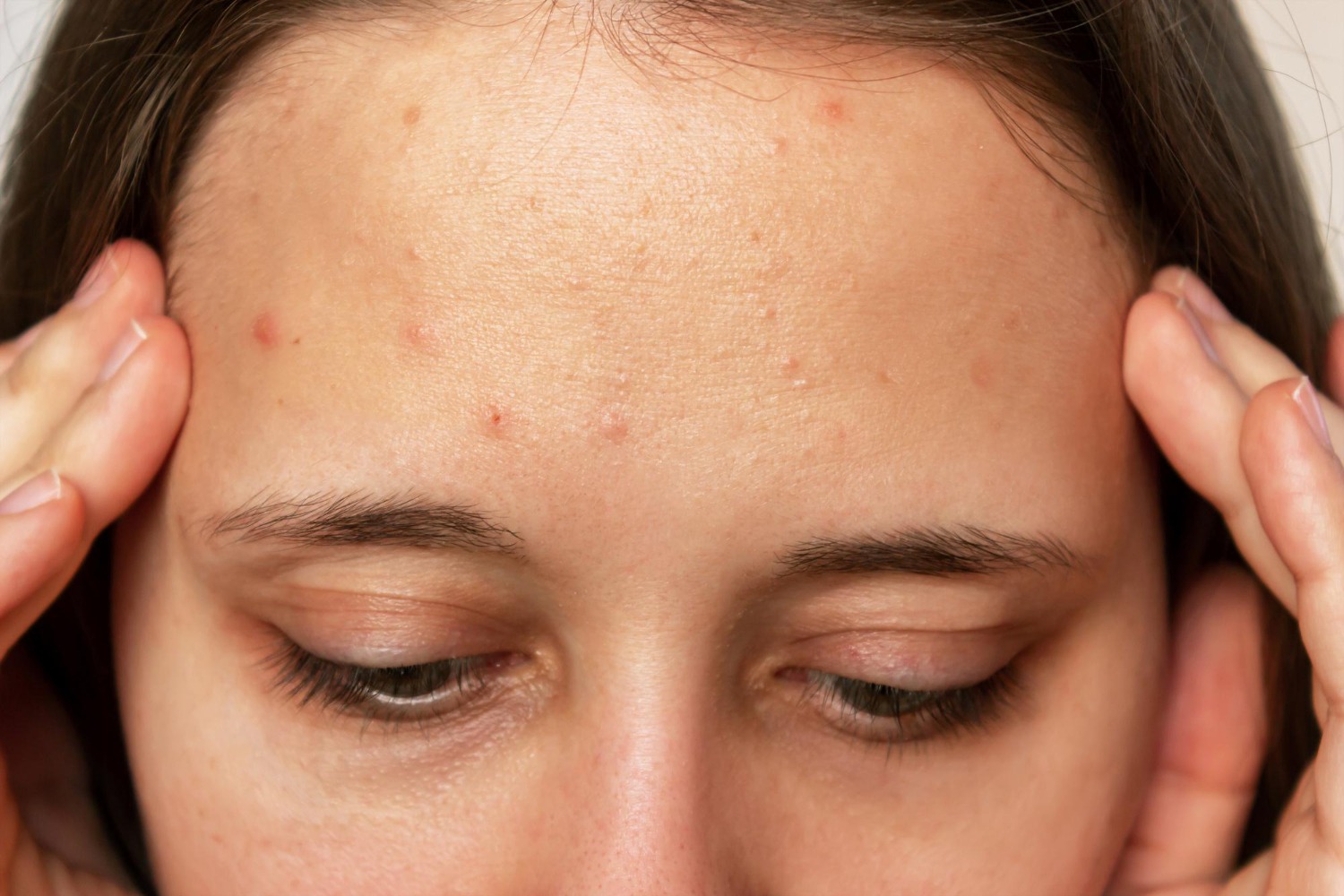
Does Fasting Cause Acne?
Fasting alone does not directly cause acne. However, changes during Ramadan may contribute:
- Altered sleep cycles
- Increased consumption of sugary foods after Iftar
- Dehydration
- Hormonal fluctuations
- Increased stress
These factors may lead to:
- Oil imbalance
- Increased inflammation
- Breakouts in acne-prone individuals
For patients with pre-existing acne, Ramadan routines can temporarily trigger flare-ups.
Can Pigmentation Worsen During Ramadan?
Pigmentation may appear darker during Ramadan due to:
- Increased sun exposure during daytime activities
- Dehydrated skin barrier
- Delayed skincare routines
- Overuse of harsh exfoliants before Eid
In Riyadh’s climate, UV exposure remains one of the strongest pigmentation triggers. Without consistent sun protection, melasma and post-inflammatory pigmentation may intensify.
Proper barrier care and sunscreen use remain essential during fasting.
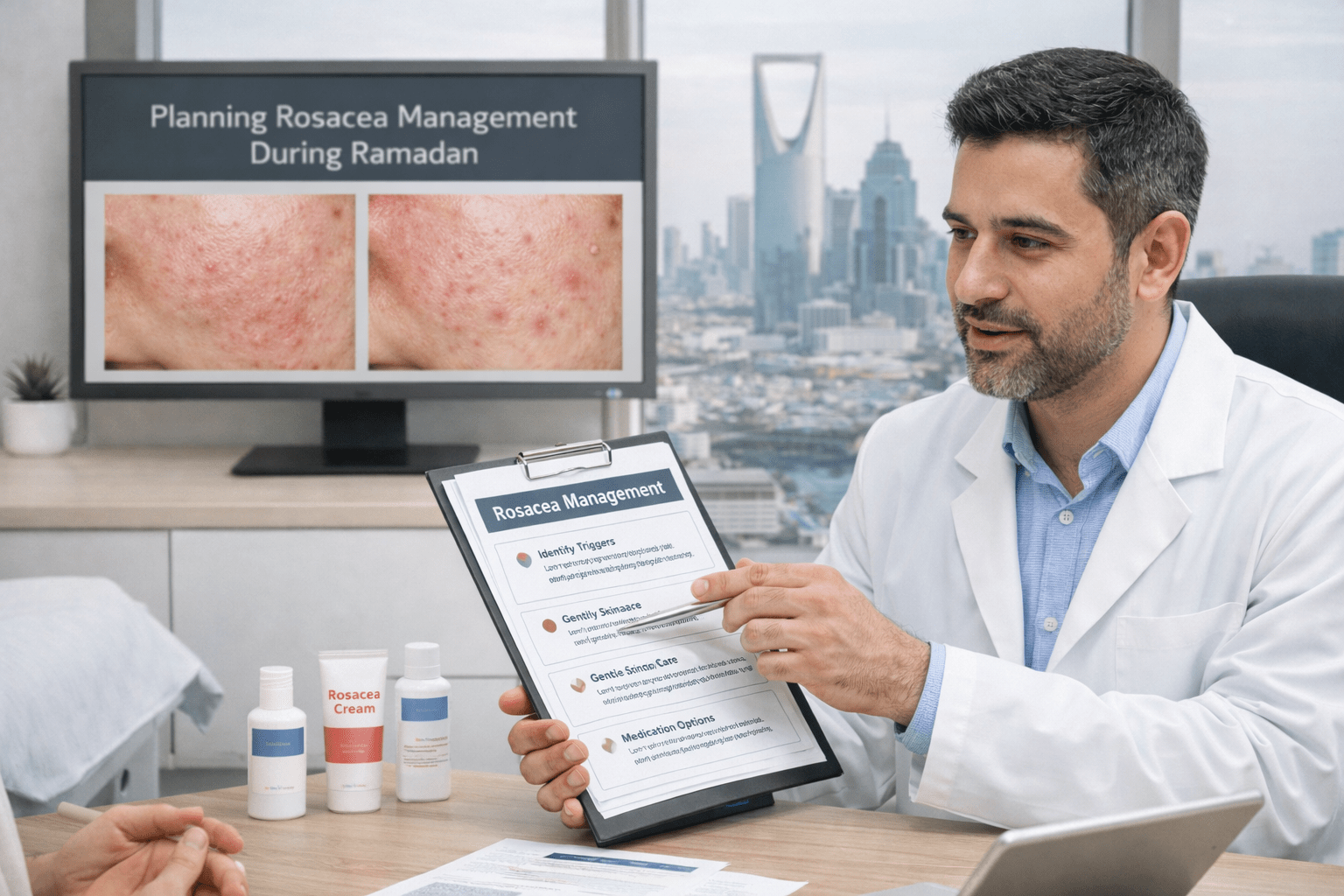
Does Rosacea Flare Up While Fasting?
Rosacea and facial redness may become more noticeable due to:
- Heat exposure
- Dehydration
- Spicy or hot meals
- Sleep changes
- Emotional stress
Fasting itself is not the cause, but associated triggers can increase flushing and sensitivity.
Patients with rosacea should focus on:
- Gentle skincare
- Sun avoidance
- Avoiding extreme temperature changes
- Medical guidance if flare-ups persist
Is It Safe to Treat These Conditions During Ramadan?
In many cases, yes — when treatment is:
- Conservative
- Carefully timed
- Adjusted for hydration status
- Based on accurate diagnosis
Possible options during Ramadan may include:
- Light-based pigmentation treatments
- Vascular laser for redness
- Conservative acne management
- Barrier-repair strategies
Aggressive resurfacing or deep procedures may be postponed until after Ramadan.
When Should You Seek Professional Evaluation?
Consider consulting a dermatologist if you experience:
- Severe acne flare-ups
- Rapid pigmentation darkening
- Persistent redness or burning
- Unusual skin sensitivity
- Sudden changes in skin behavior
Consultant-level evaluation ensures appropriate adjustments during Ramadan rather than overreacting with harsh products.
Ramadan Skin Management Strategy
During fasting, focus on:
- Gentle cleansing
- Strong sun protection
- Balanced post-Iftar nutrition
- Hydration outside fasting hours
- Avoiding over-treatment
- Gradual improvement before Eid
Ramadan is a time of balance — skin care should reflect the same principle.
Frequently Asked Questions (FAQ)
Does fasting permanently worsen acne?
No. Acne flare-ups are usually temporary and linked to lifestyle shifts.
Can melasma darken during Ramadan?
Yes, especially with increased sun exposure and dehydration.
Is it safe to treat pigmentation while fasting?
In many cases, yes — with proper medical supervision.
Can rosacea become more sensitive in Ramadan?
Yes. Heat and dehydration may increase flushing.
Should I postpone all treatments until after Eid?
Not always. Many treatments can be safely performed with conservative planning.
Read More insights about Dr. Haitham Al-Gzlan
Manage Ramadan Skin Changes Safely
If you notice changes in acne, pigmentation, or redness during Ramadan, professional guidance can prevent worsening and ensure safe management.
Consult Dr. Haitham Al-Gzlan at Reveal Clinics Riyadh for a personalized dermatology plan aligned with fasting and seasonal factors.
📍 Reveal Clinics, 2484 Muhammad Al Maqdimi, An Nafal, Riyadh 13312
🌐 byhaitham.com 📞 +966 56 262 4285
🌐 reveal-clinics.com 📞 +966 11 504 8687
