
What Is RF Microneedling?
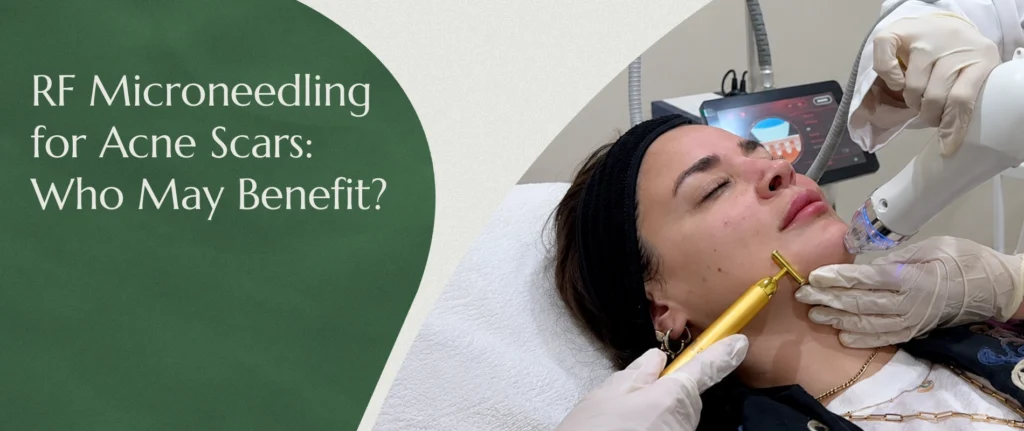
RF microneedling is a minimally invasive procedure that combines traditional microneedling with controlled radiofrequency energy. Fine needles enter the skin at selected depths, and the device releases thermal energy into targeted areas of the dermis. The mechanical micro-injuries and RF heat trigger a controlled wound-healing response that can stimulate collagen production, collagen synthesis, elastin formation, and longer-term dermal remodeling. Compared with traditional skin needling, microneedling with radiofrequency adds a thermal component below the skin surface and allows the dermatologist to customize both needle penetration and RF energy. Dermatologists use RF skin needling for concerns such as atrophic acne scars, uneven skin texture, and selected cases of mild laxity. Treatment results depend on the scar type, device, settings, treatment density, and individual response rather than on the RF technology alone.Common RF microneedling devices and wavelengths
RF microneedling devices use radiofrequency energy rather than laser wavelengths, so describing them by “wavelength” is technically inaccurate. Common platforms include Secret RF, Morpheus8, Potenza, Virtue RF, and other fractional radiofrequency systems, although available devices and regulatory indications vary between countries. Some systems use bipolar radiofrequency, while others differ in electrode configuration, insulated versus non-insulated needles, treatment depths, pulse delivery, and energy range. These technical differences affect how heat is distributed within the dermis and how much control the clinician has over the treatment. The device name itself does not determine whether RF microneedling will work well for acne scars. Treatment success depends more on matching the scar depth, skin type, needle depth, and RF energy level appropriately.How device differences influence depth, energy, and safety
Device design affects where radiofrequency energy enters the skin and how much tissue receives thermal injury. Insulated needles can concentrate RF energy near specific portions of the needle, while non-insulated needles may distribute energy along a larger part of the shaft. Adjustable needle depth lets the dermatologist target different levels of the dermis according to scar depth and anatomical area. Treatment density, RF energy, pulse duration, passes, and needle configuration also influence the strength of the wound-healing response. Deeper penetration or higher energy is not automatically more effective because excessive mechanical or thermal injury can increase pain, inflammation, track marks, pigmentation, or scarring. Safe RF microneedling therefore depends on precise treatment customization rather than simply using the highest available setting.How RF Microneedling Works on Acne Scars
RF microneedling improves selected acne scars by creating controlled mechanical and thermal injury that stimulates collagen remodeling within the dermis. The needles produce micro-injuries, while radiofrequency energy generates controlled heat around the treatment points. This combination activates the wound-healing response and encourages fibroblasts to produce and reorganize collagen and elastin. As dermal support improves, selected depressed scars may become shallower and the surrounding skin texture can appear smoother. RF microneedling does not physically fill a scar during the procedure, so improvement develops gradually over weeks to months. It should therefore be viewed as a scar-remodeling treatment rather than a method that permanently removes every acne scar.The technical mechanism: heat, injury, and remodeling
The technical effect of micro needle RF comes from combining needle penetration with controlled dermal heating. Mechanical injury begins a repair response, while RF energy creates a defined zone of thermal coagulation within deeper tissue. This can stimulate neocollagenesis, collagen reorganization, and longer-term scar remodeling. Unlike many laser procedures, radiofrequency energy does not depend on targeting melanin, which helps explain why RF microneedling is often considered across a broad range of phototypes. The depth and strength of this effect depend on needle penetration, RF energy, pulse duration, treatment density, and the patient’s tissue response. The goal is enough controlled injury to stimulate remodeling without creating unnecessary inflammation or thermal damage.What types of acne scars can RF microneedling treat?
RF microneedling is most useful for selected atrophic acne scars, especially rolling scars, shallow-to-moderate boxcar scars, and areas of diffuse depressed or uneven texture. Rolling scars can improve through collagen remodeling, but strongly tethered rolling scars may still need subcision because radiofrequency needling does not reliably release deep fibrous bands. Boxcar scars may respond when their depth is within the treatment zone, while very deep or sharply defined boxcar scars may need focal treatment as well. Narrow, deep ice-pick scars generally respond less predictably to RF microneedling alone because the scar tract extends deeply through a small opening. Patients with mixed acne scarring often need a combination plan in which RF microneedling treats broader texture while another technique addresses deep or tethered scars.RF microneedling for active acne versus old scars
RF microneedling used for acne scar treatment should be distinguished from radiofrequency protocols studied for active acne. Significant inflammatory acne is usually controlled before scar-focused treatment becomes the priority because new nodules and pustules can continue creating scars while older scars are being treated. Some RF systems have been studied for active acne and sebum-related concerns, but those treatment goals and parameters are not interchangeable with scar-remodeling protocols. An occasional minor breakout does not necessarily exclude treatment, but widespread pustules, nodules, cyst-like lesions, or infection in the treatment field need clinical assessment first. The dermatologist should therefore establish whether the goal is treating active acne, established acne scarring, or both before choosing the treatment plan.Who May Benefit from RF Microneedling for Acne Scars?
People with stable atrophic acne scars and realistic treatment goals may benefit most from RF microneedling. The treatment is particularly relevant for rolling scars, selected boxcar scars, broader uneven skin texture, and patients seeking collagen remodeling with relatively limited epidermal disruption. It can also be useful when a patient has a darker skin tone and wants to avoid some of the pigment-related concerns associated with more aggressive ablative resurfacing. Scar depth, scar severity, skin type, previous treatments, pigmentation history, and available downtime still affect treatment suitability. RF microneedling should not be expected to replace subcision, CROSS, fillers, or surgery when those procedures address the scar more directly. The best candidates are therefore patients whose scar structure matches what controlled dermal remodeling can realistically improve.Ideal candidates: stable, inactive acne and realistic goals
Ideal candidates usually have reasonably stable acne and are no longer developing frequent deep inflammatory lesions in the area being treated. Controlling active disease reduces the chance that new scars will continue forming during an RF microneedling treatment course. Candidates should also understand that RF microneedling benefits develop progressively and that several treatment sessions may be recommended. The realistic goal is improvement in scar depth and skin texture rather than complete scar removal. Patients who can follow post-treatment skincare, sun protection, and follow-up recommendations are also better positioned for safe treatment.Patients with mild to moderate atrophic scarring
Patients with mild-to-moderate atrophic acne scars often respond well because RF microneedling directly targets the dermal remodeling involved in depressed scars. Rolling scars and selected boxcar scars may become less noticeable as collagen reorganizes beneath the skin. Moderate scars may need several sessions, while deeper or mixed scars can require combination therapy. Scar grading should assess depth, morphology, tethering, and distribution rather than simply labeling all depressed scars as one category. People with severe acne scarring can still benefit from RF microneedling, but the procedure may represent only one part of a broader treatment plan.Patients with darker skin tones (Fitzpatrick III–VI)
Patients with Fitzpatrick III–VI skin may benefit from RF microneedling because radiofrequency energy can be delivered into the dermis without relying on melanin as its primary target. This can provide a useful acne scarring treatment option when pigmentation risk influences the choice between RF needling and aggressive laser resurfacing. Published reviews in skin of color report a relatively low rate of persistent hyperpigmentation or scarring after radiofrequency and RF microneedling when used appropriately. Temporary PIH can still occur, however, because the treatment creates controlled inflammation. Conservative settings, careful technique, sun protection, and attention to a patient’s previous pigment response remain important in darker skin.Who May Not Be Suitable for RF Microneedling?
RF microneedling is not suitable for every patient or every stage of acne treatment. Active infection, significant inflammatory acne, impaired wound healing, certain medical conditions, and some implanted electronic devices can affect suitability depending on the RF platform being used. A personal or family tendency toward abnormal scars also deserves discussion before treatment. Pregnancy is another situation in which elective RF microneedling is generally postponed because adequate safety data are lacking. Medications, recent dermatologic procedures, and previous reactions to energy-based treatments should also be reviewed during the clinical assessment. A dermatologist should therefore confirm treatment suitability rather than relying on a generic eligibility checklist.Active inflammatory acne or skin infection in the treatment area
Significant inflammatory acne or an active skin infection in the treatment area usually needs management before scar-focused RF microneedling. Passing needles through pustules or infected skin can increase irritation and complicate healing. Deep nodules can also produce additional scars while older scars are being treated, which works against the overall treatment goal. An isolated minor blemish does not necessarily mean the entire procedure must be cancelled, but the dermatologist should assess the extent and activity of the acne. Controlling the condition that continues to create scars generally takes priority over intensive scar revision.Pregnancy or breastfeeding
Elective RF microneedling is generally postponed during pregnancy because sufficient safety evidence is not available to justify a cosmetic energy-based procedure during this period. Breastfeeding also requires individualized discussion because the evidence base remains limited and topical anesthetics or accompanying medications may require separate consideration. This does not mean RF microneedling has been proven harmful during pregnancy or lactation. Rather, the absence of strong safety evidence favors postponing elective treatment when there is no medical urgency. Patients who are pregnant, breastfeeding, or trying to conceive should discuss treatment timing with their dermatologist and relevant medical clinician.Uncontrolled melasma or pigmentary disorders without specialist oversight
Patients with uncontrolled melasma or unstable pigmentary disorders require specialist assessment before RF microneedling. Although RF does not primarily target melanin, the procedure still creates inflammation and thermal energy that can influence pigment behavior. Aggressive treatment can potentially improve texture while making pigmentation more noticeable in a susceptible patient. A dermatologist should first determine whether dark areas represent PIH, melasma, another pigmentary disorder, or a combination. Scar treatment can then be timed and adjusted around an appropriate pigment-control strategy.Benefits and Characteristics of RF Microneedling for Acne Scars
The main benefits of RF microneedling include adjustable depth, targeted RF energy, relatively limited epidermal injury, and gradual collagen remodeling. The clinician can change needle penetration and energy according to skin thickness, scar depth, and treatment area, which gives RF microneedling a high degree of treatment customization. Compared with ablative fractional lasers, it usually involves less visible surface healing and a shorter social recovery. Radiofrequency microneedling for scars can also be used across various skin tones when performed carefully. The treatment can improve both acne scar texture and the appearance of enlarged pores in selected patients, although pore size itself cannot literally be “removed.” Its main limitation is that collagen stimulation alone cannot correct every form of structural acne scarring.Depth control and precision targeting
Adjustable needle depth allows the dermatologist to target different layers of the dermis rather than treating the entire face at one standard level. Thicker cheek skin may tolerate and require a different depth from thinner areas near the temples or forehead. Scar depth also influences how far the needles and RF energy need to reach. This flexibility helps the clinician target rolling scars, boxcar scars, and broader areas of atrophic scarring more precisely. However, maximum needle depth should never be treated as a treatment goal in itself because accuracy and tissue response matter more than depth alone.Minimal downtime compared with ablative fractional lasers
RF microneedling generally causes less surface disruption than ablative fractional CO₂ resurfacing, so visible downtime is often shorter. Patients commonly experience redness, warmth, tenderness, and mild swelling rather than the more pronounced oozing, crusting, and peeling associated with ablative resurfacing. This can make RF microneedling easier to plan around work and social commitments. Recent head-to-head research also supports shorter erythema, swelling, pain, and scab duration with RF microneedling compared with fractional CO₂ in selected patients. Less downtime does not mean no recovery, however, and stronger settings can produce longer inflammation.Suitable for various skin tones when performed correctly
Microneedling with radiofrequency is useful across a broad range of skin tones because RF energy is delivered into tissue through electrodes rather than selectively targeting epidermal pigment. This can give RF microneedling an advantage when PIH risk affects treatment planning. Reviews in skin of color have reported generally low rates of persistent pigment complications, although transient hyperpigmentation does occur. Darker skin still requires conservative energy, appropriate needle depth, careful sun protection, and close follow-up. The correct message is therefore that RF microneedling can be suitable for darker skin when performed properly—not that it carries no pigment risk.Natural, long-term improvement through collagen remodeling
RF microneedling produces gradual improvement because it relies on the body’s own wound-healing and collagen-remodeling processes. New collagen and elastin do not appear instantly, so scar texture can continue improving for several months after treatment. Appropriate depressed scars may become shallower, and broader areas of uneven skin may appear smoother as the dermis reorganizes. This structural remodeling can persist rather than disappearing when temporary swelling resolves. However, normal ageing continues, and new inflammatory acne can create new scars, which is why long-term acne control remains important.Comparing RF Microneedling to Other Acne Scar Treatments
RF microneedling is one part of acne scar treatment rather than a universal replacement for traditional microneedling, fractional CO₂, chemical peels, subcision, fillers, or focal scar procedures. Each treatment addresses a different scar mechanism or skin layer. RF microneedling is most useful when controlled dermal heating and collagen remodeling match the problem being treated. Fractional CO₂ provides stronger ablative resurfacing but generally produces more downtime and pigmentation risk, while standard microneedling uses mechanical injury without RF heat. Subcision and fillers address tethering and volume loss that RF microneedling cannot directly correct. The dermatologist should therefore choose the procedure according to scar architecture rather than simply ranking treatments from weakest to strongest.RF microneedling vs traditional microneedling
Traditional microneedling creates controlled mechanical micro-injuries that stimulate collagen and elastin, while RF microneedling adds thermal energy within the dermis. This additional energy allows treatment of selected deeper tissue and gives the clinician another variable for scar remodeling. The American Academy of Dermatology notes that using radiofrequency together with microneedling can make acne scars less noticeable and that both approaches can be used across skin tones. RF needling may therefore offer an advantage for some deeper textural concerns, but it also increases procedural complexity and requires careful energy control. Traditional microneedling remains a reasonable option for some patients with mild acne scarring or those who do not need the additional thermal component.RF microneedling vs fractional CO₂ laser
RF microneedling and fractional CO₂ both improve selected atrophic acne scars but use different mechanisms. RF microneedling delivers heat through needles beneath the skin surface, while fractional CO₂ creates microscopic areas of ablation together with thermal injury. Recent comparative evidence suggests that fractional CO₂ may produce somewhat greater average scar improvement in some study populations, while RF microneedling generally causes less pain, shorter erythema, and fewer PIH events. Other randomized trials have found broadly comparable clinical improvement between the two. The better choice therefore depends on scar severity, skin phototype, acceptable downtime, pigmentation risk, and the patient’s preference rather than one treatment being universally superior.RF microneedling vs chemical peels
Chemical peels create controlled chemical injury at a depth determined by the peeling agent, concentration, application, and treatment protocol. They may help superficial texture, acne marks, and selected shallow scars but do not provide the same adjustable dermal RF delivery as radiofrequency needling. Deeper peels can produce more significant resurfacing but also increase recovery and pigment risk, particularly in darker skin tones. RF microneedling may be more appropriate when the primary goal is dermal collagen remodeling rather than surface exfoliation. In some patients, a peel can still complement RF treatment when pigmentation or superficial irregularity also needs attention.RF microneedling vs subcision and fillers
RF microneedling stimulates collagen remodeling, while subcision physically releases fibrous attachments that pull some rolling scars downward. This distinction is important because RF heat does not reliably “break up” the deep tethering responsible for every rolling scar. A strongly tethered scar may therefore respond better after the fibrous bands have been released. Dermal fillers address a different problem by restoring volume beneath selected depressed scars, something RF microneedling cannot do directly. Patients with mixed scar mechanisms may benefit from a staged combination of subcision, fillers, focal scar treatment, and RF remodeling.What to Expect During RF Microneedling Treatment
RF microneedling treatment generally involves a dermatology consultation, skin preparation, anesthesia, controlled needle and RF delivery, and post-procedure care. Before treatment, the clinician identifies which scars are likely to respond and selects settings according to scar depth, skin thickness, skin tone, and treatment area. Topical anesthetic is commonly used because the needles and thermal energy can produce pressure, heat, or stinging. During treatment, the handpiece creates controlled treatment points at one or more depths. Temporary redness, warmth, swelling, or tenderness usually appears afterward. The exact experience and recovery depend on the device and treatment intensity.Pre-procedure consultation
The consultation should confirm both the diagnosis and the structure of the scars before RF microneedling is recommended. The dermatologist assesses rolling scars, boxcar scars, ice-pick scars, tethering, raised scars, pigmentation, and overall skin texture rather than treating every post-acne change in the same way. Active acne, infection, previous acne scar treatments, pigmentation history, cold sores, abnormal scarring, medications, and relevant medical conditions should also be discussed. Treatment goals and downtime tolerance help determine whether RF microneedling or another procedure is more appropriate. Standardized photographs can also provide a useful baseline for later assessment.Pre-procedure preparation
Preparation may involve stabilizing active acne, limiting excessive sun exposure, and temporarily adjusting irritating skincare according to the clinician’s instructions. Patients should disclose prescription retinoids, isotretinoin history, anticoagulant or antiplatelet medication, supplements, and previous procedure reactions. Prescription medicines should not be stopped solely for a cosmetic procedure without advice from the clinician who prescribed them. The treatment area should be free of active infection or severe irritation on the day of treatment. Device-specific medical instructions should take priority over generic advice found online.During the procedure
After cleansing and anesthesia, the RF microneedling device places sterile needles into the skin at programmed depths and releases radiofrequency energy into selected dermal tissue. The dermatologist may vary needle depth or RF energy across the face because cheek, temple, forehead, and jawline skin do not have identical thickness. Patients commonly feel pressure, heat, prickling, or brief stinging despite topical numbing. Some treatment plans involve multiple depths or passes when clinically appropriate. Excessive overlap or energy can increase inflammation and thermal injury, so more treatment is not automatically better.Immediate post-procedure care
Immediately after treatment, the skin often looks red and feels warm, tight, or mildly tender. Temporary swelling, pinpoint marks, or mild sensitivity may also occur depending on the device and treatment intensity. Gentle cleansing, simple moisturization, and appropriate sun protection support the skin barrier while it recovers. Makeup, scrubs, retinoids, strong acids, and other irritating products may need to be paused until the treated skin has recovered sufficiently. Patients should avoid picking, scratching, or repeatedly touching the treatment area.Recovery Timeline After RF Microneedling Treatment
RF microneedling usually has less visible downtime than ablative fractional laser resurfacing, but recovery still depends on needle depth, RF energy, treatment density, and individual skin sensitivity. Redness and warmth tend to appear first, followed by mild dryness or roughness as the epidermal barrier normalizes. The skin can look largely recovered before deeper collagen remodeling has finished. The timeline below therefore describes common phases rather than guaranteed milestones for every patient. Stronger treatment or pigment-prone skin may take longer to settle. Patients should follow their own dermatologist’s recovery instructions rather than using a fixed internet schedule.Days 1–2: redness, warmth, and mild swelling
Redness, warmth, mild swelling, and tenderness are common during the first one to two days. Small pinpoint marks or temporary grid-like impressions may also appear depending on needle configuration and settings. These effects generally settle progressively rather than becoming increasingly painful or inflamed. Patients should avoid unnecessary sun, heat, rubbing, and aggressive skincare during this period. Worsening pain, drainage, blistering, or spreading redness warrants clinical review.Days 3–5: subtle peeling and return to makeup for most patients
By days three to five, visible redness has often decreased substantially, although some patients still have dryness, subtle flaking, or rough texture. Many people can return to makeup after the skin barrier is intact and their clinician has cleared cosmetic products. Makeup should not be applied over open, crusted, or significantly irritated skin. Harsh exfoliation and active skincare should remain limited until the skin has recovered. This period represents surface healing rather than completion of collagen remodeling.Week 1–2: barrier recovery and early texture changes
During the first one to two weeks, the skin barrier usually becomes more stable and residual sensitivity continues to decrease. Some patients begin noticing early smoothness once swelling and inflammation have settled, but these changes do not represent the final scar result. Pigment-prone skin may also show temporary PIH during this phase. Continued sun protection helps reduce avoidable pigment stimulation. Deeper dermal remodeling remains active well beyond the point when the skin appears normal.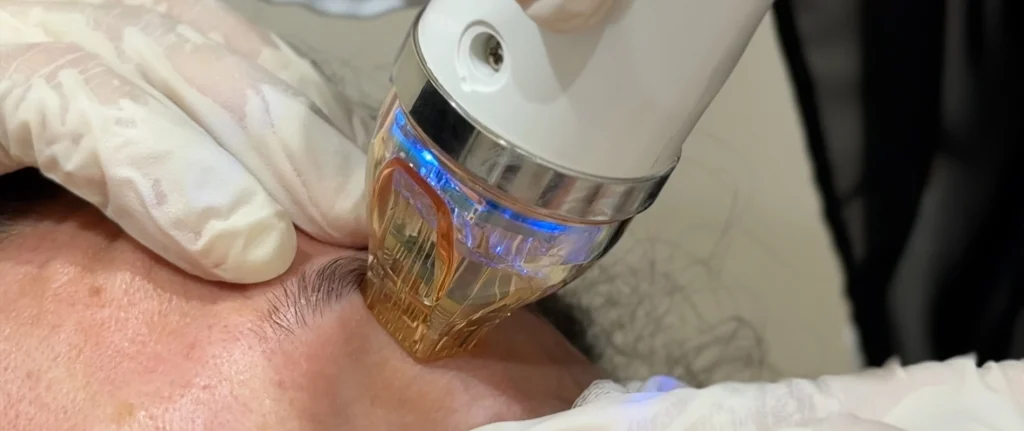
Weeks 4–6: visible smoothing and pore refinement
By approximately four to six weeks, early collagen remodeling may make selected depressed scars and uneven areas appear smoother. Some patients also report a reduction in the appearance of enlarged pores as surrounding dermal support and texture improve. RF microneedling does not physically close or eliminate pores, so this effect should be described as pore refinement rather than pore removal. Response varies according to scar type, treatment intensity, and individual wound healing. This stage is also a practical point for reassessing whether another session is appropriate.Months 2–4: continued collagen remodeling and scar improvement
Collagen production and scar remodeling continue for several months after RF microneedling. During this period, appropriate rolling and boxcar scars may gradually become shallower and less visible. Improvement from several sessions can accumulate as each treatment adds another controlled remodeling cycle. Very deep ice-pick scars, significant tethering, or major volume loss may remain because these structural problems require another mechanism of treatment. Final results should therefore be judged after sufficient remodeling time rather than immediately after the final procedure.How Many Sessions Are Needed?
There is no universal number of RF microneedling sessions for acne scars. Studies use different devices, scar-grading systems, RF parameters, and treatment intervals, which makes fixed session packages medically imprecise. Many published protocols use several sessions, commonly around three or four, but the correct number depends on scar type, severity, treatment intensity, pigmentation risk, and individual response. Mild-to-moderate scars may need fewer treatments than severe mixed scarring. The dermatologist should reassess clinical improvement and side effects as treatment progresses. Patients with deep or tethered scars may achieve a better overall result by adding another modality rather than simply increasing the number of RF sessions.Typical session ranges for mild, moderate, and severe scarring
Many RF microneedling studies use approximately three to four treatment sessions, but this should be treated as a common research pattern rather than a rule for every patient. Mild texture irregularity or shallow scarring may improve with fewer treatments, while moderate widespread atrophic scarring may require a longer course. Severe acne scarring often contains tethered scars, deep ice-pick scars, or volume loss that RF microneedling alone cannot fully address. In those cases, simply scheduling more RF sessions may be less efficient than adding subcision, CROSS, fillers, or another appropriate procedure. Scar severity should therefore determine the overall treatment strategy rather than just the session count.Why sessions are spaced 4–8 weeks apart
RF microneedling sessions are commonly separated by several weeks because the skin needs time to recover and begin collagen remodeling before another controlled injury is created. Four-to-eight-week intervals appear frequently in clinical protocols, although exact timing depends on treatment intensity and patient recovery. Persistent redness, PIH, barrier disruption, or stronger settings may justify waiting longer. Treating too quickly does not necessarily speed collagen production and may simply add more inflammation. The next treatment should therefore follow clinical recovery rather than a rigid calendar.When combination therapy reduces the total number of sessions
Combination therapy can reduce reliance on repeated RF microneedling when another procedure directly corrects a scar feature that RF does not address efficiently. Subcision can release tethered rolling scars, fillers can restore selected volume loss, and focal chemical or surgical techniques can treat deep ice-pick scars. This may allow subsequent RF microneedling to focus on broader texture and collagen remodeling. Combination treatment does not guarantee fewer total appointments, however. Its main advantage is better scar matching and potentially more efficient improvement rather than simply reducing the number of sessions.Results: What Improvement Can You Expect?
RF microneedling can make selected atrophic acne scars smoother and less noticeable, but complete scar removal should not be promised. Clinical evidence supports improvement in facial atrophic acne scars, although outcomes vary according to device, RF settings, scar grading, session number, and study design. Rolling and selected boxcar scars may respond better than very deep ice-pick scars or scars with significant tethering. Improvement develops gradually as collagen forms and remodels, so the final result cannot be judged immediately after treatment. Skin type, scar depth, adherence to aftercare, and combination treatment also influence outcomes. The realistic goal is progressive acne scar improvement and smoother skin texture rather than perfectly scar-free skin.How long results last and whether maintenance is needed
Structural improvement created through collagen remodeling can persist for a long period, although the skin continues to age and undergo normal collagen changes. Acne scars that have improved do not simply reappear because an RF treatment has “worn off.” New inflammatory acne can create new scars, so maintaining acne control remains important. Some patients may choose additional RF treatment later if they want further improvement, but routine annual maintenance is not medically required for every acne scar patient. Maintenance should therefore be individualized rather than automatically scheduled every six or twelve months.Safety, Side Effects, and Pigmentation Risk
RF microneedling has a generally favorable safety profile when an experienced clinician uses appropriate settings. Temporary redness, swelling, tenderness, warmth, and mild dryness are the most common effects. Evidence in Fitzpatrick III–VI skin suggests relatively low rates of persistent hyperpigmentation or scarring compared with more epidermally disruptive energy-based treatments, although temporary PIH can still occur. Rare complications include infection, prolonged grid or track marks, burns, abnormal pigmentation, and additional scarring. Risk varies according to needle depth, RF energy, treatment density, device design, skin tone, and aftercare. Proper patient selection and conservative treatment settings remain important even though RF microneedling is often regarded as a lower-downtime procedure.Common short-term side effects: redness, swelling, tenderness
Redness, warmth, mild swelling, and tenderness are the most common early reactions after RF microneedling. Dryness, temporary roughness, mild flaking, or pinpoint treatment marks may also occur. Most of these effects settle as the epidermal barrier recovers. Stronger treatments can cause more prolonged inflammation than gentle protocols. Patients should know what recovery is expected from the exact device and settings used rather than assume all RF microneedling procedures have identical downtime.Post-inflammatory hyperpigmentation (PIH) risk, especially in darker skin
PIH can occur after RF microneedling because controlled heat and injury can stimulate melanocytes during healing. The risk is generally considered relatively favorable in darker skin compared with many ablative laser procedures, but it is not zero. A review of RF and RF microneedling studies in Fitzpatrick III–VI skin found transient PIH in several studies while persistent pigment problems and permanent scarring were uncommon. Previous PIH, melasma, sun exposure, treatment intensity, and individual healing all influence risk. Careful settings and strict sun protection remain especially important in pigment-prone patients.Rare complications: infection, track marks, or scarring
Rare complications include bacterial infection, persistent track marks, burns, prolonged redness, hyperpigmentation, hypopigmentation, or additional scar formation. Track marks can occur when mechanical injury or thermal delivery is excessive or when treated areas receive too much overlap. Infection becomes more likely if barrier care is poor or patients touch and irritate healing skin repeatedly. Excessive RF energy can also create unnecessary thermal injury. Persistent grid patterns, worsening pain, drainage, blistering, or unusual discoloration should be reviewed promptly rather than treated as routine recovery.How to minimize risks: experienced provider, conservative settings, strict sun protection
Risk reduction begins with an experienced dermatologist or appropriately trained medical provider who understands acne scar anatomy, RF energy delivery, darker skin phototypes, and device-specific settings. Needle depth and RF energy should match the treatment area and scar depth instead of automatically using maximum settings. Patients should protect healing skin from excessive sun exposure and avoid picking, strong exfoliation, or unapproved active ingredients during recovery. Significant inflammatory acne and infection should be controlled before scar-focused treatment. Follow-up allows the clinician to adjust the next session if PIH, prolonged redness, or slow healing develops.Is RF Microneedling for Acne Scars Right for You?
RF microneedling may be appropriate if you have stable atrophic acne scars that can improve through dermal collagen remodeling and you prefer a treatment with relatively limited surface disruption. Rolling scars, selected boxcar scars, and broader areas of uneven texture may respond better than narrow deep ice-pick scars or heavily tethered depressions. Patients with darker skin tones can often undergo RF microneedling, but careful energy settings and pigment-aware aftercare remain important. Active acne, melasma, previous procedures, scar depth, downtime, and realistic goals should all influence treatment suitability. When another procedure better addresses the structural problem, RF microneedling should be used as part of a combination plan rather than repeated indefinitely. For patients considering RF microneedling treatment in Riyadh, a dermatologist-led acne scar assessment can determine whether radiofrequency microneedling, subcision, fractional laser, fillers, CROSS, or another acne scar treatment best matches the individual scar pattern.Frequently Asked Questions About RF Microneedling for Acne Scars
Yes. RF microneedling can be used across darker skin tones and has a relatively favorable pigment-safety profile, although temporary PIH can still occur. Careful settings, experienced treatment, and strict sun protection remain important.
Structural collagen remodeling can produce long-lasting improvement, although the skin continues to age normally. New acne can still create new scars, so ongoing acne control remains important.
RF microneedling can cause warmth, pressure, prickling, or stinging, but topical anesthetic usually makes the procedure more tolerable. Discomfort varies according to needle depth, RF energy, treatment area, and individual sensitivity.
Yes. Dermatologists may combine or stage RF microneedling with subcision, fillers, CROSS, fractional laser, chemical peels, or other procedures when different scar structures need different mechanisms of treatment.
Many patients experience one to several days of redness, warmth, swelling, or dryness. Recovery varies with the device, needle depth, RF energy, treatment density, and individual healing.
Neither is universally better. Fractional CO₂ may produce somewhat greater scar improvement in some patients, while RF microneedling generally offers shorter recovery and fewer pigmentary events, making the choice dependent on scar severity, skin tone, downtime, and risk tolerance.
Conclusion
RF microneedling can improve selected atrophic acne scars by combining controlled needle injury with radiofrequency energy to stimulate collagen production and dermal remodeling. Rolling scars, selected boxcar scars, and broader uneven texture may benefit most, while very deep ice-pick scars, strong tethering, or volume loss often need another procedure. The main RF microneedling benefits include adjustable needle depth, controlled RF energy, relatively limited epidermal disruption, and suitability across a broad range of skin tones when performed correctly. Several treatment sessions are commonly used, but session number should be individualized rather than fixed in advance. Results develop gradually over months as collagen remodels, and successful treatment depends on scar type, skin characteristics, treatment settings, aftercare, and realistic expectations. The best approach is therefore a dermatologist-led plan that matches RF microneedling to the actual structure and severity of the acne scars.