Ramadan Dermatology Guide: What Treatments Are Safe During Fasting in Riyadh?
Ramadan is a time of discipline, balance, and spiritual focus. For many residents of Riyadh, it is also a time to prepare for family gatherings and Eid celebrations.
One of the most common questions patients ask during this month is:
“Which dermatology and aesthetic treatments are safe while fasting?”
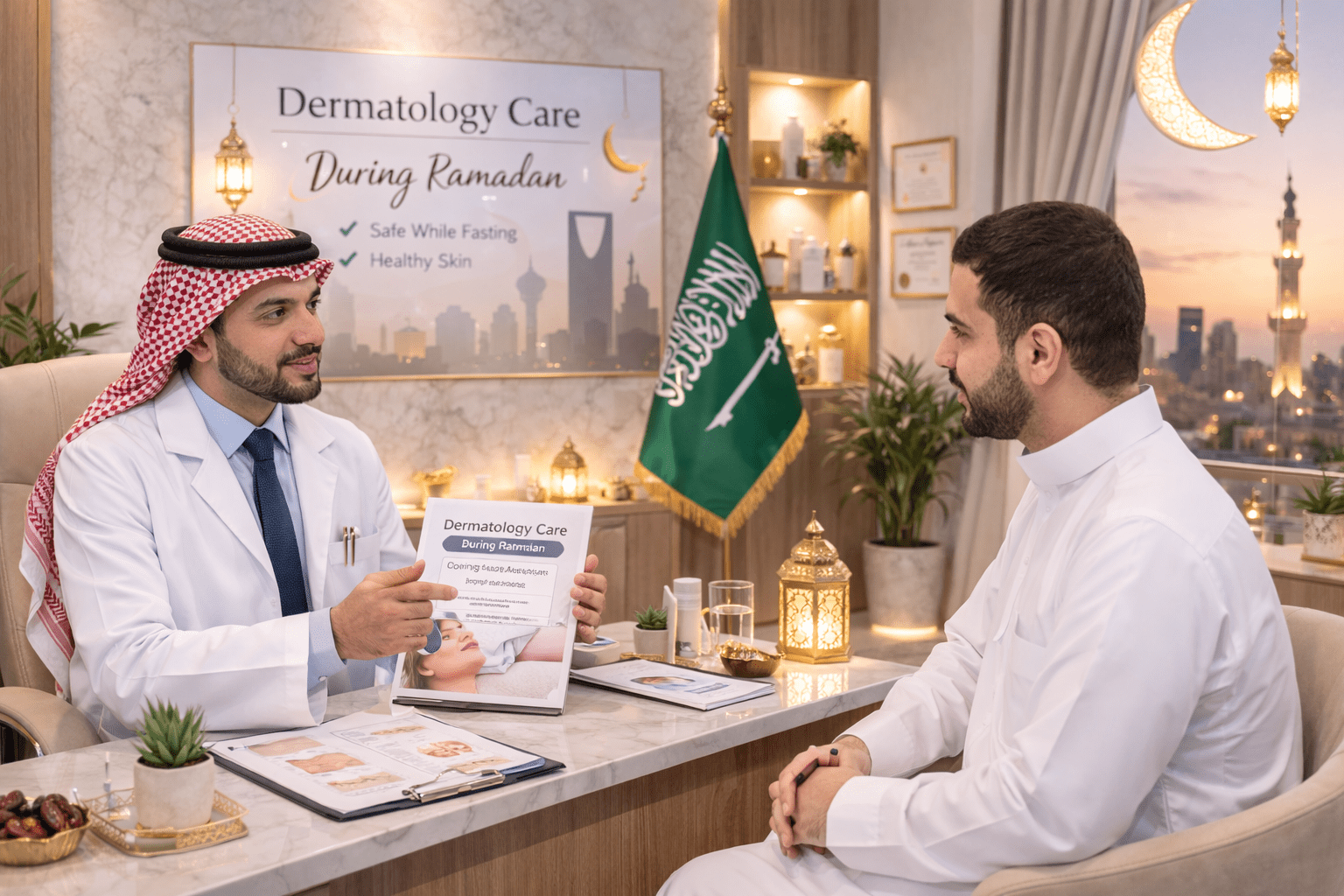
According to Dr. Haitham Al-Gzlan, Consultant Dermatologist at Reveal Clinics Riyadh, many treatments can be performed safely during Ramadan — provided they are carefully selected and medically supervised.
How Fasting Affects the Skin
Fasting may influence:
- Hydration levels
- Skin barrier strength
- Oil production
- Inflammatory response
- Sensitivity to sun exposure
In Riyadh’s climate, dehydration combined with heat can make the skin more reactive. This is why treatment planning during Ramadan must consider seasonal and physiological factors.
Treatments Generally Considered Safe During Ramadan
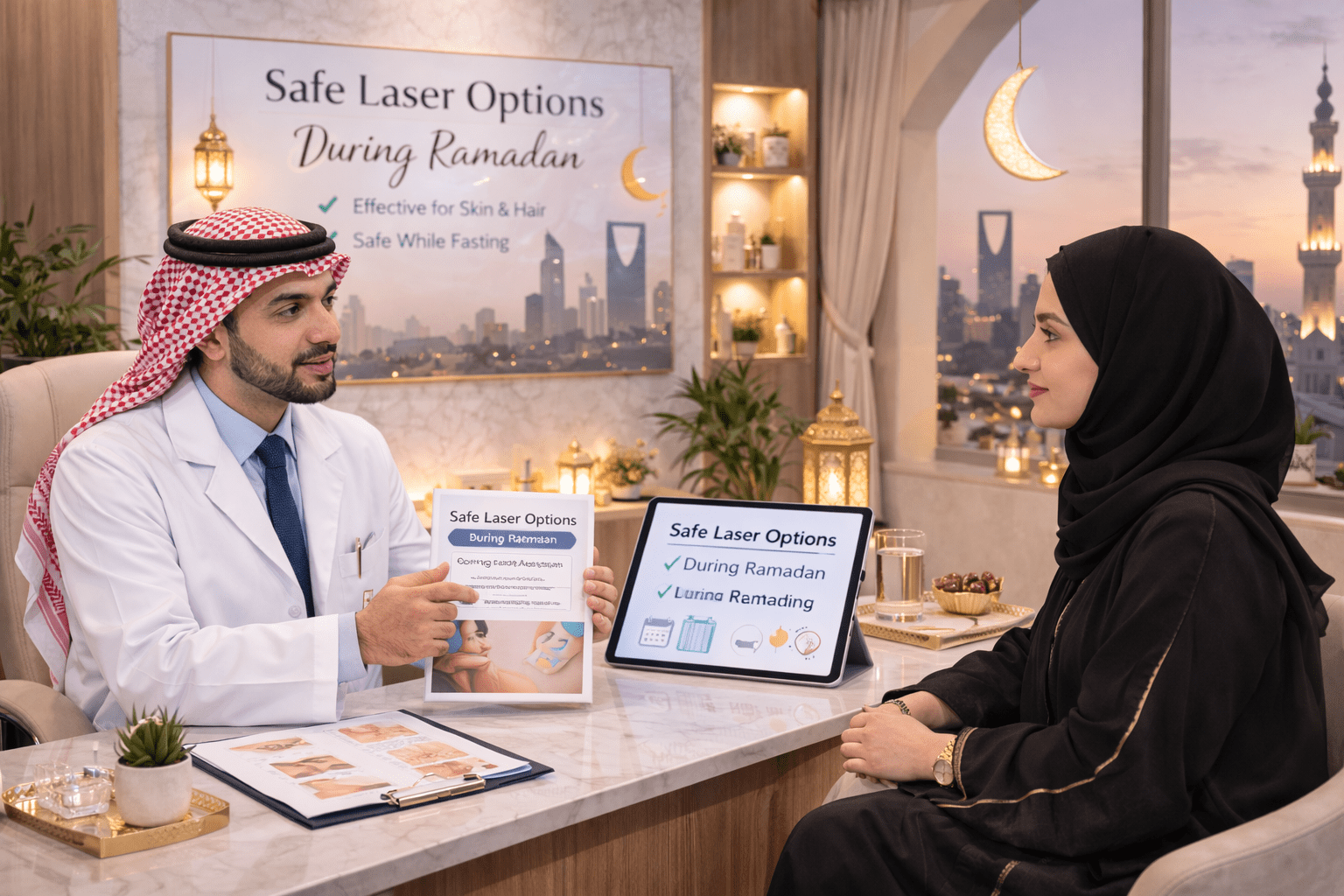
With proper evaluation, the following are often suitable:
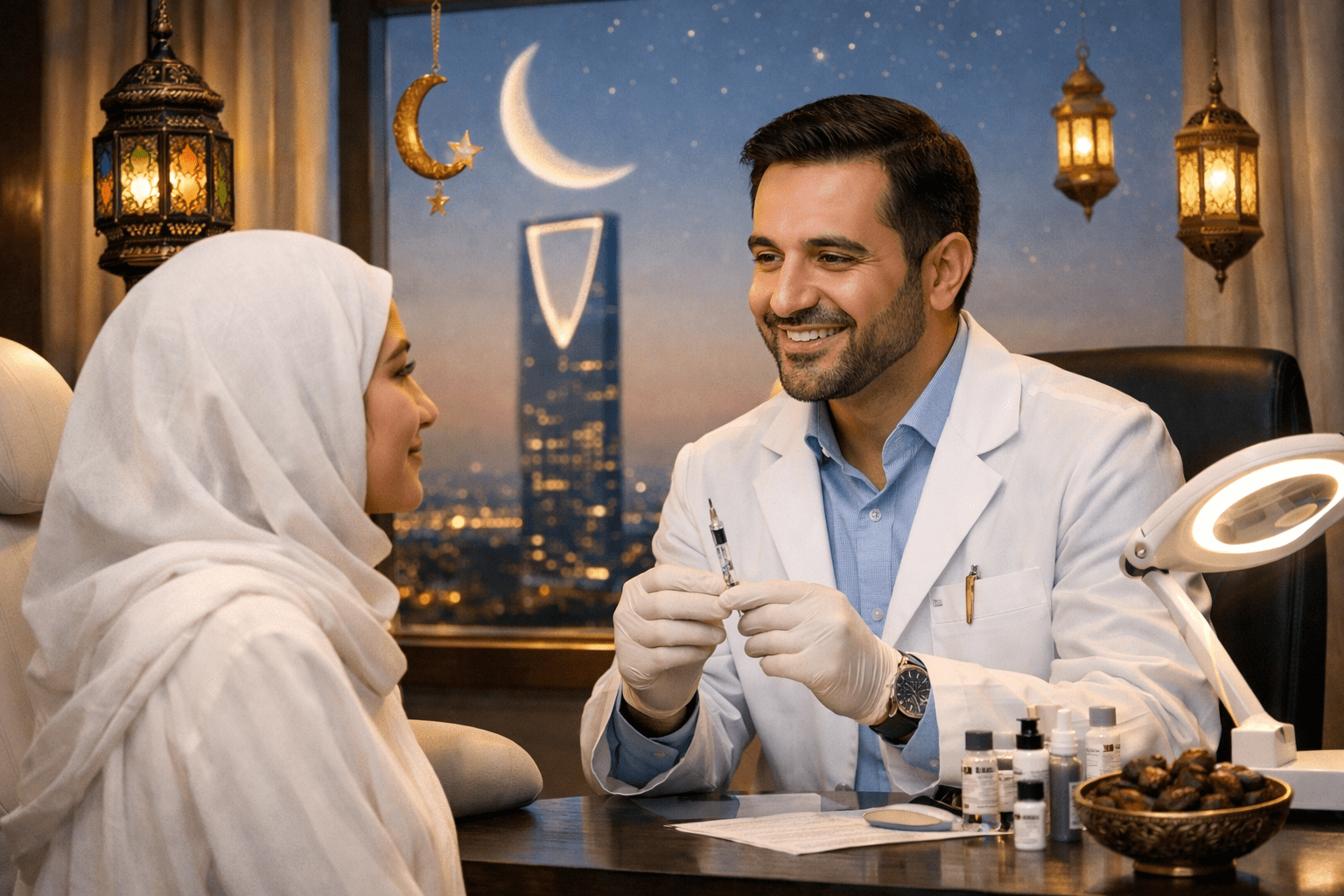
- Botox
- Localized treatment
- Minimal downtime
- Does not interfere with fasting physiology
- Light-Based Treatments (e.g., IPL & Vascular Laser)
- Minimal downtime
- Controlled energy delivery
- Suitable for pigmentation and redness
- Skin Boosters (Selected Cases)
- Improve hydration
- Performed conservatively
- Planned according to skin condition
- Non-Invasive Rejuvenation
- Mild collagen stimulation
- Low-risk procedures
- Gradual improvement
These treatments are typically performed with conservative settings during Ramadan.
Treatments That May Require Caution
Some procedures are better postponed until after Ramadan, including:
- Deep fractional resurfacing
- Aggressive chemical peels
- High-downtime laser treatments
- Procedures requiring extended recovery
The decision depends on individual skin stability and timing before Eid.
When Should You Schedule Treatments During Ramadan?
Patients often prefer:
- Evening appointments
- Planning treatments earlier in the month
- Allowing buffer time before Eid
- Avoiding procedures during peak dehydration hours
Gradual planning ensures safer results and less stress close to celebrations.
Ramadan Skin Priorities: Stability First
During Ramadan, the safest strategy is:
- Maintain hydration after Iftar
- Protect skin from sun exposure
- Avoid new harsh skincare products
- Address chronic conditions gradually
- Focus on low-downtime options
Skin stability is more important than dramatic change during this month.
Why Consultant Evaluation Matters
Seasonal changes combined with fasting may increase:
- Pigmentation risk
- Skin sensitivity
- Slower recovery
- Inflammatory flare-ups
Under consultant supervision, treatment plans can be adjusted for:
- Middle Eastern skin types
- Climate considerations
- Fasting physiology
- Individual health status
Ramadan dermatology should reflect balance and medical responsibility.
Frequently Asked Questions (FAQ)
Does laser treatment break the fast?
From a medical standpoint, laser treatments are external procedures and do not affect fasting physiology.
Is Botox allowed during Ramadan?
Botox is a localized treatment and is generally safe when medically appropriate.
Can dehydration affect laser recovery?
Yes. Proper hydration outside fasting hours helps support skin recovery.
Should I wait until after Eid?
Not always. Many treatments are safe if planned carefully.
Can fasting worsen acne or pigmentation?
Changes in hydration and routine may influence skin conditions, which is why medical guidance is helpful.
Read More insights about Dr. Haitham Al-Gzlan
Plan Your Ramadan Skin Care with Confidence
If you are considering dermatology or aesthetic treatments during Ramadan, a personalized evaluation ensures safety and optimal results.
Consult Dr. Haitham Al-Gzlan at Reveal Clinics Riyadh for expert guidance tailored to your skin and fasting considerations.
📍 Reveal Clinics, 2484 Muhammad Al Maqdimi, An Nafal, Riyadh 13312
🌐 byhaitham.com 📞 +966 56 262 4285
🌐 reveal-clinics.com 📞 +966 11 504 8687
