
PicoWay vs Fraxel for Acne Scars in Riyadh – How Dermatologists Decide
Acne scars are one of the most common reasons patients seek laser treatment in Riyadh — and also one of the most misunderstood.
Patients often ask: “Which laser is better for acne scars — PicoWay or Fraxel?”
The medical truth is simple:
👉 There is no single “best” laser for all acne scars.
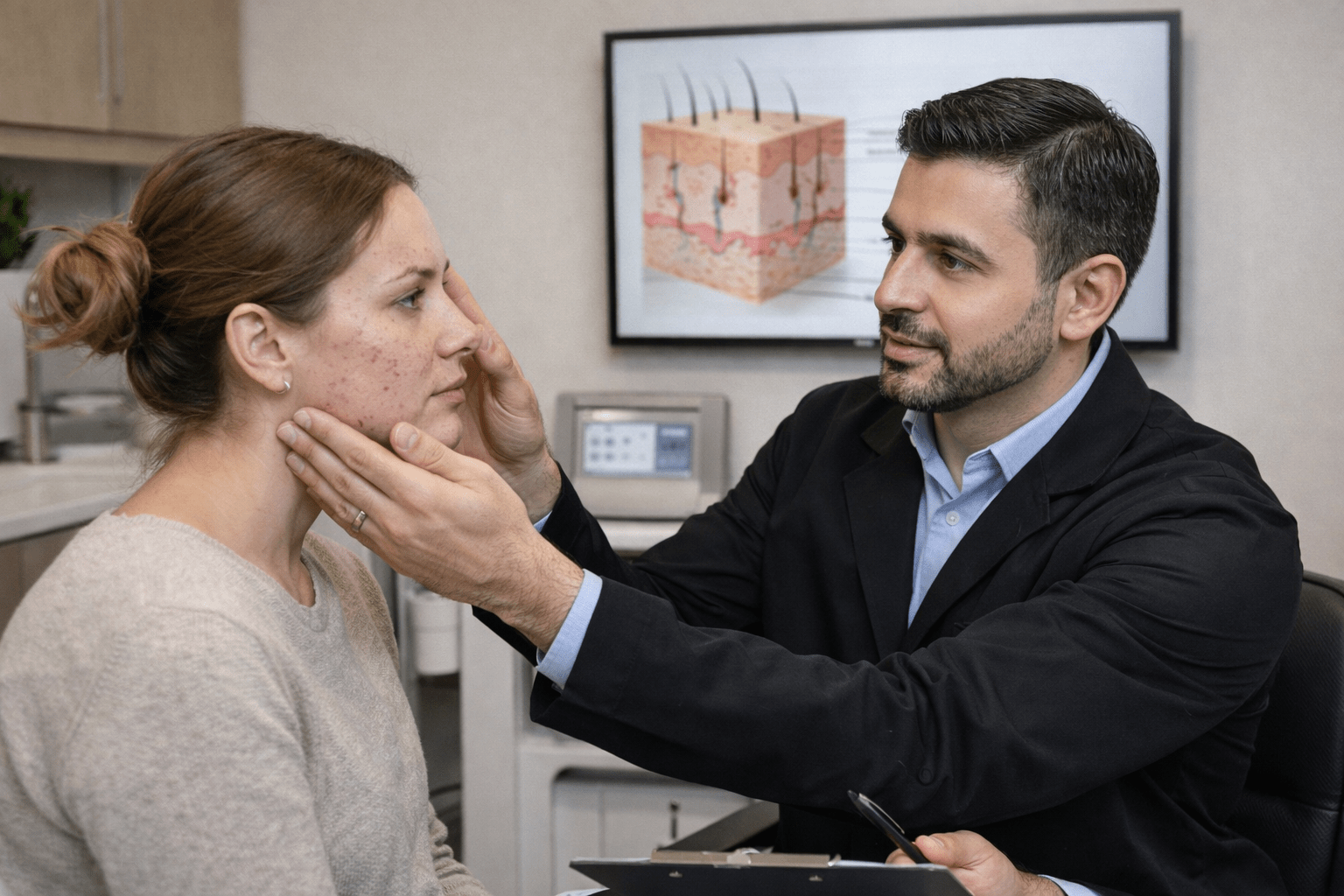
At Reveal Clinics Riyadh, Dr. Haitham Al-Gzlan, Consultant Dermatologist, chooses acne scar treatments based on scar type, depth, skin response, and safety, not trends or device popularity.
This article explains the real differences between PicoWay and Fraxel — and how dermatologists decide which is appropriate.


Why Acne Scars Are Not All the Same
Before choosing any laser, acne scars must be classified medically.
Common acne scar types include:
- Rolling scars (soft depressions)
- Boxcar scars (defined edges)
- Mixed texture scars
- Post-acne pigmentation (not true scarring)
Each type responds differently to laser energy.
This is why treating all scars with one device often leads to poor or inconsistent results.
What Is PicoWay Laser?
PicoWay is a pico-second laser that delivers ultra-short pulses of energy measured in trillionths of a second.
Key characteristics:
- Works through a photo-mechanical effect
- Minimal heat generation
- Targets pigment and micro-textural irregularities
- Stimulates collagen without aggressive resurfacing
- Lower risk of post-inflammatory hyperpigmentation (PIH)
PicoWay is often selected for surface texture improvement and pigmentation-associated scars, especially in melanin-rich skin.
What Is Fraxel Fractional Laser?
Fraxel is a fractional laser designed to resurface the skin by creating microscopic treatment zones.
Key characteristics:
- Creates controlled microthermal injury
- Stimulates deeper collagen remodeling
- Improves scar depth and skin texture
- Requires downtime for healing
- More powerful for structural scar remodeling
Fraxel is often chosen for deeper acne scars and textural irregularities that require resurfacing.
Key Differences Between PicoWay and Fraxel
🔹 Mechanism of Action
- PicoWay: Photo-mechanical stimulation with minimal heat
- Fraxel: Fractional thermal resurfacing
🔹 Depth of Treatment
- PicoWay: Superficial to mid-dermal stimulation
- Fraxel: Deeper dermal remodeling
🔹 Downtime
- PicoWay: Minimal downtime
- Fraxel: Several days of redness and peeling
🔹 Pigmentation Risk
- PicoWay: Lower PIH risk
- Fraxel: Requires careful settings in Middle Eastern skin
🔹 Type of Improvement
- PicoWay: Texture refinement, pigment improvement
- Fraxel: Structural scar depth improvement
How Dermatologists Decide Between PicoWay and Fraxel
This decision is medical, not cosmetic.
Dr. Haitham evaluates:
- Scar type and depth
- Skin thickness and sensitivity
- Pigmentation risk
- History of PIH
- Downtime tolerance
- Whether combination treatments are needed
His guiding principle:
Use the least aggressive technology that can safely deliver results.
Who Is a Better Candidate for PicoWay?
You may be better suited for PicoWay if:
- Acne scars are shallow or mixed with pigmentation
- You want minimal downtime
- You have higher pigmentation risk
- Texture irregularity is mild to moderate
PicoWay may not be sufficient if:
- Scars are deep or tethered
- Structural remodeling is required
Who Is a Better Candidate for Fraxel?
You may be better suited for Fraxel if:
- Acne scars are deeper
- Skin texture is significantly uneven
- You can tolerate downtime
- Pigmentation risk is controlled and monitored
Fraxel may not be ideal if:
- Skin is inflamed
- PIH risk is high without preparation
Can PicoWay and Fraxel Be Combined?
Yes — and this is often where the best results come from.
In many cases, Dr. Haitham:
- Uses PicoWay for pigment control and surface refinement
- Uses Fraxel for deeper scar remodeling
- Spaces treatments strategically
- Supports healing with medical skincare
Combination therapy is often safer and more effective than aggressive single sessions.
Treatment Process at Reveal Clinics Riyadh
- Consultant dermatology consultation
- Acne scar classification and risk assessment
- Laser selection (PicoWay, Fraxel, or combination)
- Customized treatment plan
- Controlled laser sessions
- Recovery and maintenance guidance
- Procedure time: 15–45 minutes
- Downtime: Minimal to moderate (device dependent)
- Results: Progressive improvement
Results: What to Expect Realistically
- Gradual smoothing of acne scars
- Improved skin texture and tone
- Collagen remodeling over weeks to months
- Multiple sessions often required
No laser can erase scars completely — but expert planning can significantly improve appearance and confidence.
Frequently Asked Questions (FAQ)
Which is better for acne scars: PicoWay or Fraxel?
Neither is universally better. The choice depends on scar type and depth.
Is PicoWay safer for darker skin?
Yes, it generally carries a lower pigmentation risk when used correctly.
Does Fraxel always cause downtime?
Yes, some downtime is expected due to resurfacing.
Can acne scars be treated without lasers?
Some scars respond to RF microneedling or injectables, depending on type.
How many sessions are needed?
Usually multiple sessions, depending on severity and method.
Read More insights about Dr. Haitham Al-Gzlan
Acne Scar Treatment Requires Expertise
Choosing the right laser for acne scars requires medical diagnosis, experience, and restraint — not trial-and-error.
Book a consultation with Dr. Haitham Al-Gzlan, Consultant Dermatologist at Reveal Clinics Riyadh, to receive a customized acne scar treatment plan designed for your skin and safety.
📍 Reveal Clinics, 2484 Muhammad Al Maqdimi, An Nafal, Riyadh 13312
🌐 byhaitham.com 📞 +966 56 262 4285
🌐 reveal-clinics.com 📞 +966 11 504 8687
