
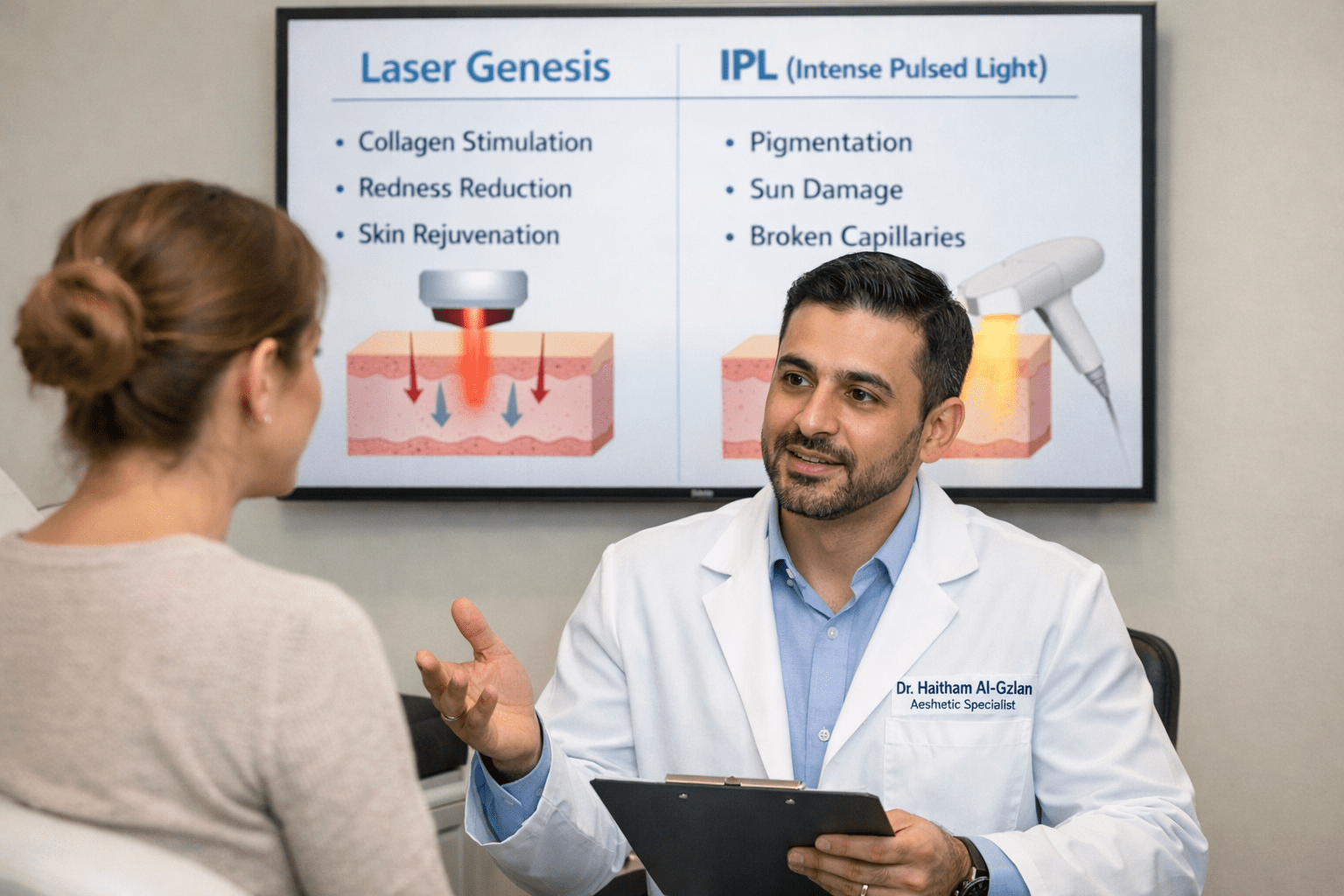
Laser Genesis vs IPL (M22) in Riyadh – What’s the Difference and Which Is Safer?
Laser Genesis and IPL (M22) are two of the most commonly requested “skin glow” and redness treatments in Riyadh.
Patients often believe they are interchangeable — but medically, they are very different technologies with different indications, risks, and outcomes.
At Reveal Clinics Riyadh, Dr. Haitham Al-Gzlan, Consultant Dermatologist, chooses between Laser Genesis and IPL only after understanding the skin condition, pigmentation risk, and treatment goals.
This guide explains the real differences and helps you understand which option may be safer and more effective for your skin.
Why Laser Genesis and IPL Are Often Confused
Both treatments:
- Are non-ablative
- Have minimal downtime
- Improve overall skin appearance
- Are marketed as “glow” or “rejuvenation” treatments
However, the mechanism, depth, and risks are not the same — especially for Middle Eastern skin.
What Is Laser Genesis?
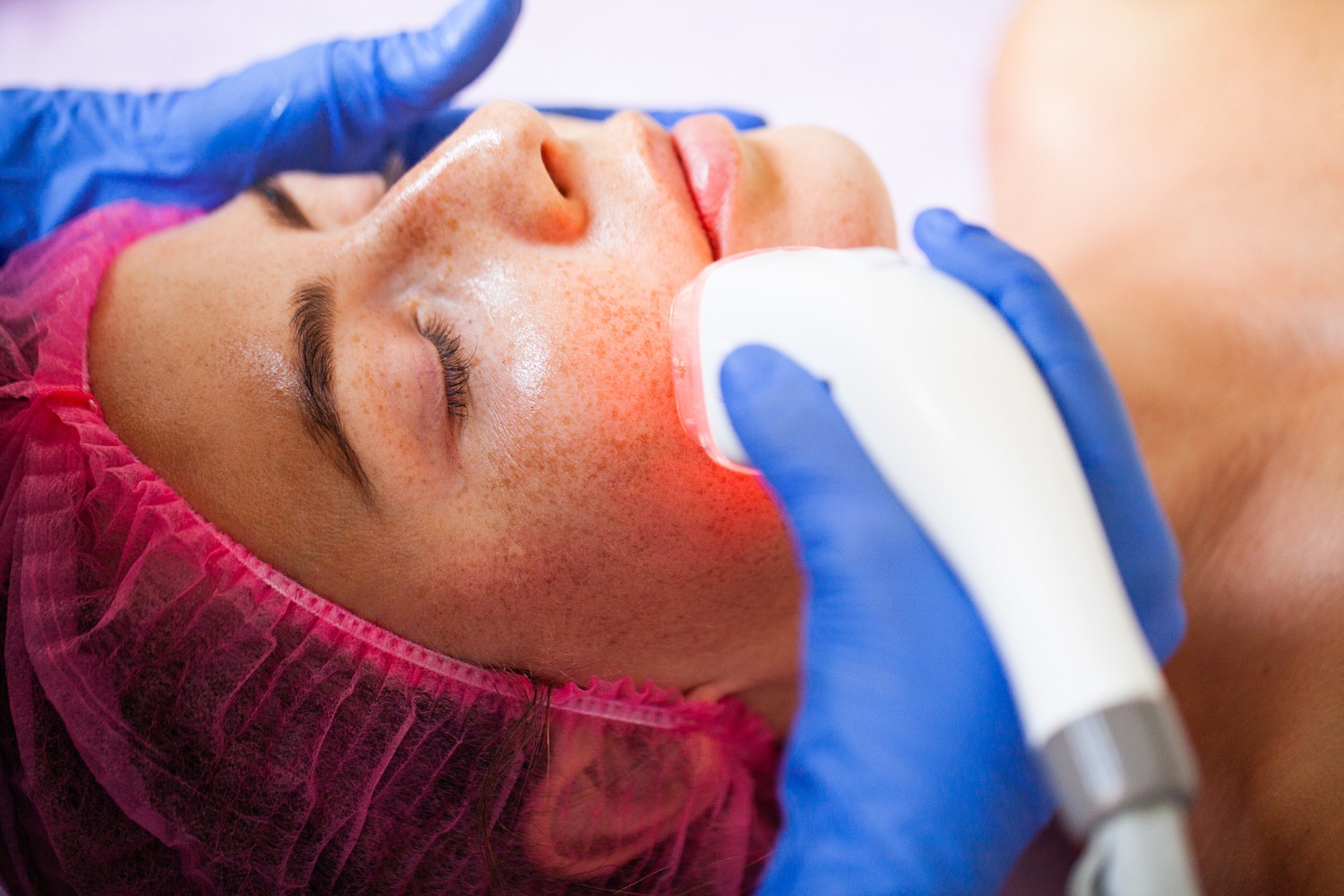
Laser Genesis is a non-ablative laser treatment designed to gently heat the upper dermis.
Key characteristics:
- Uses a specific laser wavelength
- Delivers gradual, uniform dermal heating
- Stimulates collagen production
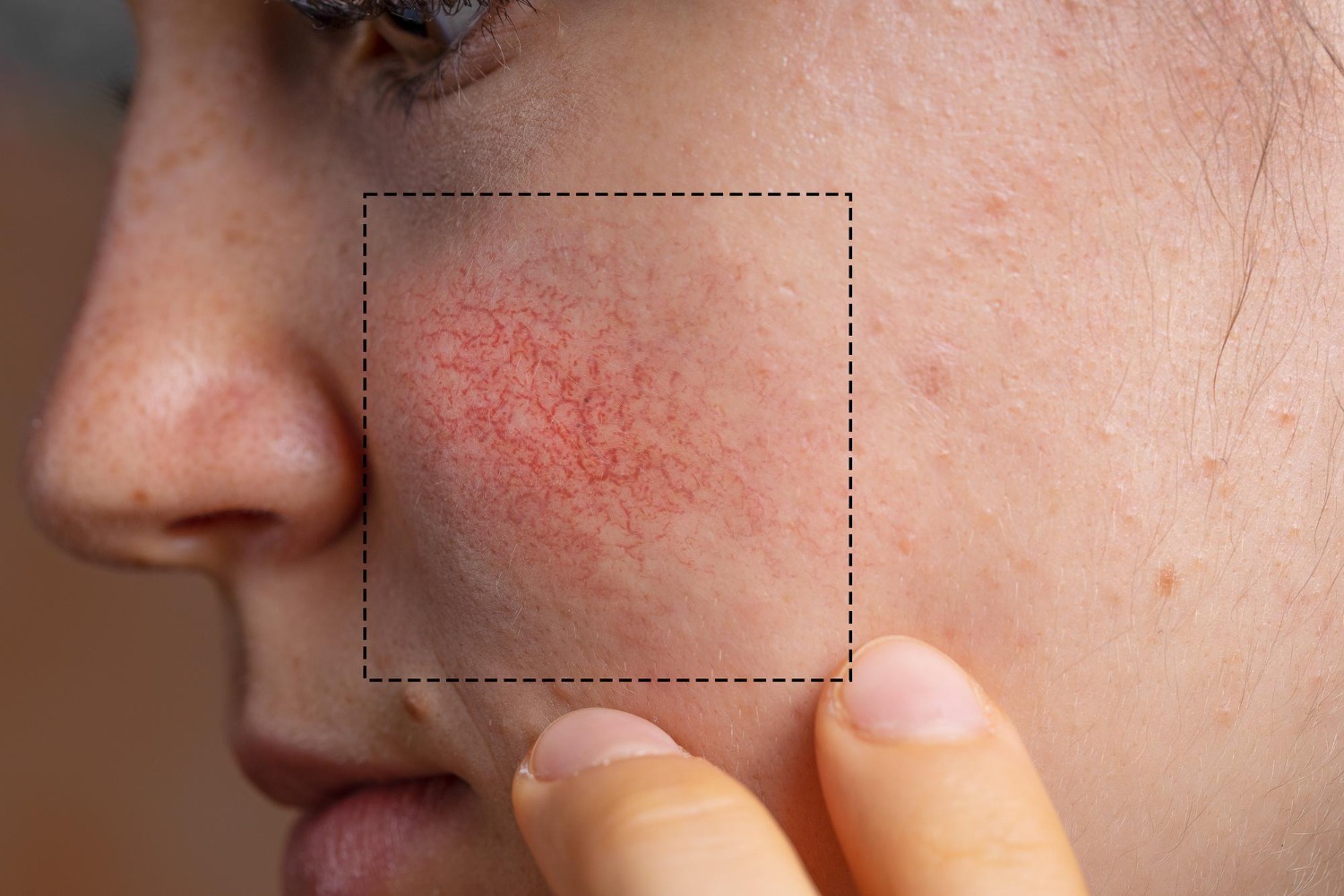
- Calms superficial redness
- Improves texture and pore appearance
- Very low risk of pigmentation complications
Laser Genesis is often chosen for skin refinement, not aggressive correction.
What Is IPL (M22)?
IPL (Intense Pulsed Light) is a broad-spectrum light technology that delivers multiple wavelengths in a single pulse.
Key characteristics:
- Targets melanin (pigment) and hemoglobin (blood vessels)
- Treats pigmentation, redness, and sun damage
- Can address multiple concerns simultaneously
- Requires careful parameter selection
- Higher risk if used aggressively or incorrectly
M22 IPL is powerful — but must be used selectively and conservatively in melanin-rich skin.
Key Differences Between Laser Genesis and IPL
🔹 Type of Energy
- Laser Genesis: Single-wavelength laser energy
- IPL: Broad-spectrum light
🔹 Treatment Target
- Laser Genesis: Dermal collagen + mild redness
- IPL: Pigment, redness, sun damage
🔹 Depth & Intensity
- Laser Genesis: Gentle, uniform heating
- IPL: Stronger, target-specific pulses
🔹 Pigmentation Risk
- Laser Genesis: Very low
- IPL: Higher if settings are not optimized
🔹 Downtime
- Laser Genesis: Minimal to none
- IPL: Mild redness or darkening of pigment spots may occur
How Dermatologists Decide Between Laser Genesis and IPL
This decision is based on medical diagnosis, not preference.
Dr. Haitham evaluates:
- Is the concern redness, pigment, or texture?
- Is melasma present or suspected?
- How reactive is the skin?
- What is the patient’s pigmentation risk?
- Is gradual refinement or active correction needed?
His guiding principle:
Use the safest technology that can achieve the goal without triggering rebound pigmentation.
Who Is a Better Candidate for Laser Genesis?
Laser Genesis may be the better option if you:
- Want gradual skin glow and refinement
- Have mild redness or post-acne marks
- Have sensitive or reactive skin
- Have melasma-prone or pigmentation-risk skin
- Want zero downtime
Laser Genesis may not be sufficient if:
- Pigmentation is deep or extensive
- Sun damage is significant
Who Is a Better Candidate for IPL (M22)?
IPL may be more suitable if you:
- Have sun spots or uneven pigmentation
- Have visible redness or vascular lesions
- Want multi-target treatment
- Have stable skin and controlled melasma risk
IPL may not be ideal if:
- Melasma is active or unstable
- Skin barrier is compromised
- Previous IPL caused pigmentation worsening
Can Laser Genesis and IPL Be Combined?
Yes — but never in the same aggressive session.
In some patients, Dr. Haitham may:
- Start with Laser Genesis to stabilize and calm the skin
- Introduce IPL later for pigment or redness correction
- Space treatments to avoid inflammation
- Support skin with medical-grade skincare
Combination therapy is used strategically, not routinely.
Treatment Process at Reveal Clinics Riyadh
- Consultant dermatology consultation
- Skin analysis and pigmentation risk assessment
- Technology selection (Laser Genesis or IPL)
- Customized treatment protocol
- Controlled treatment session
- Aftercare and sun protection guidance
- Procedure time: 20–30 minutes
- Downtime: Minimal
- Results: Gradual improvement over sessions
Results: What to Expect
- Improved skin brightness and texture
- Reduced redness or pigment (technology dependent)
- Healthier, calmer skin appearance
- Natural-looking results without over-treatment
Multiple sessions are usually required for optimal results.
Frequently Asked Questions (FAQ)
Which is safer: Laser Genesis or IPL?
Laser Genesis generally carries a lower pigmentation risk, especially in melasma-prone skin.
Can IPL worsen pigmentation?
Yes, if used aggressively or without proper assessment.
Is Laser Genesis enough for pigmentation?
It improves tone but may not treat deeper pigment.
Can these treatments be done year-round?
Laser Genesis is more flexible; IPL requires careful sun avoidance.
Do these treatments replace stronger lasers?
No. They are part of a broader dermatology treatment strategy.
Read More insights about Dr. Haitham Al-Gzlan
Safety Comes First
Choosing between Laser Genesis and IPL should never be based on marketing terms like “glow” or “quick results.”
It should be based on skin biology, pigmentation risk, and expert medical judgment.
Book a consultation with Dr. Haitham Al-Gzlan, Consultant Dermatologist at Reveal Clinics Riyadh, to determine which approach is safest and most effective for your skin.
📍 Reveal Clinics, 2484 Muhammad Al Maqdimi, An Nafal, Riyadh 13312
🌐 byhaitham.com 📞 +966 56 262 4285
🌐 reveal-clinics.com 📞 +966 11 504 8687
